The tradition & historical record
6 min read · 2 sourcesA piñata (, Spanish pronunciation: [piˈɲata] ) is a container, often made of papier-mâché, pottery, or cloth, that is decorated, filled with candy, and then broken as part of a celebration. Piñatas are commonly associated with Mexico. The idea of breaking a container filled with treats came to Europe in the 14th century. The Spanish brought the European tradition to Mexico, although there were similar traditions in Mesoamerica, such as the Aztecs' honoring the birthday of the god Huītzilōpōchtli in mid-December. According to local records, the Mexican piñata tradition began in the town of Acolman, just north of Mexico City, where piñatas were introduced for catechism purposes as well as to co-opt the Huitzilopochtli ceremony. Today, the piñata is still part of Mexican culture, the cultures of other countries in Latin America, as well as the United States, but it has mostly lost its religious character. 1
Etymology
The Spanish word piñata probably derives from the Italian pignatta 'fragile pot,' itself from pigna lit. 'pinecone.' It may also come from Spanish piña lit. 'pinecone.' 1
History
Although today, piñatas are typically used for a fun activity at parties, their origins lie in other customs. There is some debate but it appears that their origin is not Spanish but Chinese. The Chinese version was in the shape of a cow or ox and used for the New Year. It was decorated with symbols and colors meant to produce a favorable climate for the coming growing season. It was filled with five types of seeds and then hit with sticks of various colors. After the piñata was broken, the remains were burned and the ashes kept for good luck. The tradition arrived in Europe in the 14th century where it was associated with the Christian celebration of Lent; in Spain, the First Sunday of Lent, "Piñata Sunday", became a celebration known as the Dance of the Piñata. As the word's Italian origin indicates, pignatta (also pignata and pignàta) meaning "earthenware cooking pot", the Spanish initially used a plain clay container, before starting to decorate it with ribbons, tinsel and colored paper. The origin of the Italian word is thought to be linked to the Latin word pinea, "pine cone". The European piñata tradition was brought to Mexico in the 16th century; however, there was a similar tradition in Mesoamerica already. The Mayan tradition was similar to the modern piñata tradition, including blindfolding the participant hitting the piñata. The Aztec tradition commemorated the birthday of Huitzilopochtli. Priests would decorate a clay pot with colorful feathers. When the pot was broken with a stick or club, the treasures inside would fall to the feet of the idol as an offering. According to local records, the piñata was first used for the purposes of evangelism in 1586, in Acolman, in the modern State of Mexico, just north of Mexico City. 1
In Mexico
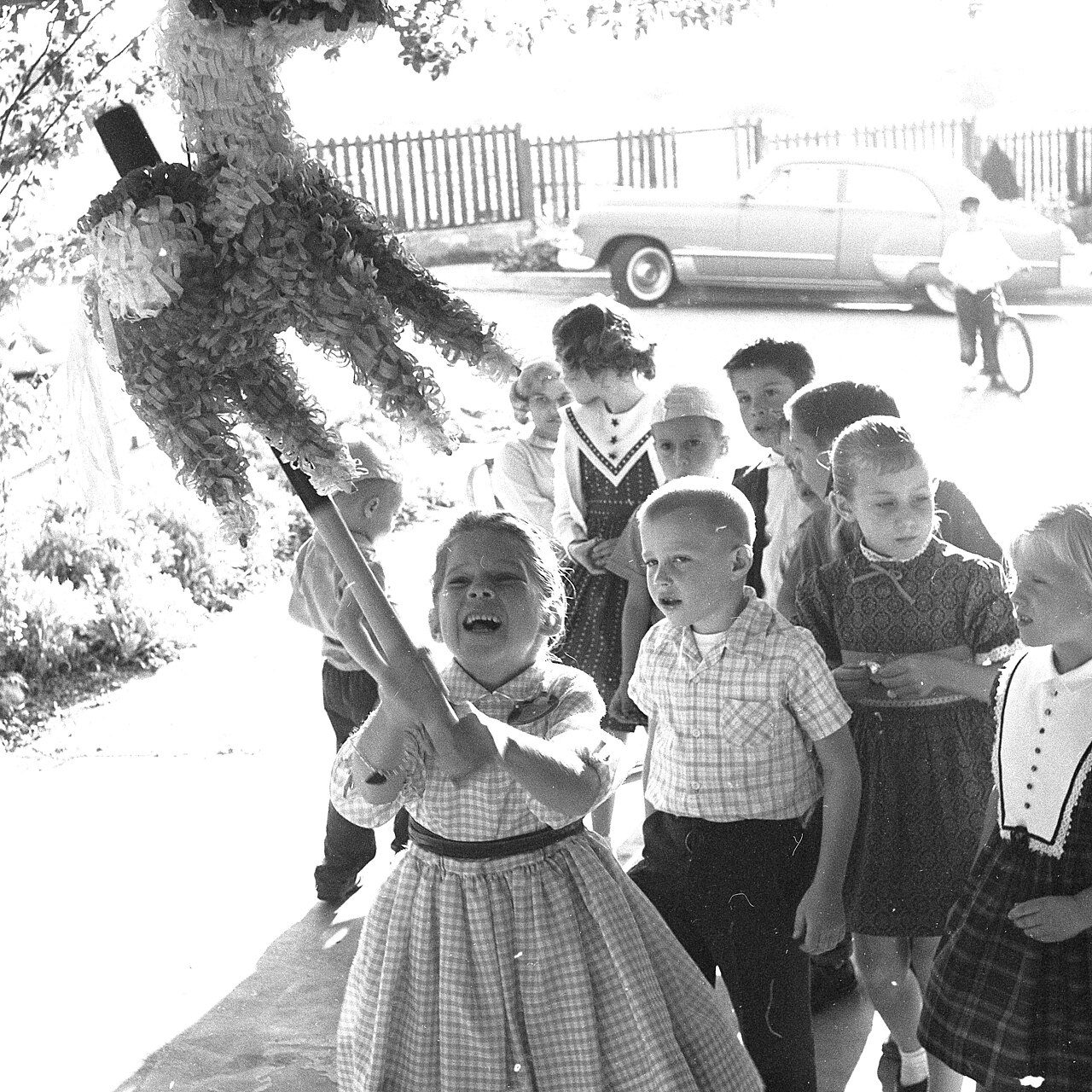
The piñata is most strongly identified with Mexico. The art of making modern piñatas falls under the Mexican craft heading of "cartonería", which refers to the making of items from paper and cardboard. This puts piñatas in the same category as amate paper craft, Judas figures and Mexico City style alebrijes. The Museo de Arte Popular held the first "Concurso de Piñatas Mexicanas" (Mexican Piñata Contest) in 2007 with prizes of 15,000, 10,000 and 5,000 pesos. The purpose of the contest is to help retain this tradition and help it to be continued to be valued. The Museo del Caracol in Mexico City held a workshop on how to make traditional piñatas, as part of its outreach program to the public. While the religious significance has been mostly lost, the ceremony that occurs with it has remained mostly intact. Piñatas remain most popular during Las Posadas with birthday parties coming in second. Each participant, usually a child, will have a turn at hitting the piñata, which is hung from above on a string. The participant is blindfolded, given a wooden stick, and then spun a number of times. As the participants works to hit the piñata, another moves it to make it harder to hit. There is a time limit to any one person's attempts, which is marked out by the singing of a traditional song: 1
Piñatas were traditionally made with a clay pot base and many artisans make a living selling just the pot for people to decorate as they wish. However, clay pot piñatas have mostly been replaced by those made with cardboard and papier-mâché, usually fashioned over balloons. One reason for this is that broken pot pieces can be dangerous to children. These are then decorated with crepe paper, other colored paper and other items. 1
In the United States
Piñatas have also become popular in Mexican-American and other Hispanic and Latino communities in the United States, as well as non-Hispanic populations. They are used for birthday parties and Halloween and Christmas and Cinco de Mayo celebrations. The 2006 video game Viva Piñata is about a world where piñatas compete to be chosen for children's birthday parties. A spinoff television show, also titled Viva Piñata was created to push sales of the Xbox game created by Microsoft. 1
Europe
A similar tradition in Denmark is slå katten af tønden ("hit the cat out of the barrel") in which a wooden barrel is struck to release candy. In Catalonia, a Christmastide tradition known as "fer cagar el tió" ("making the log defecate") is observed. A log is wrapped with a blanket several days in advance of Christmas and is "fed" grass. On Christmas Eve, the log is repeatedly struck with sticks in order to make the log "defecate". The blanket is then removed to reveal the gifts that have been "expelled" by the log. In Italy feasts with a game similar to piñata, called pentolaccia, used to be celebrated the first Sunday of Lent. 1
The text above is adapted from the Wikipedia article “Piñata”, available under the Creative Commons Attribution-ShareAlike 4.0 licence. 1
piñata is container often made of papier-mâché, pottery, or cloth, according to the structured record cited below. This entry was generated automatically from that record and has not yet been reviewed by a person familiar with the tradition. 2
The source record links this tradition to 13 external registers, which can be verified through the citation. 2