The tradition & historical record
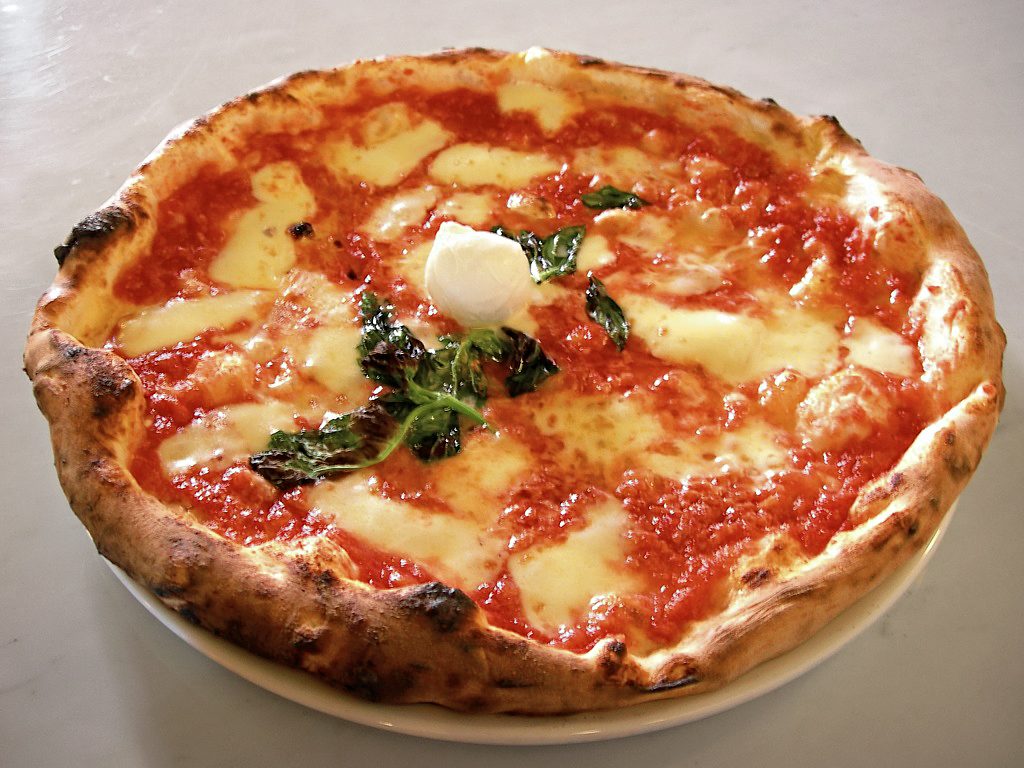
7 min read · 2 sourcesPizza is an Italian dish typically consisting of a flat base of leavened wheat-based dough topped with tomato, cheese, and other ingredients, baked at a high temperature, traditionally in a wood-fired oven. The term pizza was first recorded in AD 997, in a Latin manuscript from the southern Italian town of Gaeta, in Lazio, on the border with Campania. Raffaele Esposito is often credited with creating the modern version of pizza in Naples at the end of the 19th century. In 2009, Neapolitan pizza was registered with the European Union as a traditional speciality guaranteed (TSG) dish. In 2017, the art of making Neapolitan pizza was included on UNESCO's list of intangible cultural heritage. Pizza and its variants are among the most popular foods in the world. Pizza is sold at a variety of restaurants, including pizzerias, Mediterranean restaurants, via delivery, and as street food. In Italy, pizza served in a restaurant is presented unsliced, and is eaten with the use of a knife and fork. In casual settings, however, it is typically cut into slices to be eaten while held in the hand. Pizza is also sold in grocery stores in a variety of forms, including frozen or as kits for self-assembly. Store-bought pizzas are then cooked using a home oven. In 2017, the world pizza market was US$128 billion; in the US, it was $44 billion spread over 76,000 pizzerias. Between 2017 and March 2020, about 11% of the US population consumed pizza on any given day. 1
Etymology
The oldest recorded usage of the word pizza is thought to be from May 997 AD, appearing in the Codex diplomaticus Caietanus, a notarial Latin document from the town of Gaeta, then still part of the Byzantine Empire. The text states that a tenant of certain property is to give the bishop of Gaeta duodecim pizze (lit. 'twelve pizzas'), a pork shoulder and kidney annually on Christmas Day, and twelve pizzas and a couple of chickens annually on Easter Sunday. Suggested etymologies include: 1
Byzantine Greek and Late Latin pitta > pizza, cf. Modern Greek pita bread and the Apulia and Calabrian (then Byzantine Italy) pitta, a round flat bread baked in the oven at high temperature sometimes with toppings. The word pitta can in turn be traced to either Ancient Greek πικτή (pikte), 'fermented pastry', which in Latin became picta, or Ancient Greek πίσσα (pissa, Attic: πίττα, pitta), 'pitch', or πήτεα (pḗtea), 'bran' (πητίτης, pētítēs, 'bran bread'). The Etymological Dictionary of the Italian Language explains it as coming from dialectal pinza, 'clamp', as in modern Italian pinze, 'pliers, pincers, tongs, forceps'. Their origin is from Latin pinsere, 'to pound, stamp'. The Lombardic word bizzo or pizzo, meaning 'mouthful' (related to the English words bit and bite), which was brought to Italy in the middle of the 6th century AD by the invading Lombards. The shift b→p could be explained by the High German consonant shift, and it has been noted in this connection that in German the word Imbiss means 'snack'. A person who makes pizza is known as a pizzaiolo. The word pizza was borrowed from Italian into English in the 1930s; before it became well known, pizza was called "tomato pie" by English speakers. Some regional pizza variations still use the name tomato pie. 1
History
Records of pizza-like foods can be found throughout ancient history from Ancient Rome to the Middle Ages. In the 6th century BC, the Persian soldiers of the Achaemenid Empire during the rule of Darius the Great baked flatbreads with cheese and dates on top of their battle shields and the ancient Greeks supplemented their bread with oils, herbs, and cheese. An early reference to a pizza-like food occurs in the Aeneid, when Celaeno, queen of the Harpies, foretells that the Trojans would not find peace until they are forced by hunger to eat their tables (Book III). In Book VII, Aeneas and his men are served a meal that includes round cakes (such as pita bread) topped with cooked vegetables. When they eat the bread, they realize that these are the "tables" prophesied by Celaeno. In 2023, archeologists discovered a fresco in Pompeii appearing to depict a pizza-like dish among other foodstuffs and staples on a silver platter. Italy's culture minister said it "may be a distant ancestor of the modern dish". The first mention of the word pizza seemingly comes from a notarial document written in Latin and dating to 997 AD from Gaeta, demanding a payment of "twelve pizzas, a pork shoulder, and a pork kidney on Christmas Day, and 12 pizzas and a couple of chickens on Easter Day". 1
Modern pizza evolved from similar flatbread dishes in Naples, Italy, in the 18th or early 19th century. Before that time, flatbread was often topped with ingredients such as garlic, salt, lard, and cheese. It is uncertain when tomatoes were first added and there are many conflicting claims, although it certainly could not have been before the 16th century and the Columbian Exchange. 1
Preparation
Pizza is sold fresh or frozen, whole or in portion-size slices. Methods have been developed to overcome challenges such as preventing the sauce from combining with the dough, and producing a crust that can be frozen and reheated without becoming rigid. There are frozen pizzas with raw ingredients and self-rising crusts. In the US, another form of pizza is available from take and bake pizzerias. This pizza is assembled in the store, then sold unbaked to customers to bake in their own ovens. Some grocery stores sell fresh dough along with sauce and basic ingredients, to assemble at home before baking in an oven. 1
Baking
In restaurants, pizza can be baked in an oven with fire bricks above the heat source, an electric deck oven, a conveyor belt oven, or in traditional style in a wood or coal-fired brick oven. The pizza is slid into the oven on a long paddle, called "peel", and baked directly on hot bricks, a screen (a round metal grate, typically aluminum), or whatever the oven surface is. Before use, a peel is typically sprinkled with cornmeal to allow the pizza to easily slide on and off it. When made at home, a pizza can be baked on a pizza stone in a regular oven to reproduce some of the heating effect of a brick oven. Cooking directly on a metal surface results in too rapid heat transfer to the crust, burning it. Some home chefs use a wood-fired pizza oven, usually installed outdoors. As in restaurants, these are often dome-shaped, as pizza ovens have been for centuries, in order to achieve even heat distribution. Another variation is grilled pizza, in which the pizza is baked directly on a barbecue grill. Some types, such as Sicilian pizza, are baked in a pan rather than directly on the bricks of the pizza oven. Most restaurants use standard and purpose-built pizza preparation tables to assemble their pizzas. Mass production of pizza by chains can be completely automated. 1
Crust
The bottom of the pizza, called the "crust", may vary widely according to style—thin as in a typical hand-tossed Neapolitan pizza or thick as in a deep-dish Chicago-style. 1
The text above is adapted from the Wikipedia article “Pizza”, available under the Creative Commons Attribution-ShareAlike 4.0 licence. 1
Pizza is Italian universal popular dish with a flat dough-based base and toppings, according to the structured record cited below. This entry was generated automatically from that record and has not yet been reviewed by a person familiar with the tradition. 2
The source record links this tradition to 61 external registers, which can be verified through the citation. 2