The tradition & historical record
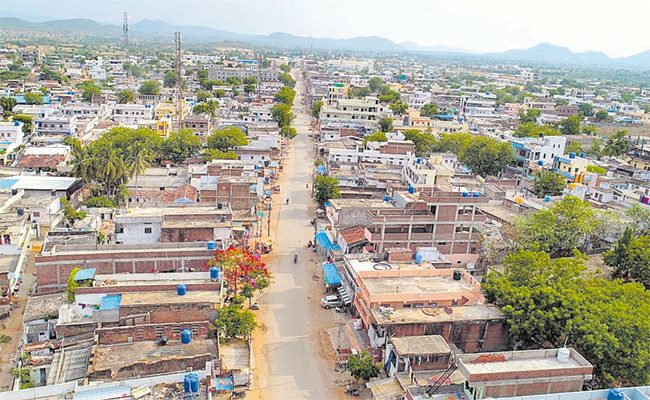
3 min read · 2 sourcesBhoodan Pochampally is a census town in the Yadadri Bhuvanagiri district of the Indian state of Telangana. It is located in Pochampalle mandal of Bhongir division. This village is Known for woven products, especially hand-woven Ikkat sarees. There are thousands of looms in the village that produce large quantities of sarees. In 2004, Pochampalli saree also received a geographical indication (GI) tag. This village was one of the three nominated under the category of best tourism villages by the United Nations World Tourism Organization. 1
History
On 18 April 1951, the historic day of the very genesis of the Bhoodan movement, Vinoba Bhave entered the Pochampally Mandal in Nalgonda district, the center of Communist activity. The organizers had arranged Vinoba's stay at Pochampally, a large village with about 700 families, of whom two-third were landless. It is widely recognised as the birthplace of the Bhoodan (land-gift) movement and as a major centre of ikat weaving, often referred to as the “silk city of India”. In 1999, the weaving industry of Bhoodan Pochampally came to limelight when a young weaver Chithakindhi Mallesham developed a machine for automating the time-consuming, laborious and painful Asu process of winding of yarn before the dyeing and weaving is done. The innovation was recognized by National Innovation Foundation – India. 1
Location and overview
Bhoodan Pochampally lies roughly 40–50 km from Hyderabad, in the eastern part of Telangana. It functions as a weaving and tourism hub for a wider cluster of surrounding villages that specialise in hand-woven ikat textiles. The name “Bhoodan Pochampally” refers to its association with the 1951 land-gift initiative led by Acharya Vinoba Bhave, while “Pochampally Ikat” refers to the local resist-dyed weaving tradition. 1
Bhoodan movement
On 18 April 1951, local landlord V. Ramachandra Reddy donated 100 acres of land following Vinoba Bhave appeal to support landless families, marking the beginning of the Bhoodan movement. Accounts identify the Pochampally donation as the spark that led to millions of acres being pledged voluntarily across India. 1
Handloom and Pochampally Ikat
Pochampally and surrounding villages are known for ikat textiles created using resist-dyed yarns woven into geometric and curvilinear patterns.The textile is legally protected under the Geographical Indications Registry, Application No. 4 (registered 31 December 2004). 1
Media and government reports note that the weaving cluster spans dozens of villages and remains a major handloom centre. 1
UNWTO ‘Best Tourism Village’ recognition
In 2021, Pochampally was shortlisted by India’s Ministry of Tourism for the UNWTO “Best Tourism Village” initiative. Later that year, Pochampally was officially recognised as one of the Best Tourism Villages at the UNWTO General Assembly in Madrid. 1
The text above is adapted from the Wikipedia article “Bhoodan Pochampally”, available under the Creative Commons Attribution-ShareAlike 4.0 licence. 1
Pochampally is census Town in Telangana, India, according to the structured record cited below. This entry was generated automatically from that record and has not yet been reviewed by a person familiar with the tradition. 2
The source record links this tradition to 3 external registers, which can be verified through the citation. 2