The tradition & historical record
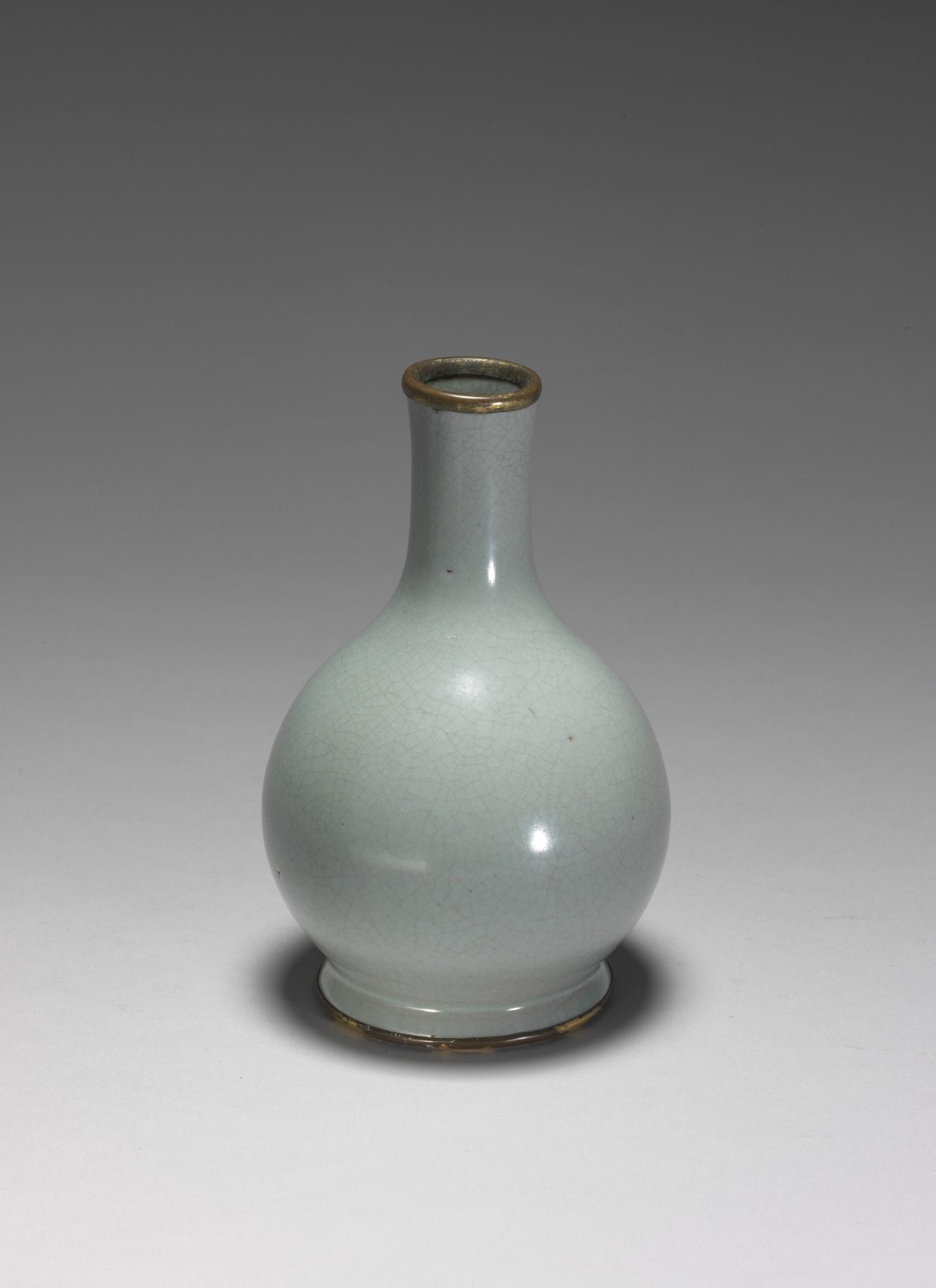
5 min read · 2 sourcesPorcelain (), also called china, is a ceramic material made by heating raw materials, generally including kaolinite, in a kiln to temperatures between 1,200 and 1,400 °C (2,200 and 2,600 °F). The greater strength and translucence of porcelain, relative to other types of pottery, arise mainly from vitrification and the formation of the mineral mullite within the body at these high temperatures. End applications include tableware, decorative ware such as figurines, and products in technology and industry such as electrical insulators and laboratory ware. The manufacturing process used for porcelain is similar to that used for earthenware and stoneware, the two other main types of pottery, although it can be more challenging to produce. It has usually been regarded as the most prestigious type of pottery due to its delicacy, strength, and high degree of whiteness. It is frequently both glazed and decorated. Though definitions vary, porcelain can be divided into three main categories: hard-paste, soft-paste, and bone china. The categories differ in the composition of the body and the firing conditions. Porcelain originated in China, the result of centuries of ceramic experimentation by Chinese potters. Depending on the definition used, the technology matured between approximately 200 and 800 CE. It later spread to other countries in Asia, then to Europe, and eventually to the rest of the world. 1
Hard paste
Hard-paste porcelain was invented in China, and it was also used in Japanese porcelain. Most of the finest quality porcelain wares are made of this material. The earliest European porcelains were produced at the Meissen factory in the early 18th century; they were formed from a paste composed of kaolin and alabaster and fired at temperatures up to 1,400 °C (2,552 °F) in a wood-fired kiln, producing a porcelain of great hardness, translucency, and strength. Later, the composition of the Meissen hard paste was changed, and the alabaster was replaced by feldspar and quartz, allowing the pieces to be fired at lower temperatures. Kaolinite, feldspar, and quartz (or other forms of silica) continue to constitute the basic ingredients for most continental European hard-paste porcelains. 1
Soft paste
Soft-paste porcelains date back to early attempts by European potters to replicate Chinese porcelain by using mixtures of clay and frit. Soapstone and lime are known to have been included in these compositions. These wares were not yet actual porcelain wares, as they were neither hard nor vitrified by firing kaolin clay at high temperatures. As these early formulations suffered from high pyroplastic deformation, or slumping in the kiln at high temperatures, they were uneconomic to produce and of low quality. 1
Formulations were later developed based on kaolin with quartz, feldspars, nepheline syenite, or other feldspathic rocks. These are technically superior and continue to be produced. Soft-paste porcelains are fired at lower temperatures than hard-paste porcelains; therefore, these wares are generally less hard than hard-paste porcelains. 1
Bone china
Although originally developed in England in 1748 to compete with imported porcelain, bone china is now made worldwide, including in China. The English had read the letters of Jesuit missionary François Xavier d'Entrecolles, which described Chinese porcelain manufacturing secrets in detail. One writer has speculated that a misunderstanding of the text could possibly have been responsible for the first attempts to use bone-ash as an ingredient in English porcelain, although this is not supported by modern researchers and historians. Traditionally, English bone china was made from two parts of bone ash, one part of kaolin, and one part of china stone, although the latter has been replaced by feldspars from non-UK sources. 1
Materials
Kaolin is the primary material from which porcelain is made, even though clay minerals might account for only a small proportion of the whole. The word paste is an old term for both unfired and fired materials. A more common terminology for the unfired material is "body"; for example, when buying materials a potter might order an amount of porcelain body from a vendor.The composition of porcelain is highly variable, but the clay mineral kaolinite is often a raw material. Other raw materials can include feldspar, ball clay, glass, bone ash, steatite, quartz, petuntse and alabaster. The clays used are often described as being long or short, depending on their plasticity. Long clays are cohesive (sticky) and have high plasticity; short clays are less cohesive and have lower plasticity. In soil mechanics, plasticity is determined by measuring the increase in content of water required to change a clay from a solid state bordering on the plastic, to a plastic state bordering on the liquid, though the term is also used less formally to describe the ease with which a clay may be worked. Clays used for porcelain are generally of lower plasticity than many other pottery clays. They wet very quickly, meaning that small changes in the content of water can produce large changes in workability. Thus, the range of water content within which these clays can be worked is very narrow and consequently must be carefully controlled. 1
Forming
Porcelain can be made using all the shaping techniques for pottery. 1
The text above is adapted from the Wikipedia article “Porcelain”, available under the Creative Commons Attribution-ShareAlike 4.0 licence. 1
porcelain is ceramic material, according to the structured record cited below. This entry was generated automatically from that record and has not yet been reviewed by a person familiar with the tradition. 2
The source record links this tradition to 51 external registers, which can be verified through the citation. 2