The tradition & historical record
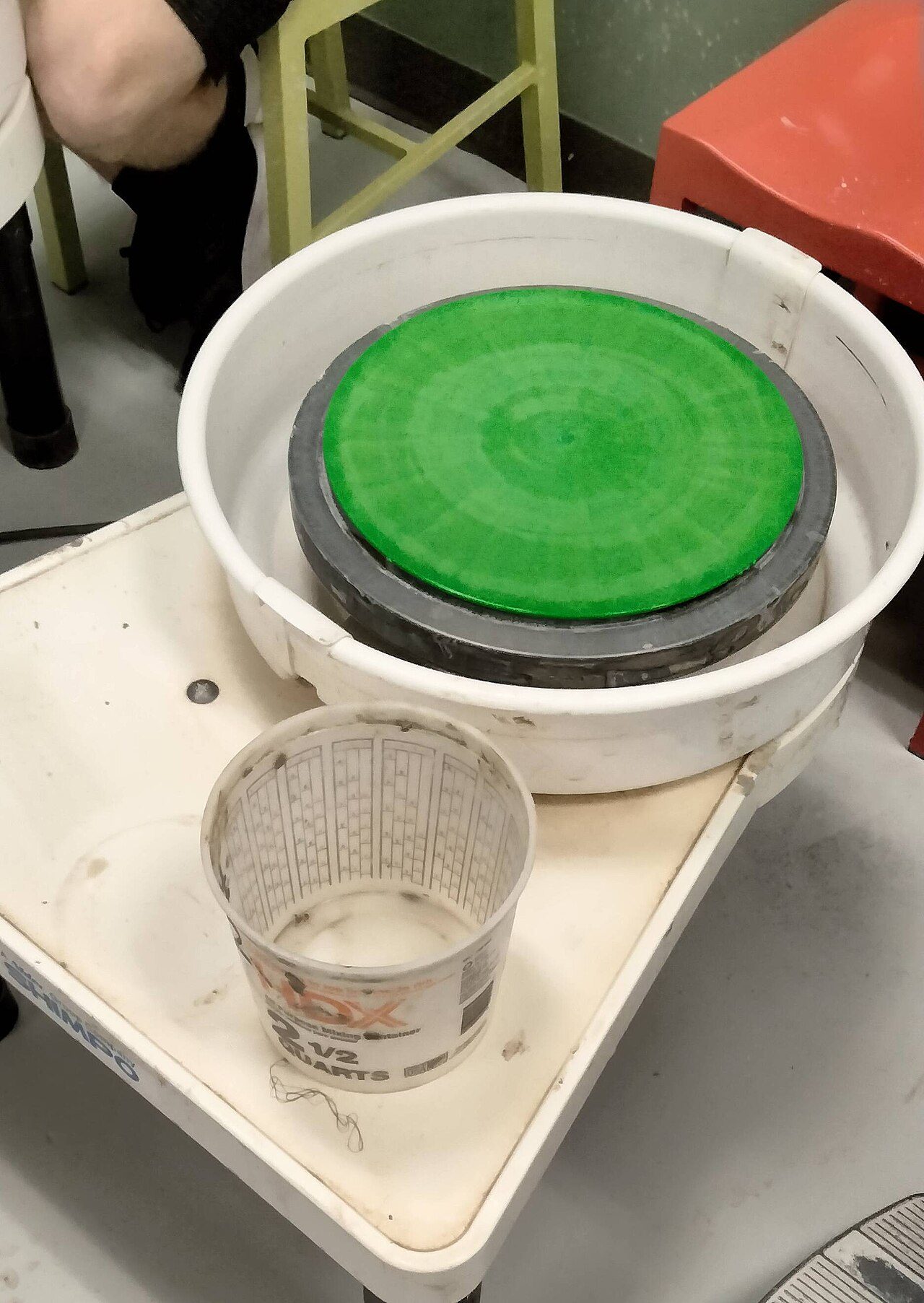
6 min read · 2 sourcesIn pottery, a potter's wheel is a machine used in the shaping (known as throwing) of clay into round ceramic ware. The wheel may also be used during the process of trimming excess clay from leather-hard dried ware that is stiff but malleable, and for applying incised decoration or rings of colour. Use of the potter's wheel became widespread throughout the Old World but was unknown in the Pre-Columbian New World, where pottery was handmade by methods that included coiling and beating. A potter's wheel may occasionally be referred to as a "potter's lathe". However, that term is better used for another kind of machine that is used for a different shaping process, turning, similar to that used for shaping of metal and wooden articles. The pottery wheel is an important component to create arts and craft products. The techniques of jiggering and jolleying can be seen as extensions of the potter's wheel: in jiggering, a shaped tool is slowly brought down onto the plastic clay body that has been placed on top of the rotating plaster mould. The jigger tool shapes one face, the mould the other. The term is specific to the shaping of flat ware, such as plates, whilst a similar technique, jolleying, refers to the production of hollow ware, such as cups. 1
History
Prior to using a wheel, all of these civilizations used techniques such as pinching, coiling, paddling, and shaping to create ceramic forms. In addition, several of these techniques continued to be used on pots on or off the wheel to decorate or create more rounded or symmetrical shapes. Most early ceramic ware was hand-built using a simple coiling technique in which clay was rolled into long threads that were then pinched and smoothed together to form the body of a vessel. In the coiling method of construction, all the energy required to form the main part of a piece is supplied indirectly by the hands of the potter. Early ceramics built by coiling were often placed on mats or large leaves to allow them to be worked more conveniently. The evidence of this lies in mat or leaf impressions left in the clay of the base of the pot. This arrangement allowed the potter to rotate the vessel during construction, rather than walk around it to add coils of clay. The oldest forms of the potter's wheel (called tourneys or slow wheels) were probably developed as an extension to this procedure. Tournettes, in use around 3500 BC in the Near East, were turned slowly by hand or by foot while coiling a pot. Only a small range of vessels were fashioned on the tournette, suggesting that it was used by a limited number of potters. The introduction of the slow wheel increased the efficiency of hand-powered pottery production. In the mid to late 3rd millennium BC the fast wheel was developed, which operated on the flywheel principle. It utilised energy stored in the rotating mass of the heavy stone wheel itself to speed the process. This wheel was wound up and charged with energy by kicking, or pushing it around with a stick, providing angular momentum. 1
Types of wheels
The use of the motor-driven wheel has become common in modern times, particularly with craft potters and educational institutions. Motor-driven wheels are the most common due to their ease of use, and accessibility. Human-powered wheels are still in use and are preferred by some studio potters. Most of these studio potters prefer these kinds of wheels because they don't use electricity, and the user can choose exactly how the wheel moves so that it's an entirely tactile experience. 1
Industrialization
Social consequences that can arrive of these technological advancements include increased economic advancements in the sales of pottery created using the potter’s wheel and industrialization of the ceramics processes. The potter’s wheel greatly increased the production rate of ceramics, which allowed for more products to be created. With the industrialization of ceramics in Japan, ceramics also lost some of its historical value, and some techniques and meanings of the ceramics were lost in the process. 1
Techniques of throwing
A skilled potter can quickly throw a vessel from up to 15 kg (30 lb) of clay. Alternatively, by throwing a vessel and adding coils of clay then throwing again, pots may be made even taller, with the heat of a blowlamp being used to firm each thrown section before adding the next coil. Similarly, multiple sections may be thrown and combined to create large vessels. Large wheels and masses of clay can also allow for multiple people to work on a pot simultaneously, which can create very large ceramic pieces. This practice is used in Jingdezhen, China, where 3 or more potters may work on one pot at the same time. There are a variety of methods to throwing, though almost all involve the following steps in some form: center the clay on the wheel, open a hole in the clay, creating a donut shaped ring of clay around the base of the pot, then raise or shape the walls to create the pot's final shape. The specifics of these steps, including the motions of the hands, can vary from culture to culture, as well as from potter to potter. In most cultures, the wheel spins counterclockwise and the right hand is placed on the outside of the pot as it is thrown. Japanese pottery is thrown oppositely, with the wheel spinning clockwise and the right hand on the interior of the pot. 1
Personal preferences
Modern wheels powered by electric motors often allow for rotation in either direction, allowing the potter to choose which direction works best for their technique, hand dominance and personal preferences. In addition to this, there are many other things people change based on personal preference. For example, some may debate about how much water a potter should use; many believe that using more water is better because it lubricates the clay more, while others prefer a dry clay body. Another way people differ in their methods is wheel direction. While it is more common for right-handed people to throw counterclockwise, some feel it is more natural for them to throw clockwise. 1
The text above is adapted from the Wikipedia article “Potter's wheel”, available under the Creative Commons Attribution-ShareAlike 4.0 licence. 1
potter's wheel is machine used in the shaping of round ceramic ware, according to the structured record cited below. This entry was generated automatically from that record and has not yet been reviewed by a person familiar with the tradition. 2
The source record links this tradition to 20 external registers, which can be verified through the citation. 2