The tradition & historical record
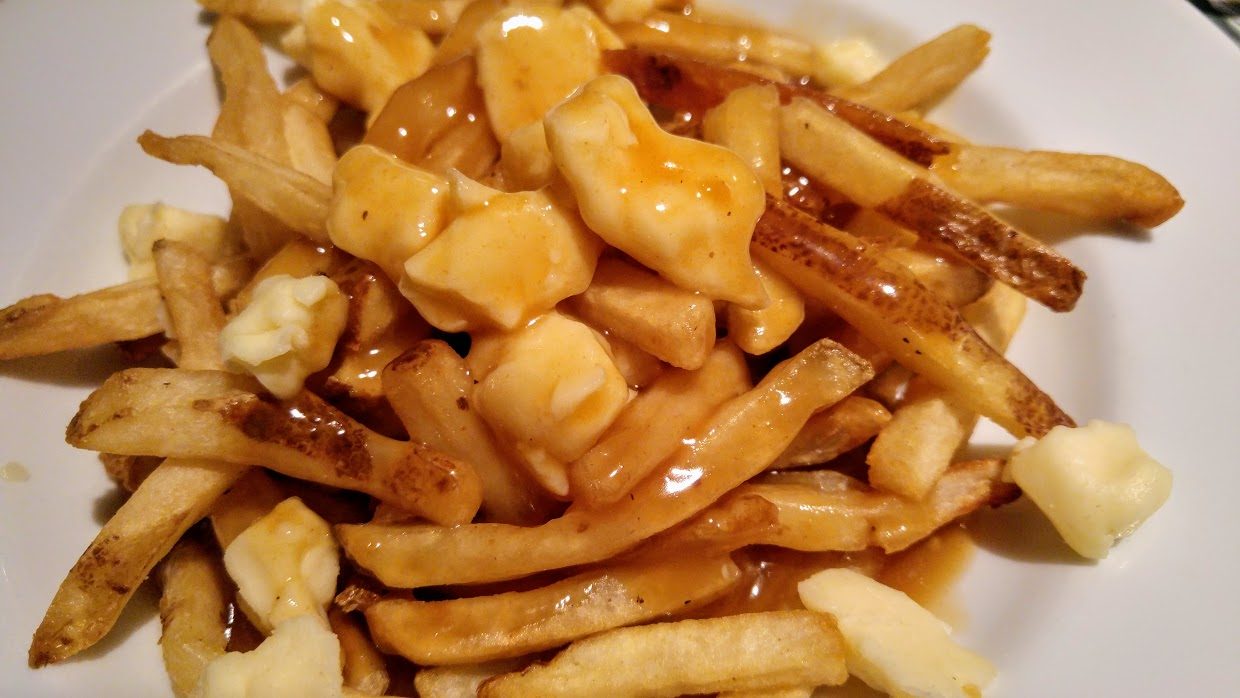
6 min read · 2 sourcesPoutine is a dish of French fries and cheese curds topped with a hot brown beef and chicken stock gravy. It emerged in the Centre-du-Québec region of Quebec in 1959, though its exact origins are uncertain, and there are several competing claims regarding its origin. For many years, it was used by some to mock Quebec society. Poutine later became celebrated as a symbol of Québécois culture and the province of Quebec. It has long been associated with Quebec cuisine, and its rise in prominence has led to its growing popularity throughout the rest of Canada. Annual poutine celebrations occur in Montreal, Quebec City, and Drummondville, as well as Toronto, Ottawa, New Hampshire, and Chicago. It has been called Canada's national dish, though some critics believe this labeling represents cultural appropriation of the Québécois or Quebec national identity. Many variations on the original recipe are popular, leading some to suggest that poutine has emerged as a new dish classification in its own right, as with sandwiches or dumplings. 1
Origins
The dish was created in the Centre-du-Québec area in the late 1950s. Several restaurants in the area claim to be the originators of the dish, but no consensus exists. 1
Le Lutin qui rit, Warwick – Restaurateur Fernand Lachance of Le Café Idéal (later Le Lutin qui rit), is said to have exclaimed in 1957, "ça va faire une maudite poutine!" (English: "It will make a damn mess!") when asked by a regular to put a handful of cheese curds in a take-out bag of french fries. The dish "poutine" appears on the establishment's 1957 menu. Lachance served this on a plate, and beginning in 1962 added hot gravy to keep it warm. Le Roy Jucep, Drummondville – This drive-in restaurant served french fries with gravy, to which some customers would add a side order of cheese curds. Owner Jean-Paul Roy began serving the combination in 1958 and added it to the menu in 1964 as "fromage-patate-sauce". Felt to be too long a name, this was later changed to poutine for a cook nicknamed "Ti-Pout" and a slang word for "pudding". The restaurant displays a copyright registration certificate, issued by the Canadian Intellectual Property Office, which alludes to Roy having invented poutine. La Petite Vache, Princeville – Customers would mix cheese curds with their fries, a combination which was added to the menu. One option included gravy and was called the "Mixte". According to Canadian gastronomy researcher Sylvain Charlebois, while Warwick is the birthplace of poutine, Drummondville's Jean-Paul Roy is the true inventor since Le Roy Jucep was the first to sell poutine with three combined ingredients, in 1964. The Oxford Companion to Cheese takes a different perspective, stating that the inventors were not chefs but the customers who chose to add cheese curds to their fries. 1
Development
Poutine was consumed in small "greasy spoon" diners (commonly known in Quebec as cantines or casse-croûtes), pubs, at roadside chip wagons (commonly known as cabanes à patates, literally "potato shacks"), and in ice hockey arenas. For decades, it remained a country snack food in Quebec's dairy region, due to the brief period in which freshly made cheddar cheese curds retain their characteristic soft, squeaky texture. In 1969, poutine was brought to Quebec City in Ashton Leblond's food truck (a business which grew into the Chez Ashton fast-food chain). In the early 1970s, La Banquise began serving poutine in Montreal, followed by the Burger King chain in 1983. Others that followed used inferior cheese and the dish's reputation declined. Poutine was largely perceived as an unsophisticated backwoods creation or unhealthy junk food to be consumed after a night of drinking. Montreal chefs would make poutine to feed their staff but had not dared to put it on their menus. In the 1990s, attempts were made to elevate the dish by using baked potatoes and duck stock. In November 2001, Martin Picard of bistro Au Pied de Cochon began serving a foie gras poutine which was praised by customers and food critics. This influenced chefs in Toronto and Vancouver to feature poutine on upscale menus. Chef Mark McEwan served lobster poutine at his Bymark eatery, and chef Jamie Kennedy served braised beef poutine at his eponymous restaurant. Over the next decade, poutine gained acceptance and popularity in all types of restaurants, from haute cuisine to fast food, and spread across Canada and internationally. 1
Etymology
The Dictionnaire historique du français québécois lists 15 meanings of poutine in Québécois and Acadian French, most of which are for kinds of food; the word poutine in the meaning "fries with cheese and gravy" is dated to 1982 in English. Other senses of the word have been in use since at least 1810. According to Merriam-Webster, a popular etymology is that poutine is from a Québécois slang word meaning "mess", and that others attribute it to the English word pudding. The exact provenance of the word poutine is uncertain. The Dictionnaire historique mentions the possibility that the form poutine is simply a gallicization of the word pudding. However, it considers it more likely that the term was inherited from regional languages in France, with some meanings shaped later by the influence of the similarly sounding English word pudding. It cites the Provençal forms poutingo "bad stew" and poutité "hodgepodge" or "crushed fruit or foods"; poutringo "mixture of various things" in Languedocien; and poutringue or potringa "bad stew" in Franche-Comté as possibly related to poutine. The meaning "fries with cheese and gravy" of poutine is among those held as probably unrelated to pudding, provided the latter view is correct. 1
Recipe
The traditional recipe for poutine consists of: 1
French fries: These are usually of medium thickness and fried (sometimes twice) such that the inside stays soft, while the outside is crispy. Cheese curds: Fresh cheese curds are used to give the desired texture. The curd size varies, as does the amount used. Brown gravy: Traditionally, it is a light and thin beef or chicken gravy, somewhat salty and mildly spiced with a hint of pepper; or a sauce brune, which is a combination of chicken and beef stock. Poutine sauces (French: mélange à sauce poutine) are sold in Quebec, Ontario, and Maritime grocery stores in jars or cans and in powdered mix packets; some grocery chains offer their own house-brand versions. Many stores and restaurants also offer vegetarian gravy. To maintain the texture of the fries, the cheese curds and gravy are added immediately before serving the dish. The hot gravy is usually poured over room-temperature cheese curds, so they are warmed without melting completely. The thin gravy allows all the fries to be coated. The serving dish typically has some depth to act as a basket for the fries so that they retain their heat. 1
Variations
The texture, temperature and viscosity of poutine's ingredients differ and continuously change as the food is consumed, making it a dish of highly dynamic contrasts. 1
The text above is adapted from the Wikipedia article “Poutine”, available under the Creative Commons Attribution-ShareAlike 4.0 licence. 1
poutine is dish of french fries, cheese curds and gravy, according to the structured record cited below. This entry was generated automatically from that record and has not yet been reviewed by a person familiar with the tradition. 2
The source record links this tradition to 10 external registers, which can be verified through the citation. 2