The tradition & historical record
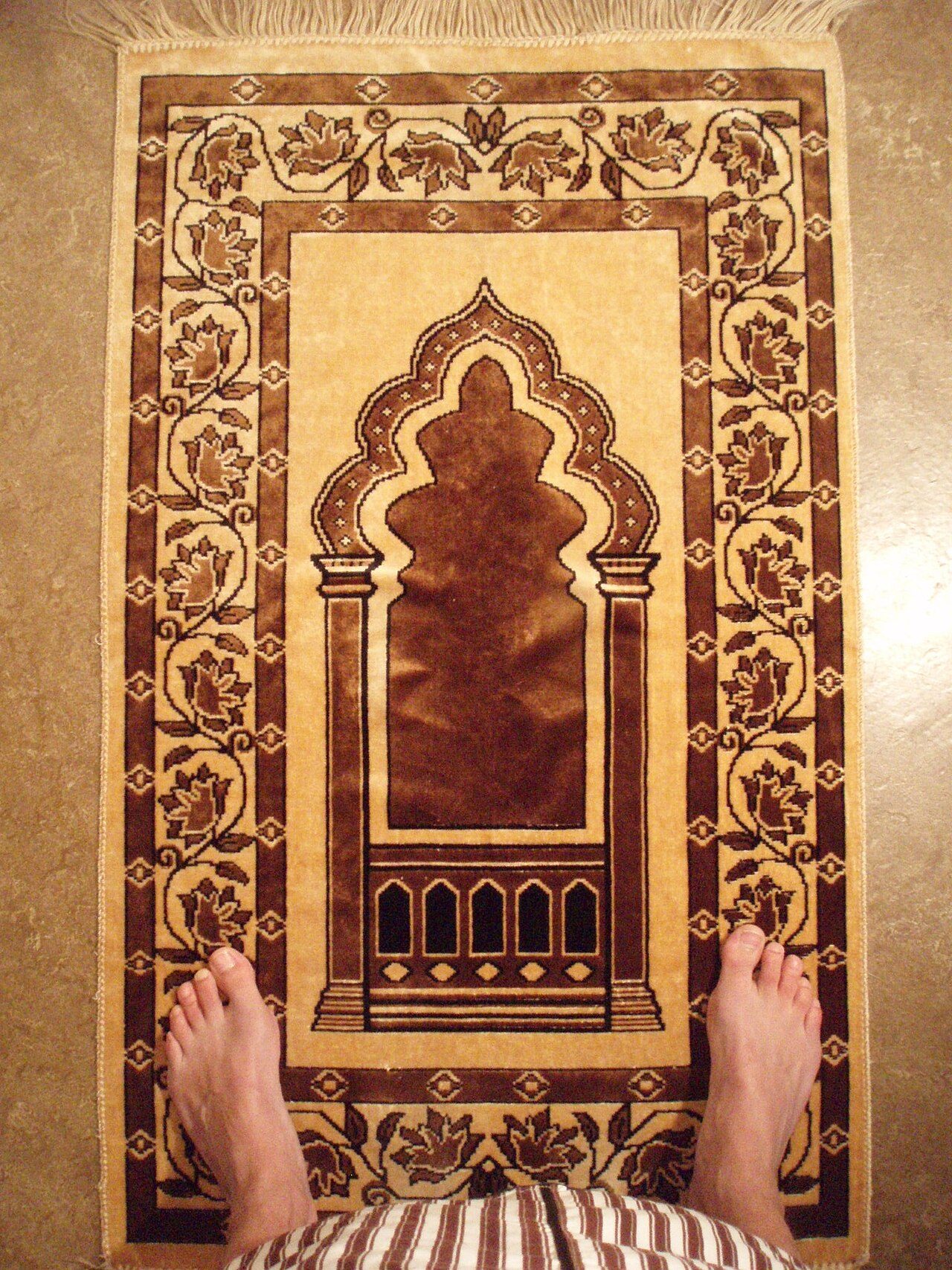
7 min read · 2 sourcesA prayer rug or prayer mat, also called Sajadah, is a piece of fabric, sometimes a pile carpet, used by Muslims during prayer. It is also used by some Christians, especially in Orthodox Christianity, and to a lesser extent by some denominations of Jews. In Islam, a prayer rug is placed between the ground and the worshipper for cleanliness during the various positions of Islamic prayer. These involve prostration and sitting on the ground. A Muslim must have wudu (ablution) before prayer, and must pray in a clean place. Prayer rugs are also used by some Oriental Orthodox Christians for Christian prayer involving prostrations in the name of the Trinity, as well as during the recitation of the Alleluia and Kyrie eleison. Its purpose is to maintain a cleanly space to pray to God and shoes must be removed when using the prayer rug. Among Russian Orthodox Christians, particularly Old Ritualists, a special prayer rug known as the Podruchnik is used to keep one's face and hands clean during prostrations, as these parts of the body are used to make the sign of the cross. Most prayer mats are manufactured by weavers in a factory. The design of a prayer mat is based on the village it came from and its weaver. These rugs are usually decorated with many beautiful geometric patterns and shapes. They are sometimes even decorated with images. These images are usually important Islamic sites, such as the Kaaba, Imam Husayn Shrine or Imam Reza Shrine, but they are never animate objects. 1
In Judaism
Prayer rugs are used in some Jewish communities. In the US they are most commonly seen today in the Karaite community. However, they were used daily or with a similar frequency by Sephardi and Mizrahi Jews historically. Ashkenazi Jews use them less often, as prostration and kneeling is less common during prayers (mainly happening on Yom Kippur). Some Mizrahim still use prayer rugs, but this has fallen out of common practice in some communities, likely due to Ashkenazi influence. This influence has even impacted some Karaites. In Hebrew these rugs are called yeriah, a term also used for the curtains and tent hangings of the Mishkan. Abraham Maimonides was a promoter of the practice of prostration and kneeling, but disliked the use of padded prayer rugs and poufs for kneeling. This was likely due to the fact that he promoted it as an ascetic, Sufi influenced custom (his view was that Sufis had preserved customs of Jews from the time just after and before the Temple was destroyed), so padding detracted from the purpose. There are varying halachic opinions on the use of prayer rugs, with some rabbis viewing them as originally pagan and therefore prohibited, but Rambam permits them, and they are required to be used during prostration and kneeling. If one does not use a rug, towel, etc, one cannot prostrate, especially on a stone floor- to do so is seen as an imitation of Temple practice that was prohibited, of potentially being a practice related to idolatry, and there are some questions about the ritual purity of rugs. It is possible that prostration and kneeling (and therefore, prayer rugs) were a more common, perhaps daily Jewish practice in antiquity. 1
In Christianity
Prayer rugs are used in some traditions of Oriental Orthodox Christianity and Western Orthodox Christianity (though this is not common), to provide a clean space for believers to offer Christian prayers to God. During the seven fixed prayer times of Oriental Orthodox Christians, believers incorporate prostrations in the praying of the canonical hours that are performed facing east, with Copts "prostrating three times in the name of the Trinity; at the end of each Psalm [...] while saying the 'Alleluia'; and multiple times during the more than forty Kyrie eleisons" (cf. Agpeya). Indian Orthodox Christians prostrate thrice during the Qauma prayer, at the words "Crucified for us, Have mercy on us!", thrice during the recitation of the Nicene Creed at the words "And was incarnate of the Holy Spirit...", "And was crucified for us...", and "And on the third day rose again...", as well as thrice during the Prayer of the Cherubim while praying the words "Blessed is the glory of the Lord, from His place forever!" (cf. Shehimo). These prayer rugs are often blessed by Christian clergy in the church before ever being used; in this way, when a Christian prays at home, it is as if they are praying in their local church. Additionally, carpets cover the floors of parishes in denominations such as the Ethiopian Orthodox Tewahedo Church on which Christians prostrate in prayer. Among Russian Orthodox Old Ritualists, a special prayer rug known as the Podruchnik is used to keep one's face and hands clean during prostrations, as these parts of the body are used to make the sign of the cross. 1
Significance
While not explicitly mandated in the Quran or Ḥadīt̲h, prayer rugs, known in one source as sad̲j̲d̲j̲āda, are nonetheless deeply embedded in Islamic practice and material culture. They represent a physical and symbolic delineation of sacred space, allowing the worshiper to create a ritually pure area for prayer. The presence of the miḥrāb—a stylized representation of the prayer niche found in mosques—visually orients the individual towards the Kaaba in Mecca, the direction Muslims face during prayer. Prayer rugs, particularly those from the Safavid and Qajar periods, offer a window into broader cultural and intellectual trends in the Islamic world. During the Safavid era, prayer rug designs emphasized explicitly Islamic themes and specifically Shi'a Islam, with inscriptions reinforcing religious identity. Conversely, Qajar prayer rugs reflect a growing focus on the individual, with patron's names, images of kings and heroes, and motifs inspired by contact with the West, signaling a shift in the understanding of the rug's purpose and meaning. Ultimately, the prayer rug, while a simple object in form, embodies the connection between the material and the spiritual, the individual and the communal, and historical trends and artistic expression in the Islamic world. 1
Background
In Islamic world there are two basic types of prayer rug, one designed with a single mihrab and meant for individual worship, the other with multiple niches and intended for a place of public prayer such as a mosque. This second type is known as saf. A prayer rug is characterized by a niche at one end, representing the mihrab in every mosque. The mihrab represents not just the direction of prayer but also a gateway to the divine or a symbolic connection to the mosque architecture. Many rugs also show one or more mosque lamps, a reference to the Verse of Light in the Qur'an. Additionally, the use of floral and tree motifs, particularly the tree of life, can be linked to concepts of paradise, eternity, and immortality. 1
Regional variations of prayer rugs
Using some type of floor covering for prayer was known early in Islamic history. Though there is evidence that carpets may have been produced in Anatolia before Turkish invasions in the 11th century, no examples survive. 1
The text above is adapted from the Wikipedia article “Prayer rug”, available under the Creative Commons Attribution-ShareAlike 4.0 licence. 1
prayer rug is piece of fabric, sometimes a pile carpet, used by Muslims and some Christians during prayer, according to the structured record cited below. This entry was generated automatically from that record and has not yet been reviewed by a person familiar with the tradition. 2
The source record links this tradition to 23 external registers, which can be verified through the citation. 2