The tradition & historical record
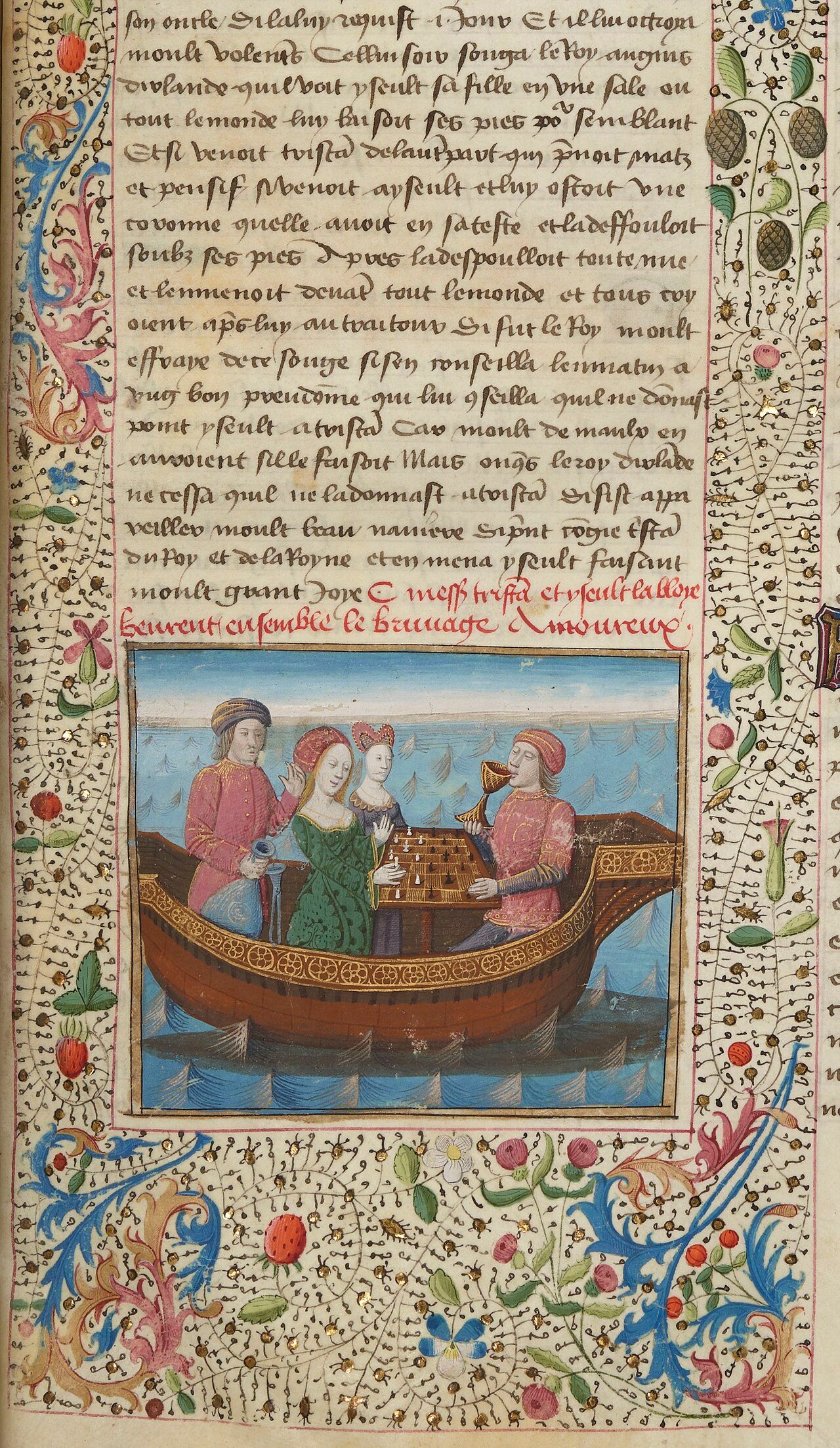
6 min read · 2 sourcesThe Prose Tristan (French: [Roman de] Tristan en prose), also known as Tristan de Léonois, is a 13th-century Old French expanded adaptation of the Tristan and Iseult legend into a vast prose romance (although containing lyrical passages). It was the first work to fully integrate the Tristan narrative into the framework of the Arthurian legend, presenting Tristan as a top-tier member of the Round Table. The Prose Tristan was also the first major Arthurian prose cycle produced after the Vulgate Cycle, which had a particular influence on its later sections. Several distinct versions of the work exist, most notably the "short" and "long" versions. The Prose Tristan was one of the most popular, widely copied, and influential works in medieval European literature. It consequently became the definitive version of the Tristan story in the late Middle Ages and significantly influenced the subsequent Arthurian works such as the Post-Vulgate Cycle and Le Morte d'Arthur. Its strong impact on the Arthurian legend included the introduction of popular characters such as Palamedes, Dinadan, and Lamorak. 1
Versions
According to the traditional but long-debated theory, the Prose Tristan originally existed in a "short version," also known as the First Version or Version I (abbreviated V.I or V1), which was later expanded and reworked sometime after 1240 to create the more popular "long version," also referred to as the Second Version or Version II (V.II or V2). Other so-called "main" and "unique" versions also exist, including Version III (a composite of V1 and V2 with additional material from Lancelot) and Version IV (V2 with Alixandre d'Orphelin). The four principal versions together survive in over 80 manuscripts, along with several unique single-manuscript variants. According to its prologue, the first part of the Prose Tristan (that is, everything preceding the Grail material) is titled L'Estoire monseignor Tristan and attributed to an English knight named Luce de Gast, who purportedly translated it from Latin. However, the claim of a Latin original has been widely doubted by scholars. In the V2 manuscripts containing the epilogue, the work is called Li Livres dou Bret (or li Bret), and its author identifies himself as Hélie de Boron, claiming to be the nephew of Robert de Boron, the reputed author of the Arthurian Grail cycle. Hélie claims to have continued the narrative where Luce left off, drawing additional material from Robert and Walter Map. In certain prologues, both Hélie and Luce are credited jointly. Hélie alone is also cited as the author of the related romances Meliadus and Guiron. It is possible that the actual authors of these works, as well as the Post-Vulgate Cycle, all of them probably written around the same time, knew each other and exchanged their ideas. The dating of the work remains uncertain. 1
Synopsis
The prose narrative uses entrelacement (interweaving) to mix the legend's traditional love potion romantic tragedy with knightly quests, jousting tournaments, and social commentary. It also provides an expanded account of the history of Tristan and his lineage, tracing his ancestry back to the time of Christ: Tristan is described as a descendant of Bron, the brother-in-law of Joseph of Arimathea. After a detailed account of his ancestors' successive unions, the story recounts how Mark becomes King of Cornwall, and his sister Helyabel marries Meliadus, the King of Lyonesse (Leonois). When Meliadus disappears after being bewitched by a fairy, Helyabel dies of grief while giving birth to a son, who is named Tristan. With the assistance of Merlin, the infant Tristan is placed under the care of the nobleman Governal, who becomes his tutor. Governal takes Tristan from Cornwall to Gaul, where he is raised at the court of King Pharamond. Upon Meliadus's return, he marries the daughter of King Hoel of Brittany. Jealous of Tristan, the new queen attempts to poison him, forcing him to flee to Cornwall and seek refuge at King Mark's court. There, he completes his knightly training following his father's murder. Tristan also demonstrates non-martial talents, such as playing the harp and singing. As a member of King Mark's court, Tristan defends Cornwall against the Irish warrior Morholt. After being wounded in combat, he travels to Ireland, where he is healed by Iseult, a skilled healer and Morholt's niece. When the Irish learn he has slain their champion, Tristan is forced to flee. Later, he returns to Ireland in disguise to seek Iseult's hand in marriage on behalf of his uncle, King Mark. 1
Analysis
The Encyclopædia Britannica describes the Prose Tristan as "fundamentally an adaptation of the Tristan story to an Arthurian setting [that] complicates the love theme of the original with the theme of a love rivalry between Tristan and the converted Saracen Palamède and represents the action as a conflict between the treacherous villain King Mark and the 'good' knight Tristan." The Bibliothèque nationale de France characterizes it as "an immense fresco based on the fusion of the two main sources of inspiration for the Matter of Britain: the story of the Cornish lovers and the legend of King Arthur and the Knights of the Round Table. The novel then becomes a tale of chivalry, and Tristan is integrated into the Arthurian world as one of the best knights of the court and a participant in the Quest for the Grail (...). As for the couple formed by Tristan and Isolde, it is comparable to that formed by Lancelot and Guinevere in the Lancelot en prose." The first part of the work remains close to the traditional Tristan narrative as told by earlier poets such as Béroul and Thomas of Britain, although many episodes are reinterpreted or significantly modified to align with the world and chronology of the Vulgate Cycle. Tristan's parents are given new names and expanded backstories, and the overall tone has been described as "more realistic" than that of the earlier verse romances, even though the characters occasionally break into song. Key episodes from the earlier Tristan tradition—particularly the story of the love potion—are preserved, but the lovers' separation introduces new and numerous adventures. During their separation, Tristan and Iseult exchange letters and lais of love, giving the narrative a lyrical quality. 1
Legacy
The Prose Tristan enjoyed considerable success until the end of the 15th century and was included in several of the most prestigious medieval libraries. It had a significant influence on later medieval literature and subsequent treatments of the Arthurian legend. Characters such as Palamedes, Dinadan, and Lamorak—all of whom first appear in the Tristan—gained lasting popularity in later works. The pagan knight Palamedes even became the central figure of the Romance of Palamedes, a later composition that elaborates on episodes from the Tristan. 1
Modern editions
Before any modern editions of the Prose Tristan were undertaken, scholars relied on an extended summary and analysis of the manuscripts compiled by Eilert Löseth i… 1
The text above is adapted from the Wikipedia article “Prose Tristan”, available under the Creative Commons Attribution-ShareAlike 4.0 licence. 1
Prose Tristan is 13th-century French Arthurian romance, according to the structured record cited below. This entry was generated automatically from that record and has not yet been reviewed by a person familiar with the tradition. 2
The source record links this tradition to 3 external registers, which can be verified through the citation. 2