The tradition & historical record
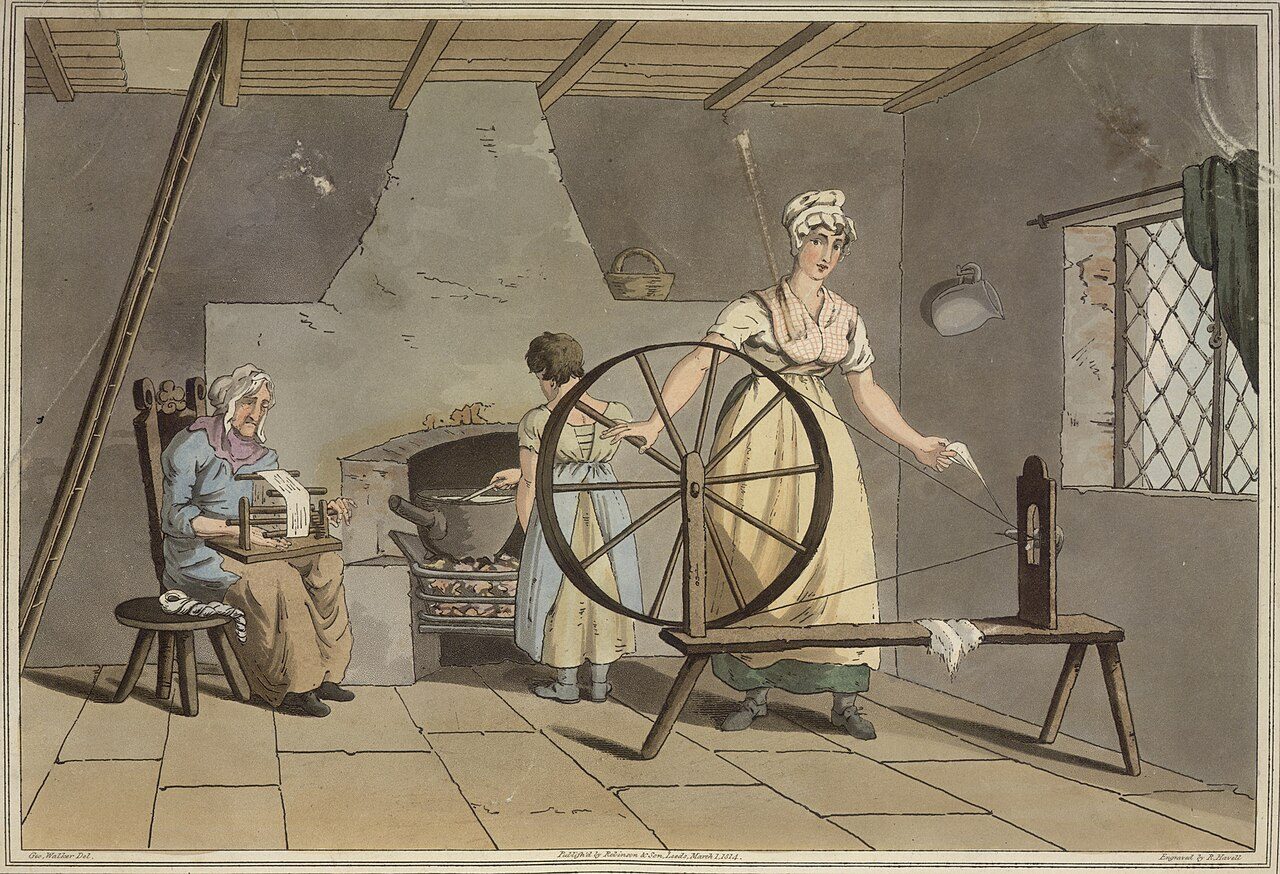
6 min read · 2 sourcesProto-industrialization is the regional development, alongside commercial agriculture, of rural handicraft production for external markets. Cottage industries in parts of Europe between the 16th and 19th centuries had long been a niche topic of study. In the early 1970s, some economic historians introduced the label "proto-industrialization", arguing that these developments were the main cause of the economic and demographic growth and social change that occurred in Europe over this period, and of the Industrial Revolution that followed. Several theories were proposed to explain the mechanisms of this proposed causation. Proto-industrialization theories have been challenged by other historians. They stress the importance of other factors that are downplayed in proto-industrialization theories. Empirical studies have demonstrated a variety of economic and demographic responses to proto-industrialization. In several cases it led to de-industrialization. Later researchers suggested that similar conditions had arisen in other parts of the world, including Mughal India and Song China. A proto-industrial and even partially industrial economy has moreover been suggested for the Roman Empire between the 1st and 4th centuries AD. 1
Theories
The concept was developed and named by Franklin Mendels in his 1969 doctoral dissertation on the rural linen industry in 18th-century Flanders and popularized in his 1972 article based on that work. Mendels argued that using surplus labor, initially available during slow periods of the agricultural seasons, increased rural incomes, broke the monopolies of urban guild systems and weakened rural traditions that had limited population growth. The resulting increase in population led to further growth in production, in a self-sustaining process that, Mendels claimed, created the labour, capital and entrepreneurial skill that led to industrialization. Other historians expanded on these ideas in the 1970s and 1980s. In their 1979 book, Peter Kriedte, Hans Medick and Jürgen Schlumbohm expanded the theory into a broad account of the transformation of European society from feudalism to industrial capitalism. They viewed proto-industrialization as part of the second phase in this transformation, following the weakening of the manorial system in the High Middle Ages. Later historians identified similar situations in other parts of the world, including India, China, Japan and the former Muslim world. The applicability of proto-industrialization in Europe has since been challenged. Martin Daunton, for example, argues that proto-industrialisation "excludes too much" to fully explain the expansion of industry: not only do proponents of proto-industrialisation ignore the vital town-based industries in pre-industrial economies, but also ignores "rural and urban industry based upon non-domestic organisation"; referring to how mines, mills, forges and furnaces fit into the agrarian economy. 1
Europe
Mendels' initial coining of "proto-industrialisation" referred to commercial activities in 18th-century Flanders and much study focused on the region. Sheilagh Ogilvie wrote, "Proto-industries arose in almost every part of Europe in the two or three centuries before industrialization." Rural proto-industries were often affected by guilds, which retained major influence over rural manufacturing in Switzerland (until the early 17th century), France and Westphalia (until the later 17th century), Bohemia and Saxony (until the early 18th century), Austria, Catalonia, and the Rhine area (until the later 18th century) and Sweden and Württemberg (into the 19th century). In other areas of Europe, guilds excluded all forms of proto-industry, including in Castile and parts of northern Italy. Political struggles occurred between proto-industries and regional guilds that sought to control them, as well against urban privileges or customs privileges. Bas van Bavel argued that some non-agriculture activities in the Low Countries reached a proto-industrial extent as early as the 13th century, though with regional and temporal differences, with a peak in the 16th century. Van Basel observes that Flanders and Holland developed as urbanised regions (a third of Flanders' population being urban in the 15th century, and over half of Holland's population in the 16th century) with a commercialised countryside and developed export markets. Flanders saw the predominance of labor-intensive rural activities such as textile production, while Holland saw the predominance of capital-intensive urban activities such as shipbuilding. 1
Switzerland
Proto-industrialization in Switzerland developed primarily around cities such as Geneva, St. Gallen, and Zurich, which participated little in mercenary service and where elites sought alternative economic activities. The system was characterized by the commercialization of peasant technologies using indigenous raw materials: flax in pre-Alpine hill regions of northeastern Switzerland and the Aargau-Lucerne border area, wool in the Fribourg Pre-Alps and Canton of Glaris, and iron ore and wood in the Jura Mountains. As the system matured, imported materials like silk and cotton became increasingly important. Rural entrepreneurship played a central role, with merchants providing consumer goods to populations no longer living in autarky. The indebtedness of rural populations to these merchants created a system where commercial capital was transformed into proto-industrial capital through advances on goods and subsequent artisanal work arrangements. This often involved the truck system, which contemporaries recognized as exploitative. Proto-industrialization flourished in areas of extensive agriculture or those with significant social inequality. In pre-Alpine regions, it combined with extensive livestock farming, while in wine-growing areas along Lake Zurich, it coexisted with intensive agriculture through gender-based labor division—women worked in silk production while men served as agricultural laborers. The proximity to cereal-exporting regions of Southern Germany (Alsace for Basel, Swabia for northeastern Switzerland) further supported this development. The system significantly altered demographics and lifestyles, allowing rural households to participate in market economies and adopt new consumption patterns including white bread, meat, coffee, and tobacco. 1
Mughal Empire
Some historians have identified proto-industrialization in the early modern South Asia, mainly in the wealthiest and largest subdivision of Mughal Empire, the Bengal Subah. The eastern part of Bengal (today's modern Bangladesh) was globally prominent in industries such as textile manufacturing and shipbuilding, and it was a major exporter of silk and cotton textiles, steel, saltpeter, and agricultural and industrial produce in the world. The region singlehandedly accounted for 40% of Dutch imports outside Europe. 1
Song China
Economic development in the Song dynasty (960–1279) has often been compared to proto-industrialization or an early capitalism.… 1
The text above is adapted from the Wikipedia article “Proto-industrialization”, available under the Creative Commons Attribution-ShareAlike 4.0 licence. 1
proto-industrialization is regional development, alongside commercial agriculture, of rural handicraft production for external markets, according to the structured record cited below. This entry was generated automatically from that record and has not yet been reviewed by a person familiar with the tradition. 2
The source record links this tradition to 7 external registers, which can be verified through the citation. 2