The tradition & historical record
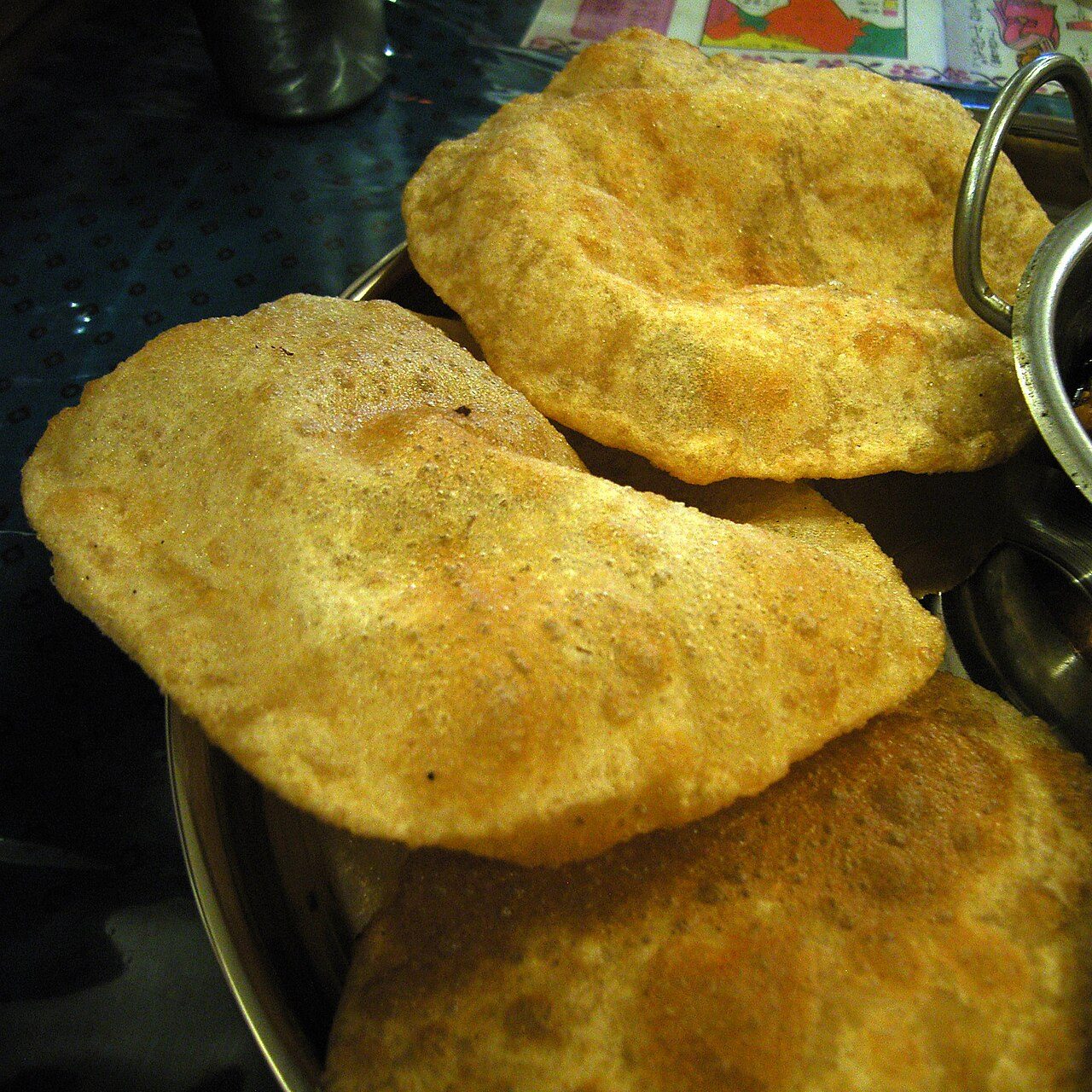
7 min read · 2 sourcesPuri (also poori, IPA: [puːɾiː]) is a type of deep-fried flatbread, with an unleavened wheat dough. Puri originated from the northern Indian subcontinent, where it is one of the most common flatbreads; it is a staple food in parts of the subcontinent. It resembles chapati but is deep-fried. Similar deep-fried breads from the region include bhatura, luchi, and kachori. Puri is made of wheat flour, typically atta, which forms a dough with oil and water. This is rolled into circles that inflate while deep-frying. Due to the cooking method, puri is high in fat and calories. Puris are commonly served as a breakfast or snack, typically paired with other foods. It may be paired with savory foods, such as potato or chickpea curry, or with sweets. Variants of puri may use different types of flour or add puréed vegetables to the dough. Other variants are stuffed. Small, spherical puris are used for panipuri and sev puri, while flat puris are used for papri chaat and bhel puri; these dishes are classified as chaat. Foods resembling puri may have existed in ancient India, and recipes were recorded by the fifteenth century. Puri is often served on holidays and other events. It is also served as in Hindu prayer as prasadam, offerings to deities. 1
Name
The word puri, or poori, entered English from Hindi (पूरी). It originates from the Sanskrit word पूर (pura), meaning either 'cake' or 'blown up'. The Sanskrit word purika described a fried gram flour food more similar to modern papri than puri. 1
Preparation
Puris are flatbreads prepared with wheat flour along with either oil or ghee, enough water to form a stiff dough, and a small amount of salt. The proportions are approximately 48% water, 2%–8% oil, and 0.5%–1.5% salt. The flour is commonly atta (whole wheat). Maida (white flour) is used in some regions, though its use is often viewed as inferior. After kneading and resting, the dough is shaped into balls, about 2 to 3 cm across, typically cut from a cylinder. These are rolled out in circles, about 10 to 17 cm across and 1 to 3 mm thick. This may also be done using a chapati press or using a dough sheeting machine that may produce thousands of puris per hour. The oil content facilitates the rolling of the dough, preventing stickiness. 1
The circles of dough are deep fried in ghee or vegetable oil in a karahi, a type of pot whose rounded shape uses less oil and avoids spillage. Common frying oils include rice bran oil and soybean oil. The dough is fried for about 30–40 seconds at about 200–220 °C (390–430 °F) or for 60–180 seconds at 180–190 °C (360–370 °F). The cooking time depends on volume, thickness, and the amount of moisture and oil. While deep frying, puris puff up because moisture in the dough changes into steam, expanding to ten times the initial volume. As steam forms, a puri floats to the top of the oil, causing it to cook on one side at a time. This requires it to be flipped, and it is often pushed down to be coated in oil. The steam pushes the crust away from the crumb and results in partial starch gelatinisation between the layers, which is high due to the high temperature. Puri has a much denser crumb than yeast breads. Puri is cooked until browned, and the oil is drained. It is served hot. The texture is soft due to the oil. 1
Serving
Puri may be a breakfast, a light meal, or a snack. Like other Indian breads, puri is usually eaten with other foods, though it may be eaten on its own. It may be eaten with sweet or savoury foods. The most common accompaniments are curries of chickpeas or potatoes. Puri served with potato curry comprises the North Indian breakfast puri-bhaji. A Punjabi breakfast may pair puri with both potato and chickpea curries. Another potato curry served with puri is the Gujarati and Parsi dish papeta nu saakh. The chickpea curry chana masala, a common street food, is served with puri. Other savory accompaniments include pickle or fried vegetables. Sweets that are commonly served with puri include the East Indian pua and the Western Indian shrikhand, doodhpak, and aamras. The sweet jalebi is often eaten alongside puri for breakfast, served with halwa in North India. The Tamil sweet pal payasam consists of puri dipped in kheer. 1
Nutrition and chemistry
A typical Bangladeshi puri, which is made of 50 grams of atta and 5 grams of oil, contains 219 calories. Due to being deep fried, puri contains more fat than other South Asian flatbreads, which makes it high in calories. The fat content is between 21% and 24%, or sometimes up to 30%, including about 7.6% of trans fats, while the moisture content is about 20%–23%. Puri has a protein content of about 12% and a starch content of about 40%, including a high level of insoluble dietary fibre. One puri contains about 300 milligrams of sodium. Compared to chapati, puri is low in minerals, though this may be increased using fortifications such as amaranth. Though the flour used in puri contains vitamins, the cooking process results in a loss of 50% of folate and 40% of other vitamins, including riboflavin and niacin. Loss of water as steam results in significant loss of vitamin B12 and fast degradation of vitamin D3. 1
Puris may vary in size, method, and oil uptake. Oil uptake is high in puris, and it is higher in puris with lower water content. As puri floats to the top of the frying oil, it absorbs less oil than foods that are fully immersed while frying (as with a deep fryer). Puri is often cooked at a temperature above the smoke point of the oil, resulting in the formation of contaminants such as 4-Hydroxynonenal and acrolein. It is also common for the oil to be reused, causing buildup of such contaminants and further lowering the smoke point. More moisture is lost in white-flour puris than wheat-flour puris, the latter containing more fibre. Finer grains and more damaged starch are also correlated with higher water content. The colour, flavour, and scent of puri are a result of the Maillard reaction during cooking. 1
History
According to chef Manjit Gill, puri has existed since the Vedic period. Historian K. T. Achaya notes the existence of cave paintings depicting the preparation of round dough, identified as puri or chapati. During the late Buddhist era, a food called gulalalāvaniya was recorded, which Achaya describes as a small, round puri that may have had both sweet and salty varieties. A recipe for puri is in the fifteenth-century cookbook Ni’matnama. Hindus in the Mughal Empire consumed puri and bhatura with vegetable dishes such as saag, but these breads were not adopted by the Muslim population. The sixteenth-century epic Padmavat lists puri as one of the foods served by the titular queen at an elaborate dinner. The cookbook Khulasat-i Makulat u Mashrubat, written during the reign of Mughal emperor Aurangzeb, includes a recipe for puri. In 19th-century British India, North Indian snack foods such as puri were eaten as tiffin snacks as part of an early form of Indian fast food. 1
The text above is adapted from the Wikipedia article “Puri (food)”, available under the Creative Commons Attribution-ShareAlike 4.0 licence. 1
puri is food, according to the structured record cited below. This entry was generated automatically from that record and has not yet been reviewed by a person familiar with the tradition. 2
The source record links this tradition to 4 external registers, which can be verified through the citation. 2