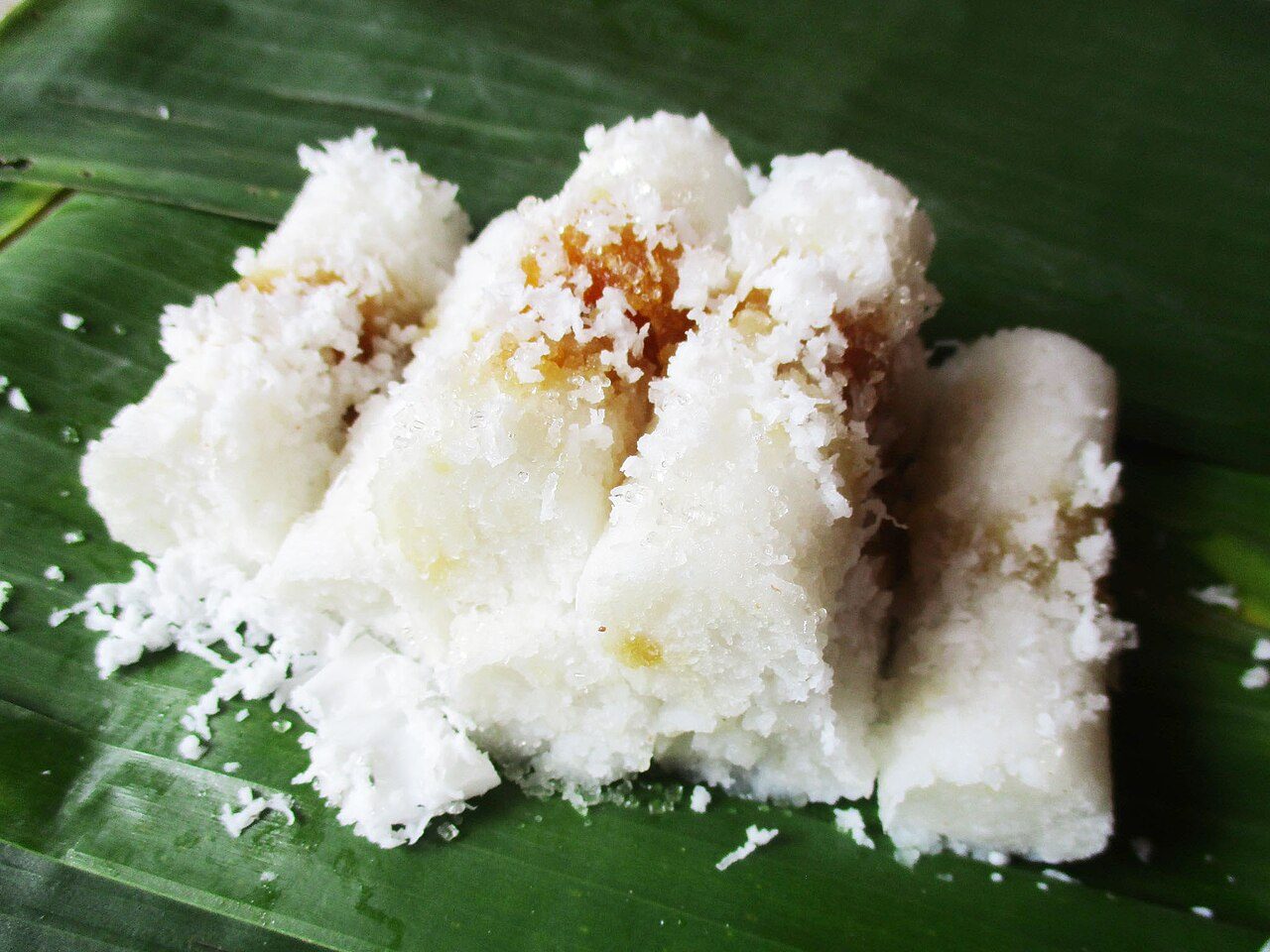
The tradition & historical record
6 min read · 2 sourcesPuto is a Filipino steamed rice cake, traditionally made from slightly fermented rice dough (galapong). It is eaten as is or as an accompaniment to a number of savoury dishes (most notably, dinuguan). Puto is also an umbrella term for various kinds of indigenous steamed cakes, including those made without rice. It is a sub-type of kakanin (rice cakes). 1
History
Puto derives from the puttu rice cakes in south of the Indian subcontinent which may have come via South Indian trade with the Malayosphere (as borrowed into Malay: ڤوتو putu before Philippine languages) reflected in many kinds of sweet rice cake bearing similar names in the Southeast Asian region such as the putu piring in Singapore; putu bambu of the Javanese; and the putu mayam, a local name for the idiyappam. 1
Description
Puto is made from rice soaked overnight to allow it to ferment slightly. Yeast may sometimes be added to aid this process. It is then ground (traditionally with stone mills) into a rice dough known as galapong. The mixture is then steamed. 1
The most common shape of the putuhán steamer used in making puto is round, ranging from 30 to 60 centimetres (12 to 24 in) in diameter and between 2 and 5 centimetres (0.79 and 1.97 in) deep. The steamers are rings made of either soldered sheet metal built around a perforated pan, or of thin strips of bent bamboo enclosing a flat basket of split bamboo slats (similar to a dim sum steamer basket). The cover is almost always conical to allow the condensing steam to drip along the perimeter instead of on the cakes. A sheet of muslin (katsâ) is stretched over the steamer ring and the prepared rice batter poured directly on it; an alternative method uses banana leaf as a liner. The puto is then sold as large, thick cakes in flat baskets called bilao lined with banana leaf, either as whole loaves or sliced into smaller, lozenge-shaped individual portions. Properly prepared puto imparts the slightly yeasty aroma of fermented rice galapong, which may be enhanced by the fragrance of banana leaves. It is neither sticky nor dry and crumbly, but soft, moist, and with a fine, uniform grain. The essential flavour is of freshly cooked rice, but it may be sweetened a bit if eaten by itself as a snack instead of as accompaniment to savory dishes. Most puto cooked in the Tagalog-speaking regions may contain a small quantity of wood ash lye. Puto eaten on its own commonly add toppings like cheese, butter/margarine, hard-boiled eggs, meat, or freshly grated coconut. 1
Variants
Puto is also an umbrella term for various kinds of indigenous steamed cakes, including those made without rice. The key characteristics are that they are cooked by steaming and are made with some type of flour (to contrast with bibingka, which are baked cakes). There are exceptions, however, like puto seko which is a baked dry cookie. The traditional puto made with galapong is sometimes referred to as putong puti ("white puto") or putong bigas ("rice puto) to distinguish it from other dishes also called puto. It is also similar to potu in Guam. Modern variants of puto may also use non-traditional ingredients like ube (purple yam), vanilla, or chocolate. Notable variants of puto, as well as other dishes classified as puto, include the following: 1
Rice-based puto
Puto bagas - a puto shaped like a concave disc that is made from ground rice (maaw). Unlike other puto it is baked until crunchy. It originates from the Bicol Region. Puto bao - a puto from the Bicol region traditionally cooked in halved coconut shells lined with a banana leaf. It distinctively has a filling of sweetened coconut meat (bukayo). Puto bumbong – traditionally made from a special variety of sticky or glutinous rice (called pirurutong) which has a distinctly purple colour. The rice mixture is soaked in saltwater and dried overnight and then poured into bumbóng (bamboo tube) and then steamed until steam rises out of the bamboo tubes. It is served topped with butter or margarine and shredded coconut mixed with moscovado sugar. It is commonly eaten during Christmas in the Philippines along with bibingka, another type of rice cake. Puto Calasiao - a puto from Calasiao, Pangasinan; that is well known all over the Philippines for its melt-in-the-mouth feeling. It is a type of puto that is shaped in small bite-sized portions. Puto dahon or puto dahon saging - a puto from the Hiligaynon people that is traditionally cooked wrapped in a banana leaf. Puto kutsinta (typically just called kutsinta or cuchinta)- a steamed rice cake similar to putong puti, but is made using lye. It is characteristically moist and chewy, and can range in color from reddish brown to yellow or orange in coloration. It is typically topped with shredded coconut meat. Putong lusong - an anise-flavored puto from Pampanga typically served in square or rectangular slices. Puto Manapla – a variant specifically flavored with anise and lined with banana leaves. It is named after the municipality of Manapla where it originates. Puto maya – more accurately, a type of biko. 1
Others
Puto flan (also called leche puto, or puto leche) – a combination of a steamed muffin and leche flan (custard). It uses regular flour, though there are versions that use rice flour. Putong kamotengkahoy - also known as puto binggala in Visayan and puto a banggala in Maranao. A small cupcake made from cassava, grated coconut, and sugar. It is very similar to cassava cake, except it is steamed rather than baked. Puto lanson – puto from Iloilo which is made of grated cassava, and is foamy when cooked. Puto mamón – a puto mixture that has no rice but combines egg yolks, salt and sugar. A mixture of milk and water and another of flour are alternately mixed into the yolks, then egg whites are beaten and folded in before the dough is poured into muffin cups and steamed for 15 to 20 minutes. It is a steamed variant of mamón, a traditional Filipino chiffon cake. Puto seco (also spelled puto seko) – a type of powdery cookie made from corn flour. The name literally means "dry puto" in Spanish. It is baked rather than steamed. Sometimes also called puto masa (literally "corn dough puto"; not to be confused with masa podrida, a Filipino shortbread cookie). 1
The text above is adapted from the Wikipedia article “Puto (food)”, available under the Creative Commons Attribution-ShareAlike 4.0 licence. 1
puto is type of steamed rice cake, according to the structured record cited below. This entry was generated automatically from that record and has not yet been reviewed by a person familiar with the tradition. 2
The source record links this tradition to 2 external registers, which can be verified through the citation. 2