The tradition & historical record
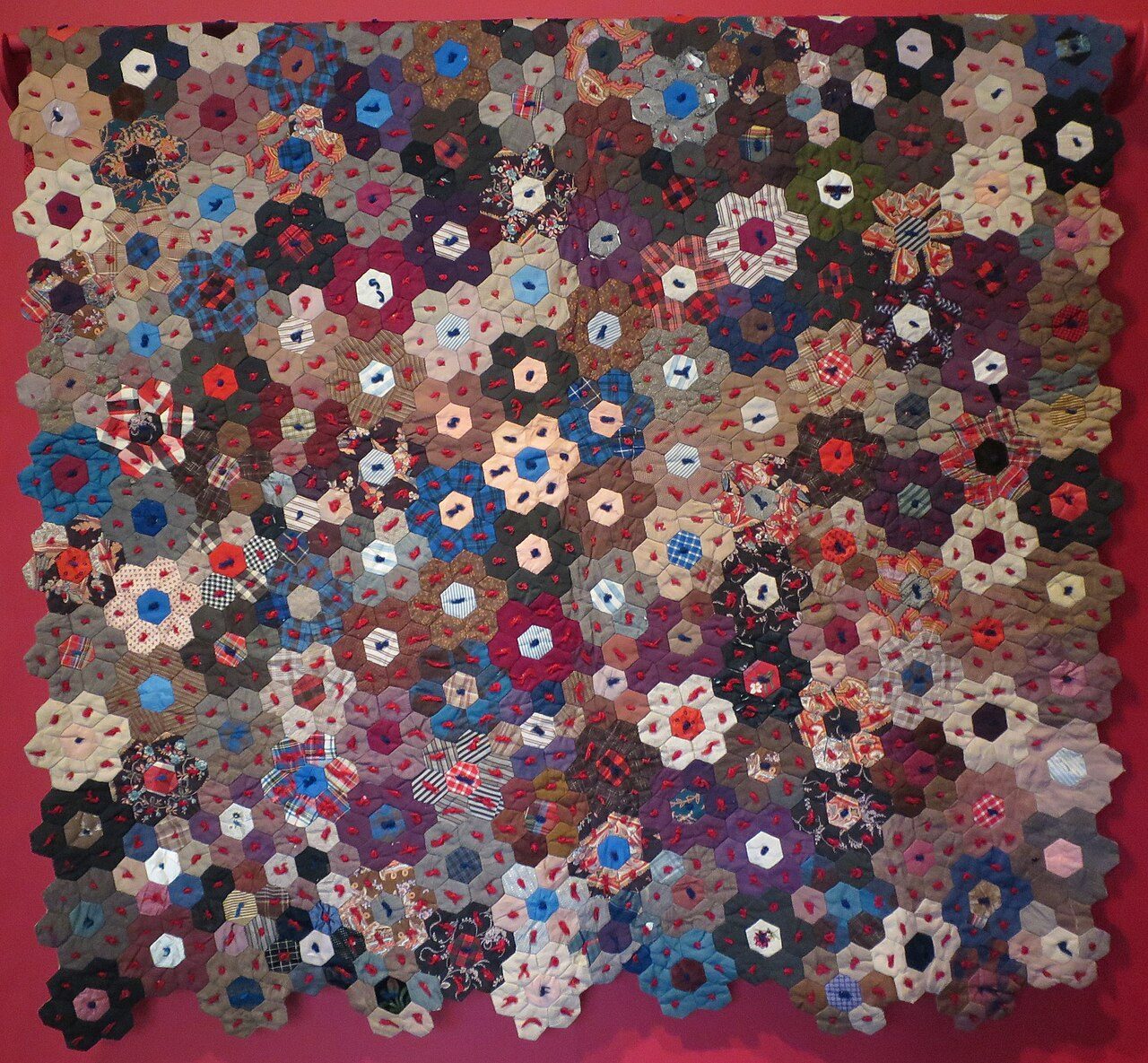
6 min read · 2 sourcesA quilt is a multi-layered textile, traditionally composed of two or more layers of fabric or fiber. Commonly three layers are used with a filler material. These layers traditionally include a woven cloth top, a layer of batting or wadding, and a woven back combined using the techniques of quilting. This is the process of sewing on the face of the fabric, and not just the edges, to combine the three layers together to reinforce the material. Stitching patterns can be a decorative element. A single piece of fabric can be used for the top of a quilt (a "whole-cloth quilt"), but in many cases the top is created from smaller fabric pieces joined, or patchwork. The pattern and color of these pieces creates the design. Quilts may contain valuable historical information about their creators, "visualizing particular segments of history in tangible, textured ways". In the twenty-first century, quilts are frequently displayed as non-utilitarian works of art but historically quilts were often used as bedcovers; and this use persists today. In modern English, the word "quilt" can also be used to refer to an unquilted duvet or comforter. 1
Uses
There are many traditions regarding the uses of quilts. Quilts may be made or given to mark important life events such as marriage, the birth of a child, a family member leaving home, or graduations. Modern quilts are not always intended for use as bedding, and may be used as wall hangings, table runners, or tablecloths. Quilting techniques are often incorporated into garment design as well. Quilt shows and competitions are held locally, regionally, and nationally. There are international competitions as well, particularly in the United States, Japan, and Europe. The following list summarizes most of the reasons a person might decide to make a quilt: 1
Bedding Decoration Armor (e.g., the garment called a gambeson) Commemoration (e.g., the AIDS Memorial Quilt) Education (e.g., a "Science" quilt or a "Gardening" quilt) Campaigning Documenting events / social history, etc. Artistic expression (e.g., Quilt art) Gift Fundraiser 1
Traditions
Quilting traditions are particularly prominent in the United States, where the necessity of creating warm bedding met the paucity of local fabrics in the early days of the colonies. Imported fabric was very expensive, and local homespun fabric was labor-intensive to create and tended to wear out sooner than commercial fabric. It was essential for most families to use and preserve textiles efficiently. Saving or salvaging small scraps of fabric was a part of life for all households. Small pieces of fabric were joined to make larger pieces, in units called "blocks". Creativity could be expressed in the block designs, or simple "utility quilts", with minimal decorative value, could be produced. Crib quilts for infants were needed in the cold of winter, but even early examples of baby quilts indicate the efforts that women made to welcome a new baby. 1
Quilting bees were common communal activities involving all the women and girls in a family or in a larger community. There are also many historical examples of men participating in these quilting traditions. The tops were prepared in advance, and a quilting bee was arranged, during which the actual quilting was completed by multiple people. Quilting frames were often used to stretch the quilt layers and maintain even tension to produce high-quality quilting stitches and to allow many individual quilters to work on a single quilt at one time. Quilting bees were important social events in many communities, and were typically held between periods of high demand for farm labor. Quilts were frequently made to commemorate major life events, such as marriages. 1
Quilts were often made for other events as well, such as graduations, or when individuals left their homes for other communities. 1
Patchwork and piecing
One of the primary techniques involved in quilt making is patchwork, sewing together geometric pieces of fabric often to form a design or "block". Also called piecing, this technique can be achieved with hand stitching or with a sewing machine. 1
Appliqué
Appliqué is a sewing technique where an upper layer of fabric is sewn onto a ground fabric. The upper, applied fabric shape can be of any shape or contour. There are several different appliqué techniques and styles. In needle-turn appliqué, the raw edges of the appliquéd fabric are tucked beneath the design to minimize raveling or damage, and small hand stitches are made to secure down the design. The stitches are made with a hem stitch, so that the thread securing the fabric is minimally visible from the front of the work. There are other methods to secure the raw edge of the appliquéd fabric, and some people use basting stitches, fabric-safe glue, freezer paper, paper forms, or starching techniques to prepare the fabric that will be applied, prior to sewing it on. Supporting paper or other materials are typically removed after the sewing is complete. The ground fabric is often cut away from behind, after the sewing is complete, to minimize the bulk of the fabric in that region. A special form of appliqué is Broderie perse, which involves the appliqué of specific motifs that have been selected from a printed fabric. For example, a series of flower designs might be cut out of one fabric with a vine design, rearranged, and sewn down on a new fabric to create the image of a rose bush. 1
Reverse appliqué
Reverse appliqué is a sewing technique where a ground fabric is cut, another piece of fabric is placed under the ground fabric, the raw edges of the ground fabric are tucked under, and the newly folded edge is sewn down to the lower fabric. Stitches are made as inconspicuous as possible. Reverse appliqué techniques are often used in combination with traditional appliqué techniques, to give a variety of visual effects. 1
The text above is adapted from the Wikipedia article “Quilt”, available under the Creative Commons Attribution-ShareAlike 4.0 licence. 1
quilt is bedcover made of multiple layers of fabric sewn together, usually stitched in decorative patterns, according to the structured record cited below. This entry was generated automatically from that record and has not yet been reviewed by a person familiar with the tradition. 2
The source record links this tradition to 29 external registers, which can be verified through the citation. 2