The tradition & historical record
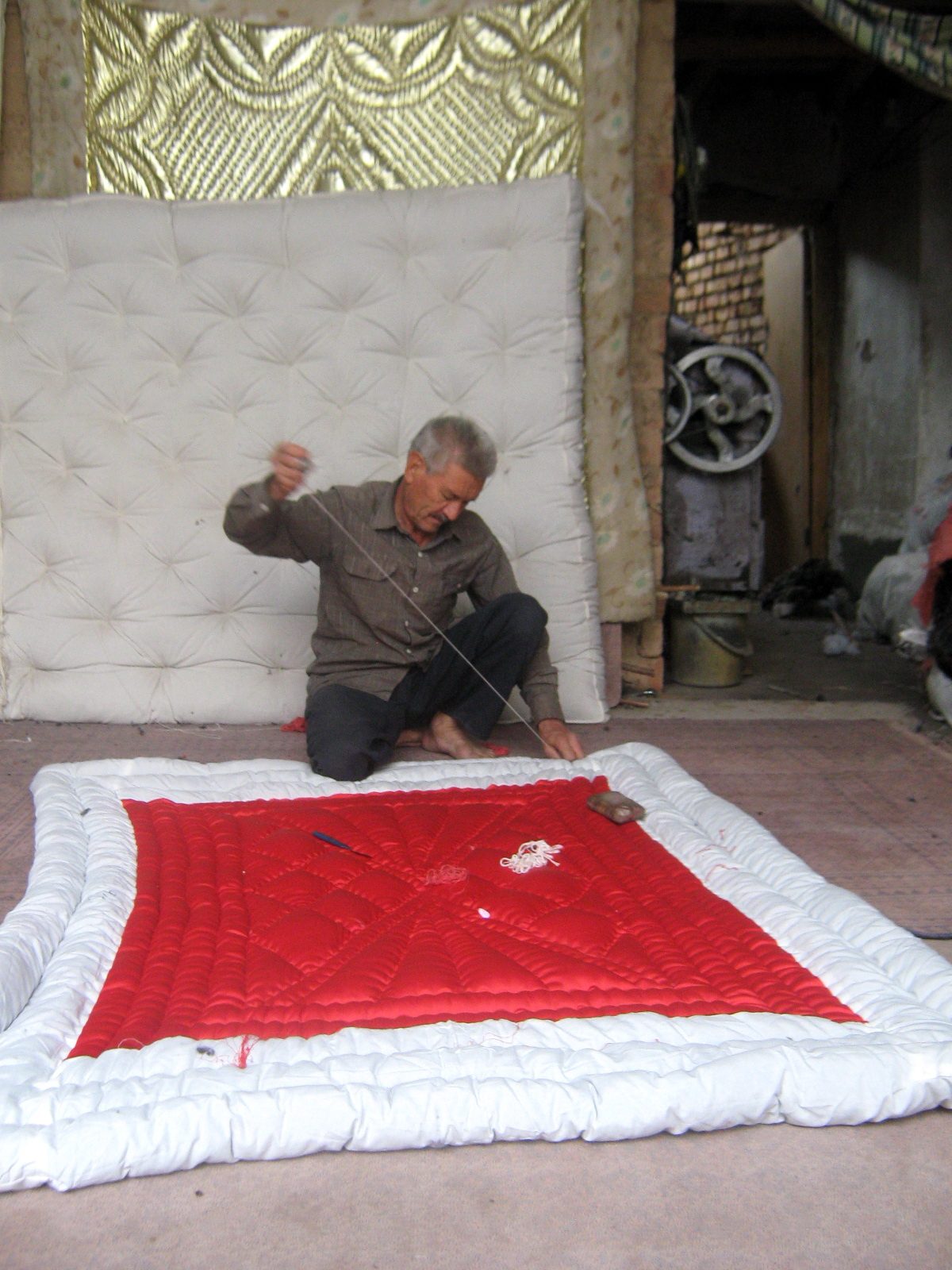
6 min read · 2 sourcesQuilting is the process of joining a minimum of three layers of fabric together either through stitching manually using a needle and thread, or mechanically with a sewing machine or specialised longarm quilting system. An array of stitches is passed through all layers of the fabric to create a three-dimensional padded surface. The three layers are typically referred to as the top fabric or quilt top, batting or insulating material, and the backing. Quilting varies from a purely functional fabric joinery technique to highly elaborate, decorative three dimensional surface treatments. A wide variety of textile products are traditionally associated with quilting, including bed coverings, home furnishings, garments and costumes, wall hangings, artistic objects, and cultural artifacts. A quilter can employ a wide range of effects that contribute to the quality and utility of the final quilted material. To create these effects, the quilter manipulates elements such as material type and thickness, stitch length and style, pattern design, piecing, and cutting. Two-dimensional effects such as optical illusions can be achieved through aesthetic choices regarding colour, texture, and print. Three-dimensional and sculptural components of quilted material can be manipulated and enhanced further by embellishment, which may include appliqué, embroidery techniques such as shisha mirror work, and the inclusion of other objects or elements such as pearls, beads, buttons, and sequins. 1
Early quilting
The origin of the term 'quilt' is linked to the Latin word culcita, meaning a bolster, cushion, or stuffed sack. The word came into the English language from the French word cuilte. The first use of the term seems to have been in England in the 13th century. The sewing techniques of piecing, appliqué, and quilting have been used to create clothing and furnishings in various parts of the world for several millennia, and a wide range of unique quilting styles and techniques have evolved around the globe. The earliest known quilted garment is depicted on the carved ivory figure of a Pharaoh dating from the ancient Egyptian First Dynasty. In 1924 archaeologists discovered a quilted floor covering in Mongolia, estimated to date between 100 BC and 200 AD. In Europe, quilting has been part of the needlework tradition since about the fifth century. Early objects contained Egyptian cotton, which may indicate that Egyptian and Mediterranean trade provided a conduit for the technique. However, quilted objects were relatively rare in Europe until approximately the twelfth century, when quilted bedding and other items appeared after the return of the Crusaders from the Middle East. The medieval quilted gambeson, aketon and arming doublet were garments worn under or instead of chain mail or plate armor. These later developed into the quilted doublet worn as part of European male clothing from the fourteenth to seventeenth century. The earliest known surviving European bed quilt is the Tristan quilt, which was made in late-fourteenth century Italy from linen padded with wool. The blocks across its center are scenes from the legend of Tristan. The quilt is 320 × 287 cm (126 × 113 in) and is in the Victoria and Albert Museum in London. 1
American quilts
In American Colonial times, quilts were predominantly whole-cloth quilts—a single piece of fabric layered with batting and backing held together with fine needlework quilting. Broderie perse quilts were popular during this time and the majority of pierced or appliqued quilts made during the 1770–1800 period were medallion-style quilts (quilts with a central ornamental panel and one or more borders). Patchwork quilting in America dates to the 1770s, the decade the United States gained its independence from England. These late-eighteenth- and nineteenth-century patchwork quilts often mixed wool, silk, linen, and cotton in the same piece, as well as mixing large-scale (often chintz) and small-scale (often calico) patterns. In North America, some worn-out blankets were utilized to create a new quilt from worn-out clothes, and in these quilts the internal batting layer was made up of old blankets or older quilts. 1
During American pioneer days, foundation piecing became popular. Paper was cut into shapes and used as a pattern; each individual piece of cut fabric was basted around the paper pattern. Paper was a scarce commodity in the early American west so women would save letters from home, postcards, newspaper clippings, and catalogs to use as patterns. The paper not only served as a pattern but as an insulator. Paper found between these old quilts has become a primary source of information about pioneer life. Quilts made without any insulation or batting were referred to as summer quilts. They were not made for warmth, but to keep the chill off during cooler summer evenings. 1
African-American quilts
There is a long tradition of African-American quilting beginning with quilts made by enslaved Africans, both for themselves and for the people who enslaved them. The style of these quilts was determined largely by time period and region, rather than race, and the documented slave-made quilts generally resemble those made by white women in their region. After 1865 and the end of slavery in the United States, African-Americans began to develop their own distinctive style of quilting. Harriet Powers, an African American woman born into slavery, made two famous "story quilts" and was one of the many African-American quilters who contributed to the development of quilting in the United States. This style of African-American quilts was categorized by its bright colors, organization in a strip arrangement, and asymmetrical patterns. 1
The first nationwide recognition of African-American quilt-making came when the Gee's Bend quilting community of Alabama was celebrated in an exhibition that opened in 2002 and traveled to many museums, including the Smithsonian. Gee's Bend is a small, isolated community of African-Americans in southern Alabama with a quilt-making tradition that goes back several generations and is characterized by pattern improvisation, multiple patterning, bright and contrasting colors, visual motion, and a lack of rules. The contributions made by Harriet Powers and other quilters of Gee's Bend, Alabama have been recognized by the US Postal Service with a series of stamps. Many of the quilters of Gee's Bend also participated in the Freedom Quilting Bee. A quilting co-op created by some of the African American women of Wilcox County, Alabama. 1
Amish quilts
Another American group to develop a distinct style of quilting were the Amish. Typically, these quilts use only solid fabrics, are pieced from geometric shapes, do not contain appliqué, and construction is simple (corners are butted, rather than mitered, for instance) and done entirely by hand. 1
Native American quilts
Some Native Americans are thought to have learned quilting through observation of white settlers; others learned it from missionaries who taught quilting to Native American women along with other … 1
The text above is adapted from the Wikipedia article “Quilting”, available under the Creative Commons Attribution-ShareAlike 4.0 licence. 1
quilting is process of sewing layers of fabric together to make a padded material, according to the structured record cited below. This entry was generated automatically from that record and has not yet been reviewed by a person familiar with the tradition. 2
The source record links this tradition to 36 external registers, which can be verified through the citation. 2