The tradition & historical record
4 min read · 2 sourcesQuilts of the Underground Railroad describes a controversial belief that quilts were used to communicate information to African slaves about how to escape to freedom via the Underground Railroad. It has been disputed by a number of historians. 1
Books that emphasize quilt use
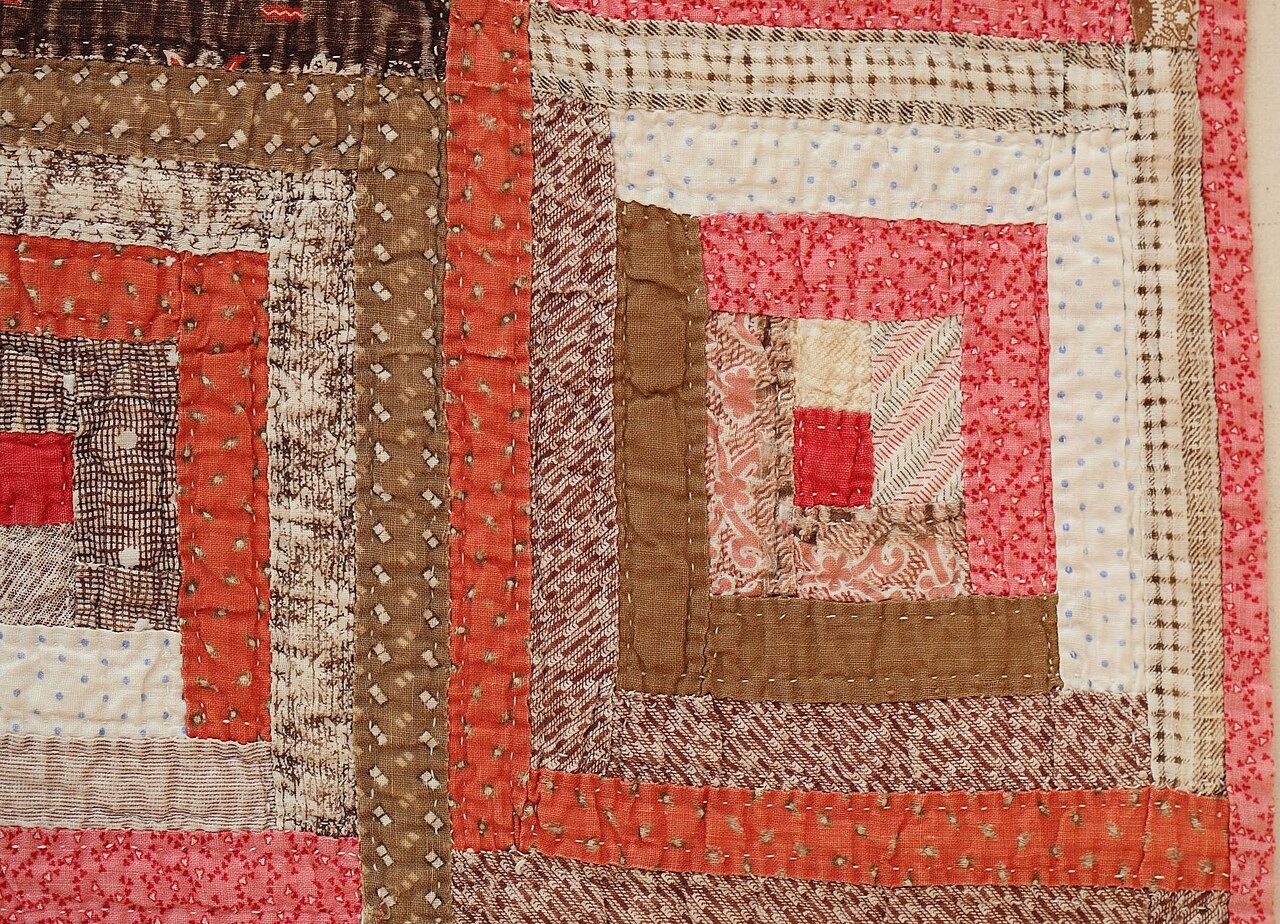
In Stitched from the Soul (1990), Gladys-Marie Fry asserted that quilts were used to communicate safe houses and other information about the Underground Railroad, which was a network through the United States and into Canada of "conductors", meeting places, and safe houses for the passage of African Americans out of slavery. The theory that quilts and songs were used to communicate information about the Underground Railroad is disputed among historians. Even so, escaping slavery was generally an act of "complex, sophisticated and covert systems of planning". The 1999 book Hidden in Plain View, by Raymond Dobard, Jr., an art historian, and Jacqueline Tobin, a college instructor in Colorado, explores how quilts were used to communicate information about the Underground Railroad. The idea for the book came from Ozella McDaniel Williams who told Tobin that her family had passed down a story for generations about how patterns like wagon wheels, log cabins, and wrenches were used in quilts to navigate the Underground Railroad. Williams stated that the quilts had ten squares, each with a message about how to successfully escape. It started with a monkey wrench, that meant to gather up necessary supplies and tools, and ended with a star, which meant to head north. The book claims that there was a quilt code that conveyed messages in counted knots and quilt block shapes, colors and names. In a 2007 Time magazine article, Tobin stated: "It's frustrating to be attacked and not allowed to celebrate this amazing oral story of one family's experience. Whether or not it's completely valid, I have no idea, but it makes sense with the amount of research we did." Dobard said, "I would say there has been a great deal of misunderstanding about the code. 1
Response
Giles Wright, an Underground Railroad expert, asserts that the book is based upon folklore that is unsubstantiated by other sources. He also said that there are no memoirs, diaries, or Works Progress Administration interviews conducted in the 1930s of ex-slaves that mention quilting codes. Quilt historians Kris Driessen, Barbara Brackman, and Kimberly Wulfert do not believe the theory that quilts were used to communicate messages about the Underground Railroad. Controversy in the hypothesis became more intense in 2007 when plans for a sculpture of Frederick Douglass at a corner of Central Park called for a huge quilt in granite to be placed in the ground to symbolize the manner in which slaves were aided along the Underground Railroad. Noted historians did not believe that the hypothesis was true and saw no connection between Douglass and this belief. Civil War historian David W. Blight said, "At some point the real stories of fugitive slave escape, as well as the much larger story of those slaves who never could escape, must take over as a teaching priority. It ought to be rooted in real and important aspects of his life and thought, not a piece of folklore largely invented in the 1990s which only reinforces a soft, happier version of the history of slavery that distracts us from facing harsher truths and a more compelling past." Fergus Bordewich, the author of Bound for Canaan: The Underground Railroad and the War for the Soul of America, calls it "fake history", based upon the mistaken premise that the Underground Railroad activities "were so secret that the truth is essentially unknowable". 1
The text above is adapted from the Wikipedia article “Quilts of the Underground Railroad”, available under the Creative Commons Attribution-ShareAlike 4.0 licence. 1
Quilts of the Underground Railroad is Disputed theory that the Underground Railroad used quilts to inform slaves, according to the structured record cited below. This entry was generated automatically from that record and has not yet been reviewed by a person familiar with the tradition. 2
The source record links this tradition to 1 external register, which can be verified through the citation. 2