The tradition & historical record
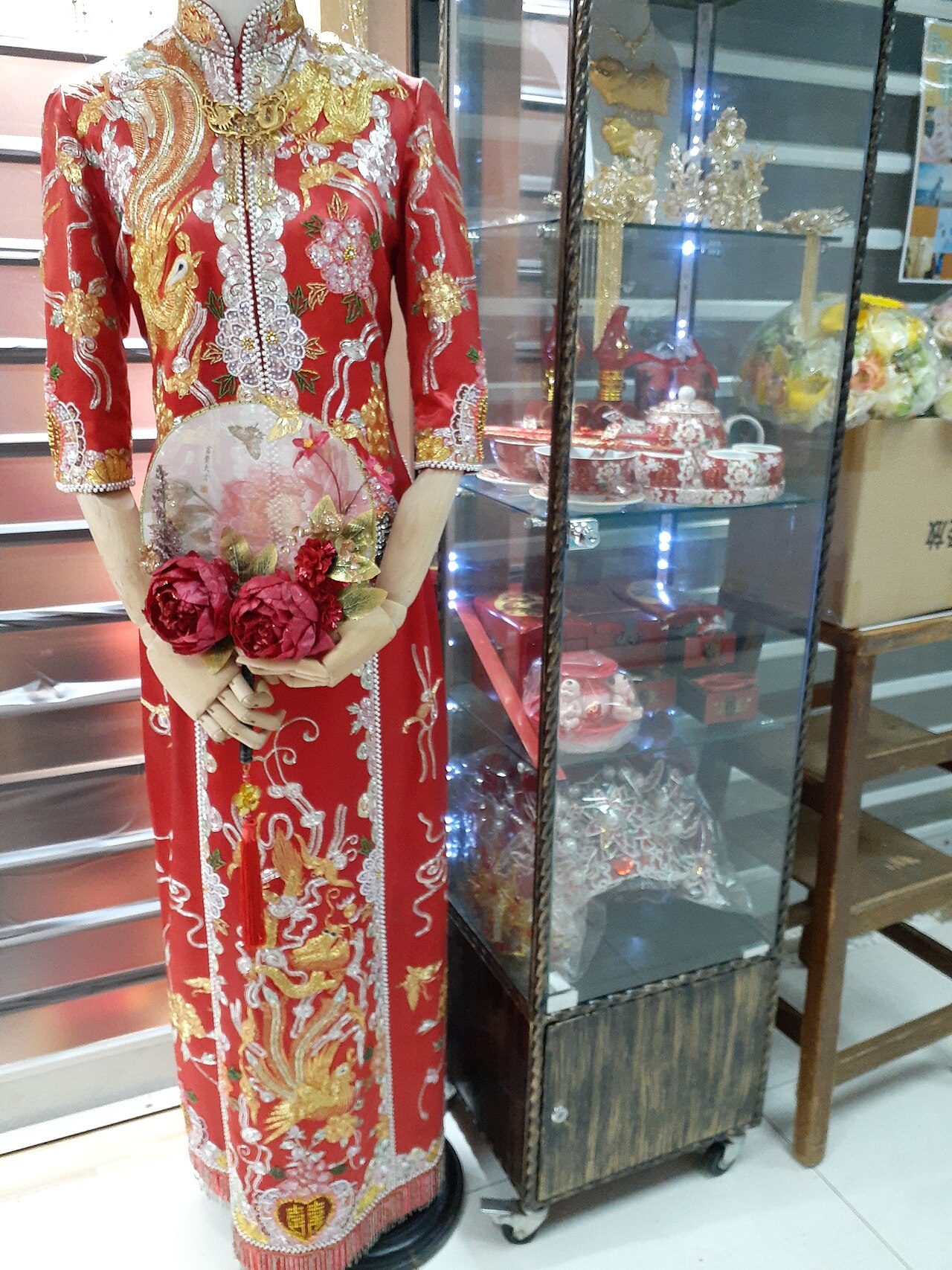
4 min read · 2 sourcesQungua (Chinese: 裙褂; Jyutping: kwan4 gwaa3), also known as longfenggua (traditional Chinese: 龍鳳褂; simplified Chinese: 龙凤褂), or longfeng qungua (traditional Chinese: 龍鳳裙褂; simplified Chinese: 龙凤裙褂), or guaqun (Chinese: 褂裙; Jyutping: gwaa3 kwan4), is one type of two-piece ceremonial traditional Chinese wedding set of attire, which is composed of a jacket called gua (褂) and of a long Chinese skirt called qun (裙). The qungua is a type of Hanfu worn by Han Chinese brides and originated in the 18th century during the Qing dynasty. It eventually became the traditional wedding attire of Cantonese brides in the Guangdong regions. It is traditionally handmade and is decorated with dragons and phoenixes embroideries. Nowadays, the qungua is still popular as a wedding dress in China, including in Hong Kong and Macau. 1
Origins and tradition
Back in Ming dynasty, the women wedding dress worn by nobles and commoners was known as fengguan xiapei (traditional Chinese: 鳳冠霞帔; simplified Chinese: 凤冠霞帔) composed of the fengguan and xiapei. The wedding dress worn in Ming dynasty continued to influence the wedding dress of the later centuries. What is known as qungua only started to be worn in the 18th century during the Qing dynasty. The qungua originated in Guangdong when Liang Zhu, a Guangdong Qing dynasty politician, was rewarded with a silk wedding dress embroidered with dragons and phoenixes by the Qing Emperor at the time of his daughter's wedding. This led to the use qungua in the Guangdong area. In 18th century, Chinese mothers would start to sew the qungua as soon as a daughter was born in the family. The qungua would then be placed as a part of the daughter's bride dowry when she gets married. The qungua follows the ancient traditional system of shangyi xiachang (Chinese: 上衣下裳; upper and lower garment). 1
Construction and Design
The qungua is composed of two separate garments: a gua (Chinese: 褂; pinyin: guà; Jyutping: gwaa3; lit. 'coat'), which is a Chinese jacket which closes at the front with buttons, and a qun (Chinese: 裙; pinyin: qún; Jyutping: kwan4; lit. 'skirt'). The qun worn in the qungua is typically straight in cut. The skirt could be pleated. 1
Colour
While Western wedding dress tends to be white in colour, Chinese traditional wedding clothing favours the use of red and gold colour. The gua was originally black in colour while the skirt was originally red in colour. 1
The gua which is completely red in colour only appeared in the 1960s. Since then the traditional black gua and red qun started to be used for the bride's mother instead of being worn by the brides themselves. 1
Embroidery
The qungua is typically embroidered with the Chinese dragons called long (traditional Chinese: 龍; simplified Chinese: 龙) and the Chinese phoenix called feng (traditional Chinese: 鳳; simplified Chinese: 凤). It can also be decorated with other auspicious symbols, such as pomegranate (symbolism for fertility), peony flowers, lotus flowers, bats, goldfish, butterfly and birds. Nowadays, there are 5 different types of qungua which is named accordingly to the percentage of embroidery covering the dress: 1
Xiaowufu (小五福): 30% covered with embroidery, Zhongwufu (中五福): 50% covered with embroidery Dawufu (大五福): 70% covered with embroidery Guahou (褂后): 90% covered with embroidery Guahuang (褂皇): 100% covered with embroidery 1
Betawi Bridal dress
The Betawi bridal dress, partly influenced by Chinese culture and by Indonesian culture, looks similar to the Chinese qungua. Like the qungua, the Betawi bridal dress is a two-piece set of attire which composed of an ankle-length with wider bottom skirt called kun and an upper garment called tuaki. The tuaki is decorated with Chinese auspicious symbols. One difference from the qungua is the use of Betawi Lotus, also known as Betawi pomegranate, a separate ornamental garment which covers the chest and shoulder areas (similar to the yunjian of the Chinese people). The Betawi lotus was used to denote the origins of the Betawi bride, but it was eventually replaced by beads which typically follows the Spanish cherry floral pattern. The kun and tuaki must match in colour. 1
The text above is adapted from the Wikipedia article “Qungua”, available under the Creative Commons Attribution-ShareAlike 4.0 licence. 1
Qungua is type of Chinese wedding dress, according to the structured record cited below. This entry was generated automatically from that record and has not yet been reviewed by a person familiar with the tradition. 2