The tradition & historical record
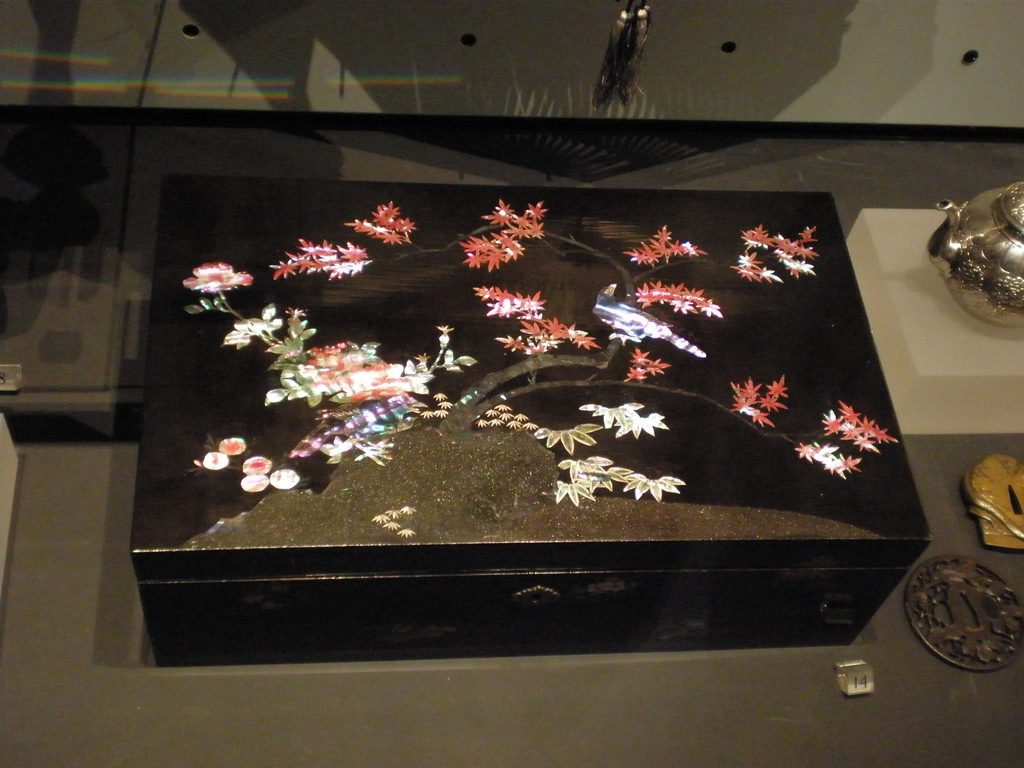
3 min read · 2 sourcesRaden (Japanese: 螺鈿, hiragana: らでん) is the Japanese term for Lydian (Chinese: 螺钿; traditional Chinese: 螺鈿; pinyin: luódiàn), a traditional East Asian decorative technique involving the inlay of nacre into lacquerware, wood, and other surfaces. It was subsequently introduced to Japan from the Tang dynasty during the Nara period. The term may also be used for similar traditional work from Korea called najeonchilgi (螺鈿漆器), from China called luodian (Chinese: 螺钿), from Vietnam called khảm xà cừ (chữ Nôm: 坎𤥭璖), and for modern work done in the West. 1
Techniques of production
There are many ways that raden is produced, with all techniques classed under three main categories: atsugai (using thick shell pieces), usugai (using much thinner pieces), and kenma (the thinnest application of shell pieces). In atsugai raden, the shell is often cut with a scroll saw, then finished with a file or rubstone before application. In usugai raden, the thinner shell pieces are usually made using a template and a special punch. Kenma raden is fashioned similarly to usugai raden. Methods of application are varied. Thick shell pieces may be inlaid into pre-carved settings, while thinner pieces may be pressed into a very thick coating of lacquer, or applied using an adhesive and then lacquered over. Other methods use acid washing and lacquering to produce different effects. Raden is especially combined with maki-e – gold or silver lacquer sprinkled with metal powder as a decoration. 1
History
One theory is that the technique of raden in the East was introduced from the Sasanian Persia to Tang China, and another theory is that it already existed in the Shang dynasty, though the former theory is more likely. By the Tang dynasty, the technique, known in Chinese as luodian, had reached a very mature level, especially lacquer-backed luodian on bronze mirrors, which was a treasure of craftsmanship in this period. Bronze mirrors with luodian lacquer backs have been excavated from Tang tombs in Shanxian County and Luoyang, Henan Province. The basic technique of luodian was introduced from the Tang dynasty into Japan during the Nara period, where it is referred to as raden, using the same Chinese characters. In Japan, raden had been used in combination with Japanese various maki-e techniques since the Heian period, but raden declined in the Muromachi period. From the Sengoku period to the Azuchi-Momoyama period, many Japanese lacquerware decorated with maki-e and raden attracted European people, and were exported through the Nanban trade via Portuguese and Spanish in response to the request of the Society of Jesus. Raden was often used in the creation of European-style items, such as chests of drawers and coffee cups, and was very popular in Europe, as the mother-of-pearl covering the items contributed to their status as a unique luxury. The Japanese referred to these goods as "Nanban lacquerware", with Nanban meaning "Southern Barbarians", a term borrowed from the Chinese and, in 16th century Japan, meaning any foreigner, especially a European. The kanji for ra (螺) means 'shell' and den (鈿) means 'inlaid'. Raden is a term used only for the technique or work of inlaying thin layers of pearl shells. 1
The text above is adapted from the Wikipedia article “Raden”, available under the Creative Commons Attribution-ShareAlike 4.0 licence. 1
raden is Japanese decorative craft, according to the structured record cited below. This entry was generated automatically from that record and has not yet been reviewed by a person familiar with the tradition. 2
The source record links this tradition to 5 external registers, which can be verified through the citation. 2