The tradition & historical record
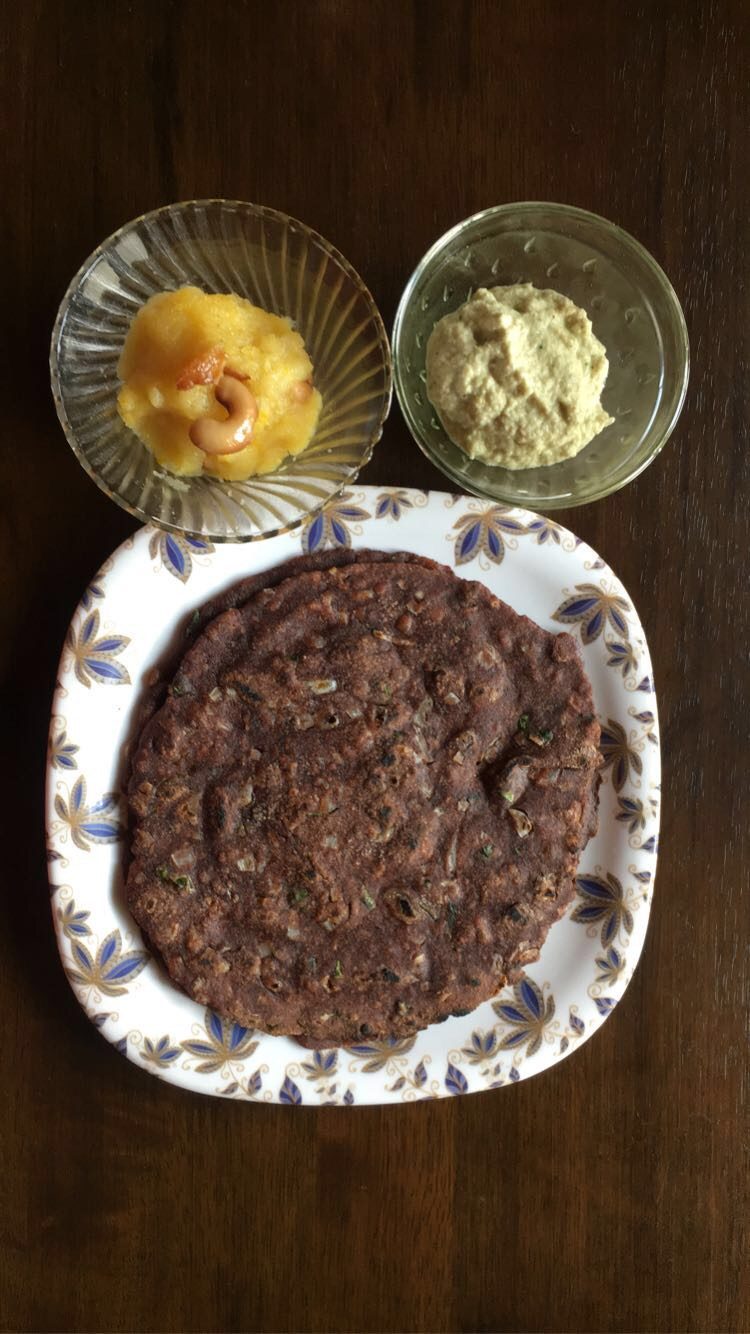
1 min read · 2 sourcesRagi rotti (Kannada: ರಾಗಿ ರೊಟ್ಟಿ) is a breakfast food of the state of Karnataka, India. It is most popular in the rural areas of southern Karnataka. It is made of ragi (finger millet) flour. Ragi rotti means ragi pancake in the native language, Kannada. It is prepared in the same way as akki rotti. The ragi flour is mixed with salt and water and kneaded well to come up with a soft dough. While making the dough, sliced onions and carrots, chopped coriander and cumin seeds can also be added for taste. Oil is spread over a griddle (tava) and a small amount of the dough is neatly spread over it to resemble a thin pancake (rotti). A small amount of oil is spread over it and the rotti is cooked on the hot griddle till it turns crisp. Ragi rotti is served hot and is eaten along with chutney. 1
The text above is adapted from the Wikipedia article “Ragi rotti”, available under the Creative Commons Attribution-ShareAlike 4.0 licence. 1
Ragi rotti is Indian flatbread, according to the structured record cited below. This entry was generated automatically from that record and has not yet been reviewed by a person familiar with the tradition. 2
The source record links this tradition to 1 external register, which can be verified through the citation. 2