The tradition & historical record
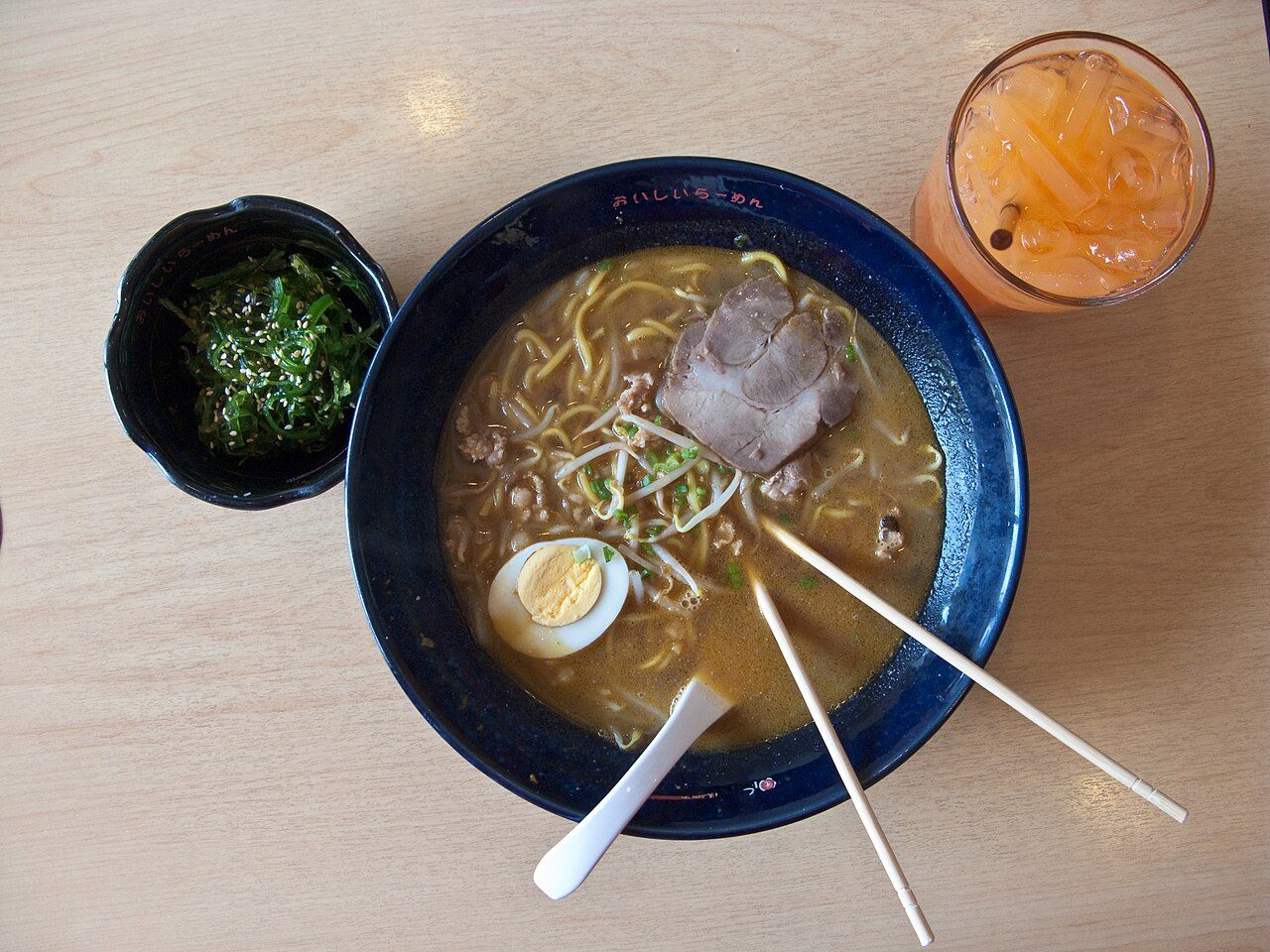
6 min read · 2 sourcesRamen () (拉麺, ラーメン or らあめん, rāmen; [ɾaꜜːmeɴ] ) is a Japanese-Chinese fusion noodle dish. It includes Chinese-style alkaline wheat noodles (中華麺, chūkamen) served in several flavors of hot broth. Common flavors are soy sauce and miso, with typical toppings including sliced pork (chāshū), nori (dried seaweed), lacto-fermented bamboo shoots (menma), narutomaki, and scallions. Nearly every region in Japan has its own variation of ramen, such as the tonkotsu (pork bone broth) ramen of Kyushu and the miso ramen of Hokkaido. The origins of ramen can be traced back to Yokohama Chinatown in the late 19th century. While the word "ramen" is a Japanese borrowing of the Chinese word lāmiàn (拉麵), meaning "pulled noodles", the ramen does not actually derive from any lamian dishes. Lamian is a part of northern Chinese cuisine, whereas the ramen evolved from southern Chinese noodle dishes from regions such as Guangdong, reflecting the demographics of Chinese immigrants in Yokohama. Ramen was largely confined to the Chinese community in Japan and was never popular nationwide until after World War II (specifically the Second Sino-Japanese War), following increased wheat consumption due to rice shortages and the return of millions of Japanese colonizers from China. 1
Etymology
The word ramen is a Japanese borrowing of the Mandarin Chinese lamian (拉麵, 'pulled noodles'). A common misconception is that ramen is a Japanese adaptation of lamian, but the two dishes have no direct relation, and how ramen came to adopt its name from lamian remains unclear. Ramen evolved from southern Chinese noodle dishes, primarily Cantonese, as opposed to northern Chinese noodle dishes that may feature lamian. The word ramen (拉麺) first appeared in Japan in Seiichi Yoshida's How to Prepare Delicious and Economical Chinese Dishes (1928). In the book, Yoshida describes how to make ramen using flour and kansui, kneading it by hand, and stretching it with an illustration. He also states that ramen is better suited for soup or cold noodles than for baked noodles. In this case, however, ramen refers to actual lamian (hand-pulled noodles), not the noodle soup dish. There are various theories on how the dish came to be named "ramen", but the most plausible is that the term was misapplied by Japanese colonizers. After the end of World War II in 1945, millions of Japanese settler colonists were repatriated to Japan from China. They may have labeled the southern Chinese noodle dishes in Japan "ramen", based on their superficial resemblance to lamian dishes they had encountered in northern China, particularly in the Japanese-backed puppet state of Manchukuo. Some cookbooks from this time period include ramen, such as Hatsuko Kuroda's Enjoyable Home Cooking (1947). Chinese immigrants in Japan initially served a wide variety of Chinese noodle soup dishes, and referred to them by their specific names. However, they were collectively referred to as Nankin soba (南京そば; lit. 'Nanjing noodles') by the Japanese. 1
Origin
Ramen is a Japanese adaptation of Chinese wheat noodle soups. It is first recorded to have appeared in Yokohama Chinatown in the early 20th century. However, the dishes ancestral to ramen already existed in Japan within the Chinese community since the 1880s. Although ramen takes its name from lamian, it did not originate from the hand-pulled lamian noodles of northern China, since the noodles used in ramen are cut, not pulled. Rather, ramen is largely derived from southern Chinese noodle dishes, particularly those from Cantonese cuisine. This is reflective of Yokohama Chinatown's demographics, as the majority of Chinese settlers there were Cantonese, followed by Shanghainese. Sōmen is another type of noodle of Chinese origin made from wheat flour, but in Japan it is distinguished from the noodles used in ramen. The noodles used for ramen today are called chūkamen (中華麺; lit. 'Chinese noodles') and are made with kansui (鹹水, alkaline salt water). The official diary of Shōkoku-ji Temple in Kyoto, Inryōken Nichiroku (蔭涼軒日録), mentions eating jīngdàimiàn (経帯麪), noodles with kansui, in 1488. Jīngdàimiàn is the noodle of the Yuan dynasty. This is the earliest record of kansui noodles being eaten in Japan. One theory says that ramen was introduced to Japan during the 1660s by the neo-Confucian scholar Zhu Shunsui, who served as an advisor to Tokugawa Mitsukuni after he became a refugee in Japan to escape Manchu rule. Mitsukuni became the first Japanese person to eat ramen. 1
First store
According to ramen expert Hiroshi Osaki, the first specialized ramen shop was Rairaiken (来々軒), which opened in 1910 in Asakusa, Tokyo. The Japanese founder, Kan'ichi Ozaki (尾崎貫一), employed twelve Cantonese cooks from Yokohama's Chinatown and served the ramen arranged for Japanese customers. In contrast to most Japanese, who held prejudiced views toward Chinese cuisine, Ozaki grew up in Yokohama, where he experienced Chinese food firsthand and witnessed the popularity of noodle dishes in the city's Chinatown. Early versions of ramen were wheat noodles in broth topped with char siu. Ozaki changed the name of the noodle dishes from Nankin soba to Shina soba. The store also served standard Cantonese fare like wontons and shumai, and is sometimes regarded as the origin of Japanese-Chinese fusion dishes like chūkadon and tenshindon. Rairaiken's original store closed in 1976, but related stores with the same name currently exist in other places, and have connections to the first store. In 1925, a Chinese traveller named Fan Qinxing from Zhejiang province opened a ramen shop called Genraiken in Kitakata as an homage to the popular Rairaiken. In 1933, Fu Xinglei (傅興雷), one of the twelve original chefs, opened a second Rairaiken in Yūtenji, Meguro Ward, Tokyo. In 1968, one of Kan'ichi Ozaki's apprentices opened a store named Shinraiken ("New Raiken") in Chiba Prefecture. In 2020, Ozaki's grandson and great-great-grandson re-opened the original Rairaiken as a store inside Shin-Yokohama Rāmen Museum. The popup closed at September 2025. In 2026, the great-great-grandson of Kan'ichi Ozaki, Yusaka Takahashi, reopened the original Rairaiken in Asakusa after his 92 year old grandfather wanted to eat the original again. 1
Popularization and modernization
After Japan's defeat in World War II, the American military occupied the country from 1945 to 1952. In December 1945, Japan recorded its worst rice harvest in 42 years, which caused food shortages as Japan had drastically reduced rice production during the war as production shifted to colonies in China and Formosa island. The US flooded the market with cheap wheat flour to deal with food shortages. During the same period, millions of Japanese colonizers returned from China and other parts of East Asia. It was only in 1947, in the post-war period, that the term ramen was first recorded in Japan to refer to the southern Chinese noodle dish that originated in Yokohama Chinatown, possibly because it superficially resembled the lamian dishes they had encountered in northern China. 1
Types
A wide v… 1
The text above is adapted from the Wikipedia article “Ramen”, available under the Creative Commons Attribution-ShareAlike 4.0 licence. 1
ramen is Japanese noodle soup of Chinese origin, according to the structured record cited below. This entry was generated automatically from that record and has not yet been reviewed by a person familiar with the tradition. 2
The source record links this tradition to 18 external registers, which can be verified through the citation. 2