The tradition & historical record
5 min read · 2 sourcesIn narratology and comparative mythology, the Rank–Raglan hero archetype is a combined or independent set of narrative patterns proposed by the Austrian psychoanalyst Otto Rank and later on by the British amateur anthropologist Lord Raglan that list different cross-cultural traits often found in the accounts of heroes, including mythical heroes. Otto Rank developed his concept of the "Mythic Hero" in his 1909 text, The Myth of the Birth of the Hero that was based on Freudian ideas. It includes a set of 12 traits that are commonly found in hero myth narratives. Lord Raglan developed his concept of the "Mythic Hero" as an archetype, based on a ritualistic interpretation of myth, in his 1936 book, The Hero, A Study in Tradition, Myth and Drama. It is a set of 22 common traits that he said were shared by many heroes in various cultures, myths and religions throughout history and around the world. Raglan argued that the higher the score, the more likely the figure's biography is mythical. Raglan did not categorically deny the historicity of the heroes he looked at, rather it was their common biographies he considered as nonhistorical. Comparative mythologists have continued to deploy the checklist in teaching and research, with Jaan Puhvel adopting it as a baseline for Indo-European hero studies and Michael Witzel integrating its royal hero arc into a global survey of mythic kingship. 1
History
Developed independently, modern comparative myth scholar Robert A. Segal combined Rank's birth-myth schema with Raglan's life-course pattern. However, Raglan is the dominant scale when discussing hero-myth patterns. 1
Rank
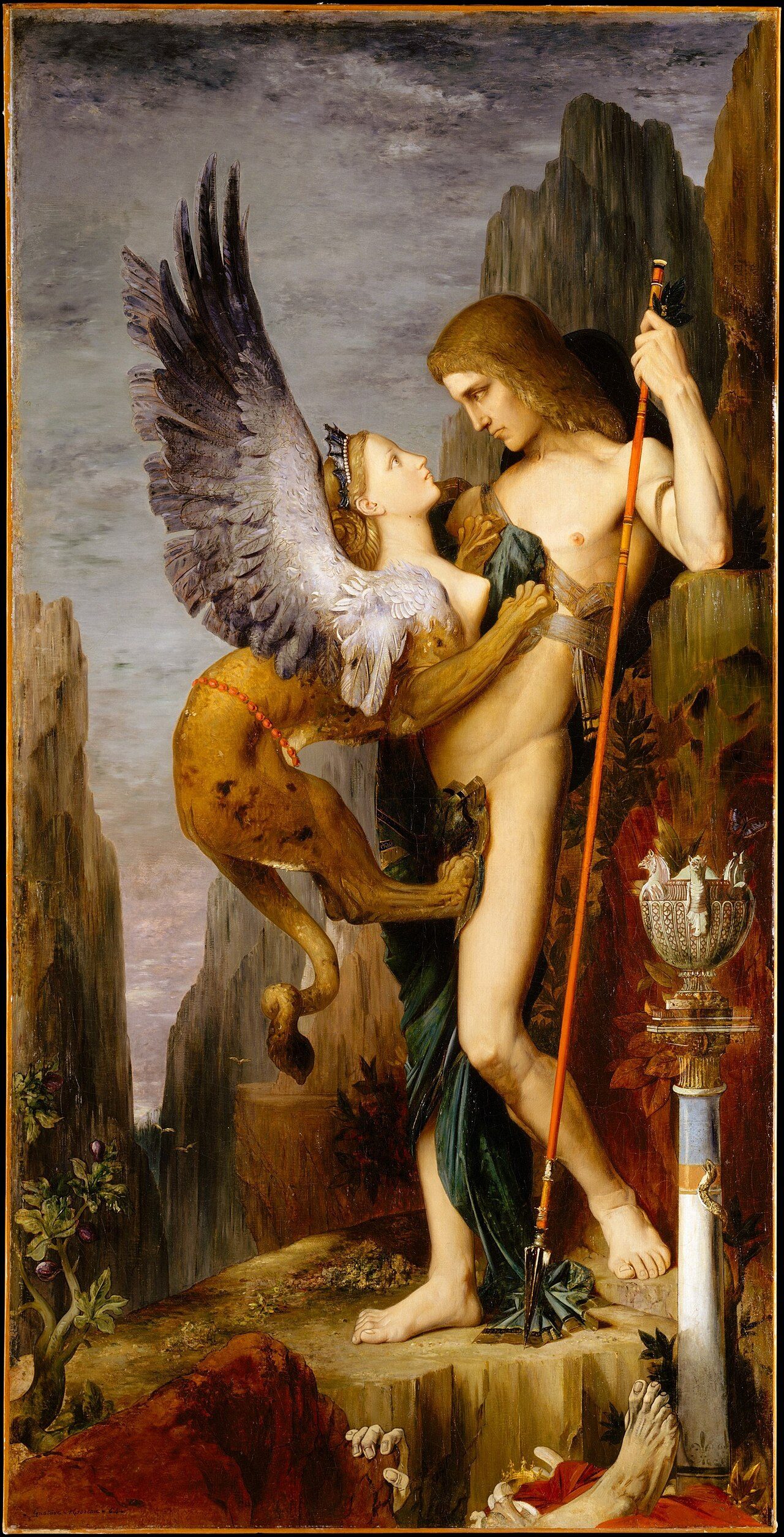
In 1909, Otto Rank developed a hero birth pattern heavily influenced by the legend of Oedipus. Following Freudian "family romance" psychoanalytic theory, Rank's pattern focused on the hero's parental relationships and only covered the first half of the hero's life: 1
Rank closely analyzed birth myths for Sargon of Akkad, Moses, Karna, Oedipus, Paris, Telephos, Perseus, Dionysus, Gilgamesh, Cyrus the Great, Trakhan, Tristan, Romulus, Hercules, Jesus, Siegfried, Lohengrin, and Sceafa. 1
Raglan
In 1936, Lord Raglan developed a 22-point hero archetype pattern that identified common narrative elements found across Indo-European heroic traditions. Building on the work of myth-ritual theorists like James Frazer and S. H. Hooke, Raglan's framework aimed to systematically analyze the recurring motifs in hero stories: 1
When Raglan's 22 point outline is used, a Hero's tradition is considered more likely to be mythical the more of these traits they hold (a point is added per trait). Raglan himself scored the following heroes: Oedipus (21 or 22 points), Theseus (20 points), Romulus (18 points), Heracles (17 points), Perseus (18 points), Jason (15 points), Bellerophon (16 points), Pelops (13 points), Dionysos (19 points), Apollo (11 points), Zeus (15 points), Joseph (12 points), Moses (20 points), Elijah (9 points), Watu Gunung (18 points), Nyikang (14 points), Sigurd (11 points), Lleu Llaw Gyffes (17 points), King Arthur (19 points), Robin Hood (13 points), and Alexander the Great (7 points). 1
Modern analysis
Classicist Thomas J. Sienkewicz analyzed additional heroes using Raglan's pattern, including Mithridates VI of Pontus (22 points), Krishna (21 points), Jesus (18 points), Mohammad (17 points), Beowulf (15 points), Buddha (15 points), Czar Nicholas II (14 points), Samson (13 points), Sunjata, the Lion-King of Ancient Mali (11 points), Achilles (10 points), and Harry Potter (8 points). Additionally, in 1999, Sienkewicz analyzed female figures against Raglan's pattern, including Penelope (13 points), Helen of Troy, Guinevere (11 points), Joan of Arc (13 points), Hero in Shakespeare's Much Ado about Nothing (10 points), Princess Diana, Princess Leia (12 points), Tori Amos (15 points), Nefertiti (13 points), Cleopatra (13 points), Irene of Athens, Susan B. Anthony (12 points), Helen Keller, Harriet Tubman, Sacagawea, Semiramis, Antigone, Jane Addams, and Marie de' Medici, with most female candidates scoring lower than mythic male heroes and fulfilling traits differently, illustrating both flexibility and cultural limitations of the pattern. 1
Reception
Comparative mythologists continue to employ the Rank–Raglan checklist as a descriptive framework for heroic biography. Jaan Puhvel presented the combined pattern as a baseline for Indo-European hero studies, and Michael Witzel integrated its royal birth, exile, and death sequence into his global survey of mythic kingship. Alan Dundes' scoring method in In Quest of the Hero continued to circulate in classrooms and comparative religion surveys, reinforcing the hero archetype's utility for cross-cultural comparison. Raglan's framework influenced later studies of hero myth patterns. As Segal noted in his introduction to In Quest of the Hero, a notable parallel development was the "monomyth" concept developed by Joseph Campbell in his seminal work The Hero with a Thousand Faces (1949). While Campbell's work shared some similarities with the approaches of Otto Rank and Lord Raglan, he did not cite or acknowledge their work in his book, instead drawing primarily from Carl Jung's analytical psychology to analyze heroic narratives across world religions and mythologies. Segal concisely summarizes the key differences between these theorists: 1
The theories of Rank, Campbell, and Raglan typify the array of analyses of hero myths. For Rank, the true subject of hero myths is the family. For Campbell, it is the mind. For Raglan, it is the physical world and, even more, the gods who control that world. Both Rank and Campbell read myth symbolically. Because the real subject of hero myths for Rank is the family, the figures in a hero myth symbolize the mythmaker or reader and his parents. It is, then, confusing for Rank to identify the hero with the ego—as if the hero's parents represent other parts of the mind. 1
The text above is adapted from the Wikipedia article “Rank–Raglan hero archetype”, available under the Creative Commons Attribution-ShareAlike 4.0 licence. 1
Rank-Raglan mythotype is hero archetype, according to the structured record cited below. This entry was generated automatically from that record and has not yet been reviewed by a person familiar with the tradition. 2
The source record links this tradition to 2 external registers, which can be verified through the citation. 2