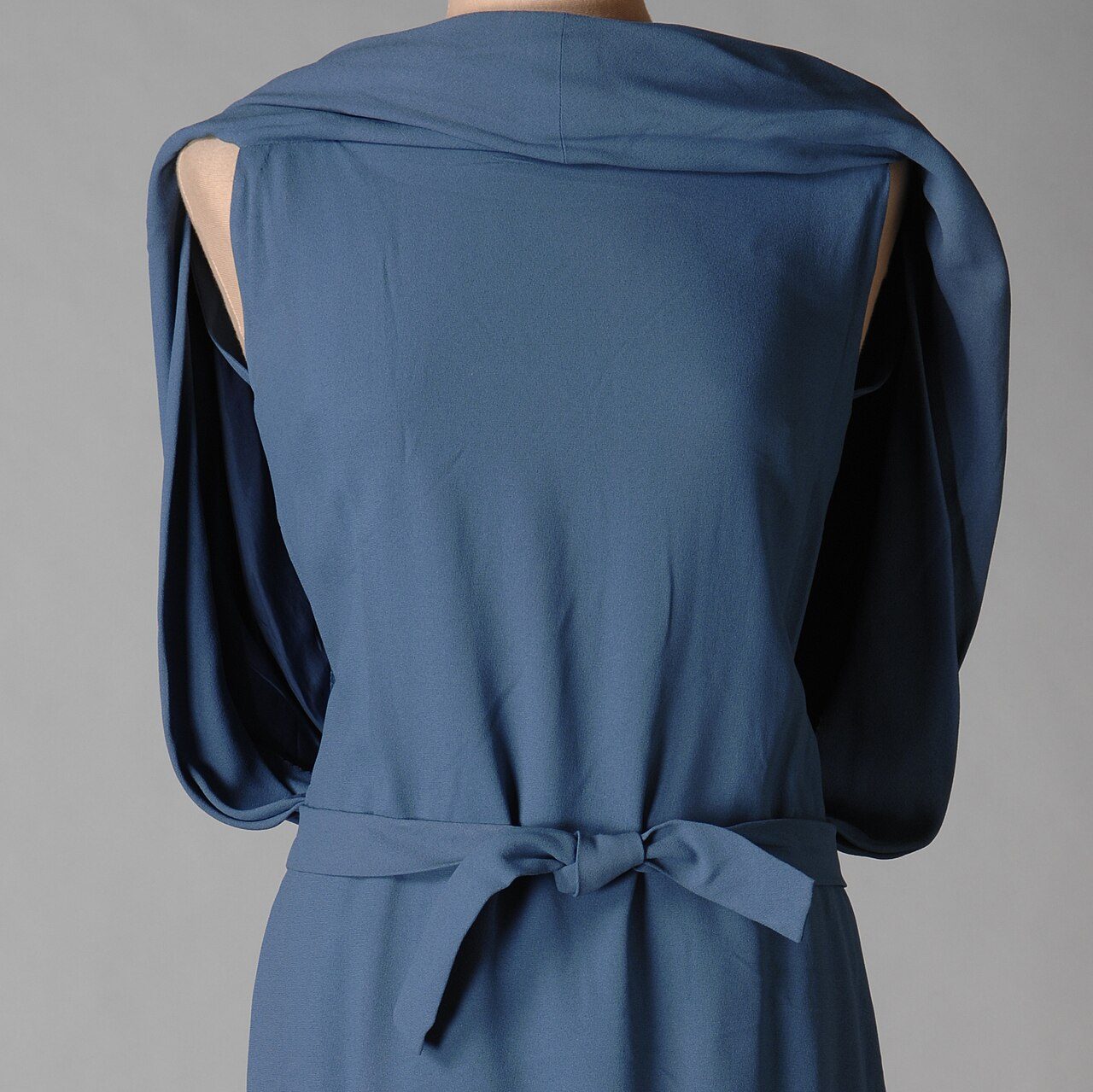
The tradition & historical record
5 min read · 2 sourcesRayon, also called viscose, is a semi-synthetic fiber made from natural sources of regenerated cellulose, such as wood and related agricultural products. It has the same molecular structure as cellulose. Many types and grades of rayon fibers and films exist. Some imitate the feel and texture of natural fibers such as silk, wool, cotton, and linen. It can be woven or knitted to make textiles for clothing and other purposes. Rayon production involves solubilizing cellulose fibers. Three common methods are as follows: 1
The cuprammonium process (obsolete), using ammoniacal solutions of copper salts The viscose process (most common) using alkali and carbon disulfide The Lyocell process, using amine oxide, avoids neurotoxic carbon disulfide but is more expensive 1
History
French scientist and industrialist Hilaire de Chardonnet (1838–1924) is known as the "father of rayon" for his early development and commercialization of nitrocellulose rayon, the first commercial semi-synthetic fiber. He patented his production process in 1885. Rayon was and still is also known by the name artificial silk. Swiss chemist Matthias Eduard Schweizer (1818–1860) discovered that cellulose dissolved in tetraamminecopper dihydroxide. Max Fremery and Johann Urban developed a method to produce carbon fibers for use in light bulbs in 1897. Improvement of cuprammonium rayon for textiles by J. P. Bemberg in 1904 made the artificial silk a product comparable to real silk. English chemist Charles Frederick Cross and his collaborators, Edward John Bevan and Clayton Beadle, patented their artificial silk in 1894. They named it "viscose" because its production involved the intermediacy of a highly viscous solution. Cross and Bevan took out British Patent No. 8,700, "Improvements in Dissolving Cellulose and Allied Compounds" in May, 1892. In 1893, they formed the Viscose Syndicate to grant licences and, in 1896, formed the British Viscoid Co. Ltd. The first commercial viscose rayon was produced by the UK company Courtaulds Fibres in November 1905. Courtaulds formed an American division, American Viscose (later known as Avtex Fibers), to produce their formulation in the US in 1910. For the next decade, American Viscose was the sole producer of rayon in the United States. By the 1920s, the United States was the largest producer of rayon in the world. By 1929, the US output of rayon was more than double that of Italy, the second largest producer. 1
Process
Rayon is produced by dissolving cellulose, then converting this solution back to insoluble fibrous cellulose. Various processes have been developed for this regeneration. The current industrial methods for creating rayon are the cuprammonium method, the viscose method, and the Lyocell process. The cuprammonium and viscose methods have been practiced for more than a century with the viscose method contributing most of production. 1
Bernigaut's method (1884)
The first rayon was made by Louis Marie Hilaire Bernigaut in 1884. Bernigaut's rayon was made of nitrocellulose produced from cellulose, where the cellulose was obtained from cotton and then reacted with a mixture of sulfuric and nitric acid. Nitration occurs as: [C6H7O2(OH)3]n + HNO3 ↔ [C6H7O2(NO3)3]n +H2O. The sulfuric acid is used take up the water formed in the reaction, leaving nitrocellulose. The nitrocellulose was highly flammable and it took seven years of further development before Bernigaut brought the product to market. The nitrocellulose process had been fully superseded for industrial production of rayon by the cuprammonium and viscose methods by the early 20th century. 1
Cuprammonium method (1890)
Cuprammonium rayon has properties similar to rayon made using the more prevalent viscose method; however, during its production, the cellulose is combined with copper and ammonia (Schweizer's reagent). Due to the detrimental environmental effects of this production method, cuprammonium rayon is no longer being produced in the United States. The process has been described as obsolete, but cuprammonium rayon is still made by one company in Japan (as of Oct 2025). Tetraamminecopper(II) sulfate is also used as a solvent. 1
Viscose method (1891)
The viscose process builds on the reaction of cellulose with a strong base, followed by treatment of that solution with carbon disulfide to give a xanthate derivative. The xanthate is then converted back to a cellulose fiber in a subsequent step. The viscose method can use wood as a source of cellulose, whereas other routes to rayon require lignin-free cellulose as a starting material. The use of woody sources of cellulose makes the viscose process cheaper, so it was traditionally used on a larger scale than the other methods. On the other hand, the original viscose process generates large amounts of contaminated wastewater. Newer technologies use less water and have improved the quality of the wastewater. 1
The raw material for viscose is primarily wood pulp (sometimes bamboo pulp), which is chemically converted into a soluble compound. It is then dissolved and forced through a spinneret to produce filaments, which are chemically solidified, resulting in fibers of nearly pure cellulose. Unless the chemicals are handled carefully, workers can be seriously harmed by the carbon disulfide used to manufacture most rayon. To prepare viscose, pulp is treated with aqueous sodium hydroxide (typically 16–19% by mass) to form alkali cellulose, which has the approximate formula [C6H9O4−ONa]n. This material is allowed to depolymerize to an extent. The rate of depolymerization (ripening or maturing) depends on temperature and is affected by the presence of various inorganic additives, such as metal oxides and hydroxides. Air also affects the ripening process, since oxygen causes depolymerization. 1
The text above is adapted from the Wikipedia article “Rayon”, available under the Creative Commons Attribution-ShareAlike 4.0 licence. 1
rayon is cellulose-based synthetic fiber, according to the structured record cited below. This entry was generated automatically from that record and has not yet been reviewed by a person familiar with the tradition. 2
The source record links this tradition to 28 external registers, which can be verified through the citation. 2