The tradition & historical record
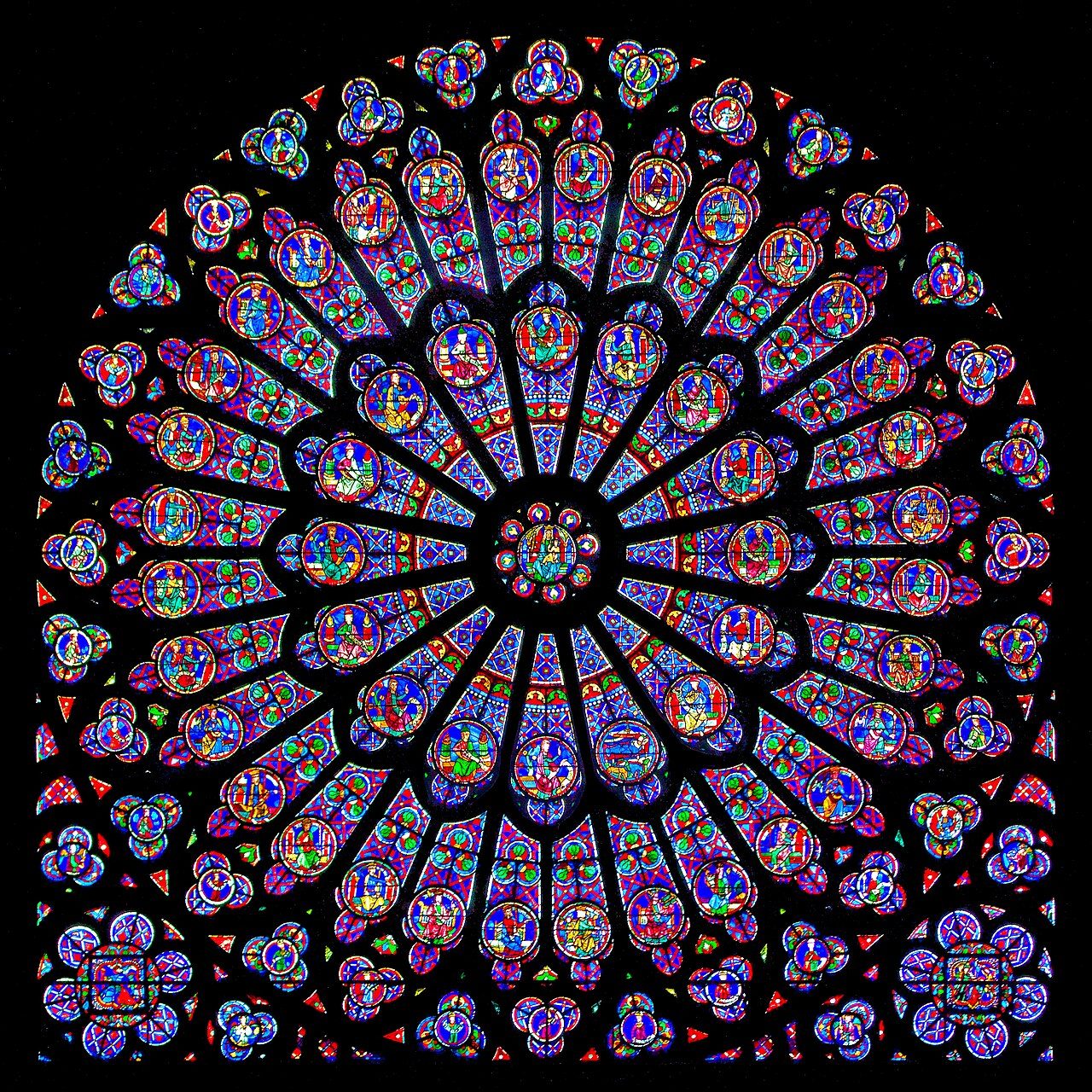
5 min read · 2 sourcesRayonnant was a style of Gothic Architecture which was developed in France in the 13th century. It was the defining style of the High Gothic period, and is often described as the high point of French Gothic architecture. French architects turned their attention from building cathedrals of greater size and height towards bringing greater light into the cathedral interiors and adding more extensive decoration. The architects made the vertical columns and supports thinner, made extensive use of pinnacles and mouldings. They combined the triforium gallery and the clerestory into single space and filled it with stained glass. They made extensive use of mouldings and bar tracery to decorate the exteriors and interiors. Among the most prominent features of the Rayonnant style were the enormous rose windows installed in the transepts and facades, made possible by the use of bar tracery. The design of the windows gave the name Rayonnant ("Radiant") to the style. The style was developed in the major reconstruction of the Abbey of Saint-Denis (1231) The first major church built in the new style was Amiens Cathedral (1220–1271). Later examples include Sainte-Chapelle, the royal chapel of King Louis IX of France (1248); the new north and south transepts of Notre Dame de Paris (1250–1270), and the church of Saint-Urbain de Troyes (1262). Rayonnant cathedrals soon appeared outside of France. One of the first was Cologne Cathedral, begun in 1248. 1
Periods
Rayonnant (French pronunciation: [ʁɛjɔnɑ̃]) style is the third of the four phases of Gothic architecture in France, as defined by French scholars. It succeeded Classic Gothic, the style of Bourges, Chartres and Reims. In the English division of Continental Gothic into three phases (Early, High, Late Gothic), it is the second and larger part of High Gothic. After the mid-14th century, Rayonnant was gradually replaced by the more ornate and highly decorated Flamboyant style. 1
Name
The term "Rayonnant" comes from the radiating spokes of the rose windows of the major cathedrals. The term was first used by 19th-century French art historians (notably Henri Focillon and Ferdinand de Lasteyrie) to classify Gothic styles on the basis of window tracery, though tracery was just one facet of the underlying style, and radiating rose windows can also be seen on earlier cathedrals, like Chartres and Reims. 1
Rayonnant in France
The style originated during the reign of Louis IX of France, or Saint Louis, from 1226 to 1270. During his reign, France was the wealthiest and most powerful nation in Europe. Louis was devoutly religious and was a major patron of the Catholic Church and arts. The University of Paris, or Sorbonne, was founded under his rule, as a school of theology. The major Rayonnant cathedrals had his patronage, and his royal chapel, Sainte-Chapelle, which he built to house his extensive collection of relics of the Saints, is considered one of the major landmarks of Rayonnant Gothic. 1
Basilica of Saint-Denis rebuilding (1231)
The Basilica of Saint-Denis, which had been the most influential initial building of Gothic style, developed problems of stability in the early 13th century. Therefore, the upper parts of the choir as well as the nave and the transepts were rebuilt beginning in 1231, opening up a greater amount of interior space (and altering beyond recognition some of the original Gothic features created by Suger). The walls were rebuilt with much larger windows, which opened up the upper elevation from the main arcades to the apexes of the vaults. The apse, once dark, was filled with light. In this campaign, the first triforia with windows were built. This was the onset of Rayonnant Gothic. 1
Amiens Cathedral
The construction of Amiens Cathedral had begun in 1220 with its western parts, in the more advanced version of Classic Gothic, similar to the eastern parts of Reims Cathedral, at the same time. Its builder, Bishop Evrard de Fouilly, set out to build the largest cathedral in France; one-hundred forty-five meters long, and seventy meters wide, with a surface area of 7700 square meters. The vaults are 42.5 meters high. The nave was completed by 1235. After the necessary enlargement of the area enclosed by the city wall, in 1236, began the construction of transept and choir, which was completed between 1241 and 1269. Here, the innovations were applied, that had been initiated in the relaunch of Saint-Denis abbey church. The western rose window was renewed in the 16th century in Flamboyant style. A close study of the tympanum in 1992 revealed traces of paint, indicating that it was entirely painted in bright colours. The original appearance is simulated today on special occasions with coloured lights. 1
The text above is adapted from the Wikipedia article “Rayonnant”, available under the Creative Commons Attribution-ShareAlike 4.0 licence. 1
Rayonnant is architectural style of Medieval France, according to the structured record cited below. This entry was generated automatically from that record and has not yet been reviewed by a person familiar with the tradition. 2
The source record links this tradition to 5 external registers, which can be verified through the citation. 2