The tradition & historical record
5 min read · 2 sourcesRed yeast rice or red rice koji is a bright reddish purple fermented rice, which acquires its color from being cultivated with the mold Monascus purpureus. Red yeast rice is what is referred to as a kōji in Japanese, meaning "grain or bean overgrown with a mold culture", a food preparation tradition going back to ca. 300 BCE. In addition to its culinary use, red yeast rice is also used in Chinese herbology and Traditional Chinese medicine, possibly during the Tang dynasty around 800 CE. Red yeast rice is described in the Chinese pharmacopoeia Ben Cao Gang Mu by Li Shizhen. Use as a dietary supplement in the modern era developed in the late 1970s, after separate researchers were isolating lovastatin from Aspergillus and monacolins from Monascus, the latter being the type of fungus used to make red yeast rice. Chemical analysis soon showed that lovastatin and monacolin K were identical. Lovastatin became the patented prescription drug Mevacor, and red yeast rice went on to become a non-prescription dietary supplement in the United States and other countries. In 1998, the U.S. Food and Drug Administration (FDA) initiated action to ban dietary supplements containing red yeast rice extract, arguing that red yeast rice products containing monacolin K are identical to a prescription drug, and are thus subject to regulation as a drug. 1
Terminology
Red yeast rice is also known as red fermented rice, red kojic rice or red koji rice from its Japanese name, and anka or angkak from Southern Min pronunciations of its Chinese name. In both the scientific and popular literature in English that draws principally on Japanese traditional use, red yeast rice is most often referred to as "red rice koji". English language articles favoring Chinese literature sources prefer the translation "red yeast rice". 1
Production
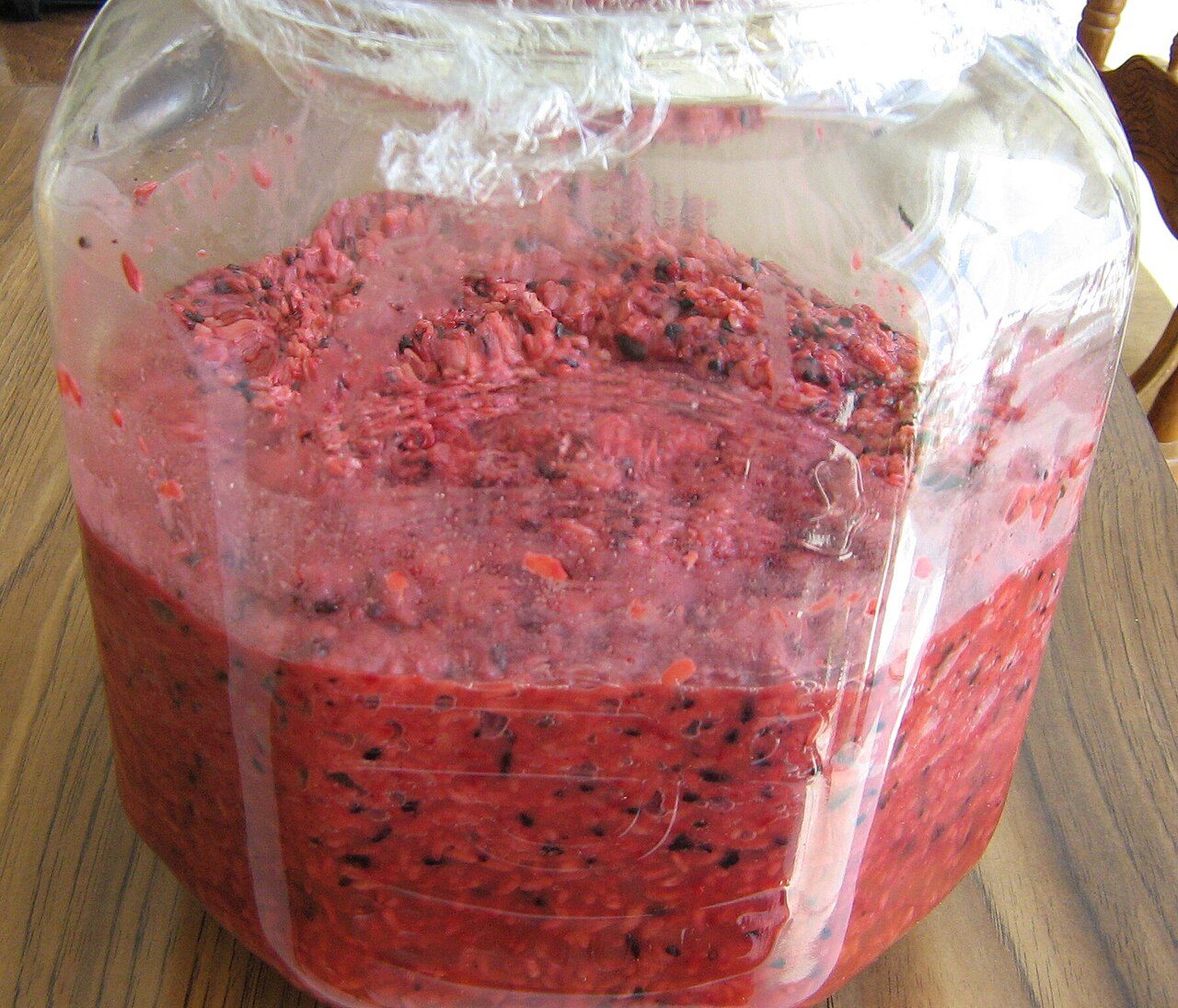
Red yeast rice is produced by cultivating the mold species Monascus purpureus on rice for 3–6 days at room temperature. The rice grains turn bright red at the core and reddish purple on the outside. The fully cultured rice is then either sold as the dried grain, or cooked and pasteurized to be sold as a wet paste, or dried and pulverized to be sold as a fine powder. China is the world's largest producer of red yeast rice, but European companies have entered the market. 1
Culinary
Red yeast rice is used to color a wide variety of food products, including fermented tofu, red rice vinegar, char siu, Peking duck, and Chinese pastries that require red food coloring. In China, documentation dates back to at least the first century CE. It is also traditionally used in the production of several types of Chinese huangjiu (Shaoxing jiu), and Japanese sake (akaisake), imparting a reddish color to these wines. It was called a "koji" in Japanese, meaning "grain or bean overgrown with a mold culture". The lees left over from wine production, known as hóngzāo (红糟), can be used as flavoring, imparting a subtle but pleasant taste to food. The lees are particularly commonly used in Fujian cuisine, where they are used for dishes like Fujian red wine chicken, a celebratory dish associated with birthdays and Chinese New Year. Red yeast rice (angkák in Filipino) is also used widely in the Philippines to traditionally color and preserve certain dishes like fermented shrimp (bagoóng alamáng), burong isdâ (fermented rice and fish), and balao-balao (fermented rice and shrimp). 1
Traditional Chinese medicine
In addition to its culinary use, red yeast rice is also used in Chinese herbology and traditional Chinese medicine. Medicinal use of red yeast rice is described in the Chinese pharmacopoeia Ben Cao Gang Mu compiled by Li Shizhen ca. 1590. Recommendations were to take it internally to invigorate the body, aid in digestion, and revitalize the blood. One reference provided the Li Shizhen health claims as a quotation "...the effect of promoting the circulation of blood and releasing stasis, invigorating the spleen, and eliminating [in]digestion." 1
Red yeast rice and statin drugs
In the late 1970s, researchers in the United States and Japan were isolating lovastatin from Aspergillus and monacolins from Monascus, the latter being the same fungus used to make red yeast rice (RYR) when cultured under carefully controlled conditions. Chemical analysis soon showed that lovastatin and monacolin K are identical chemical compounds. The two isolations, documentations, and patent applications occurred months apart. Lovastatin became the patented, prescription drug Mevacor. Red yeast rice went on to become a non-prescription dietary supplement in the United States and other countries. Lovastatin and other prescription statin drugs inhibit cholesterol synthesis by blocking action of the enzyme HMG-CoA reductase. As a consequence, circulating total cholesterol and LDL-cholesterol are lowered by 24–49% depending on the statin and dose. Different strains of Monascus fungus will produce different amounts of monacolins. The 'Went' strain of Monascus purpureus (purpureus=dark red in Latin), when properly fermented and processed, will yield a dried red yeast rice powder that is approximately 0.4% monacolins, of which roughly half will be monacolin K (chemically identical to lovastatin). 1
The text above is adapted from the Wikipedia article “Red yeast rice”, available under the Creative Commons Attribution-ShareAlike 4.0 licence. 1
red yeast rice is type of fermented rice, according to the structured record cited below. This entry was generated automatically from that record and has not yet been reviewed by a person familiar with the tradition. 2
The source record links this tradition to 9 external registers, which can be verified through the citation. 2