The tradition & historical record
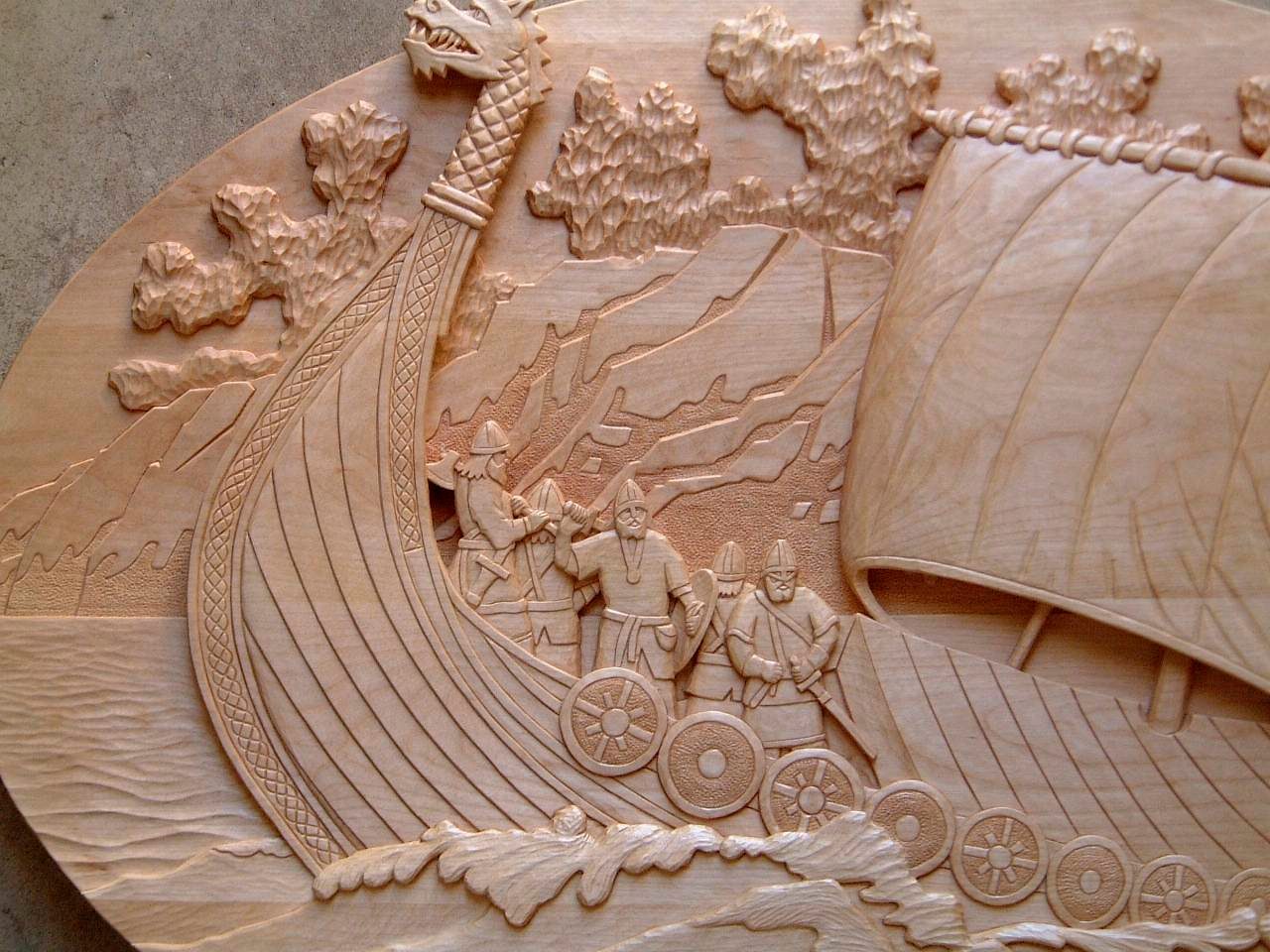
3 min read · 2 sourcesIn wood carving, relief carving is a technique in which figures or patterns are carved in a flat panel of wood; the same term is also used for carving in stone, ivory carving and various other materials. The figures project only slightly from the background rather than standing freely. Depending on the degree of projection, reliefs may also be classified as high or medium relief. Relief carving can be described as "carving pictures in wood". The process of relief carving involves removing wood from a flat wood panel in such a way that an object appears to rise out of the wood. Relief carving begins with a design idea, usually put to paper in the form of a master pattern which is then transferred to the wood surface. Most relief carving is done with hand tools, chisels and gouges, which often require a mallet to drive them through the wood. As wood is removed from the panel around the objects traced onto it from the pattern, the objects themselves stand up from the background wood. Modelling of the objects can take place as soon as enough background has been removed and the object edges are trimmed to the pattern lines. In order to secure the wood panel, a workbench with fixtures like bench-dogs, carver's screws or clamps, is necessary. Carving tools come in a wide variety of shapes and sizes, some aimed strictly at the hobbyist, but others directed at professional carvers. Some carving tools are held with one hand while the carving is held in the other. 1
Stages of relief carving
Create a pattern, drawn on paper. Prepare a wood panel for carving. This may be a single piece of wood or a laminated panel. Transfer the pattern to the panel, using carbon paper as the transfer medium. Remove wood around the objects that comprise the pattern. Model the objects Detail the objects Tidy the background behind the objects Apply a suitable finish to the panel 1
Styles of relief carving
High relief, usually between 1/2" and 2" in depth. Bas relief, or Low relief usually under 1/2" in depth. Deep relief, usually over 2" in depth. Pierced relief, where holes are carved clear through the wood. Some carvers prefer to finish their carving with a clear finish. But others incorporate color and pyrography into their relief carvings. 1
The text above is adapted from the Wikipedia article “Relief carving”, available under the Creative Commons Attribution-ShareAlike 4.0 licence. 1
relief carving is carving in which figures are carved in a flat panel of wood, according to the structured record cited below. This entry was generated automatically from that record and has not yet been reviewed by a person familiar with the tradition. 2
The source record links this tradition to 3 external registers, which can be verified through the citation. 2