The tradition & historical record
3 min read · 2 sourcesResist dyeing (resist-dyeing) is a traditional method of dyeing textiles with patterns. Methods are used to "resist" or prevent the dye from reaching all the cloth, thereby creating a pattern and ground. The most common forms use wax, some type of paste made from starch or mud, or a mechanical resist that manipulates the cloth such as tying or stitching. Another form of resist involves using a dye containing a chemical agent that will repel another type of dye printed over the top. The best-known varieties today include tie-dye, batik, and ikat. 1
Wax or paste
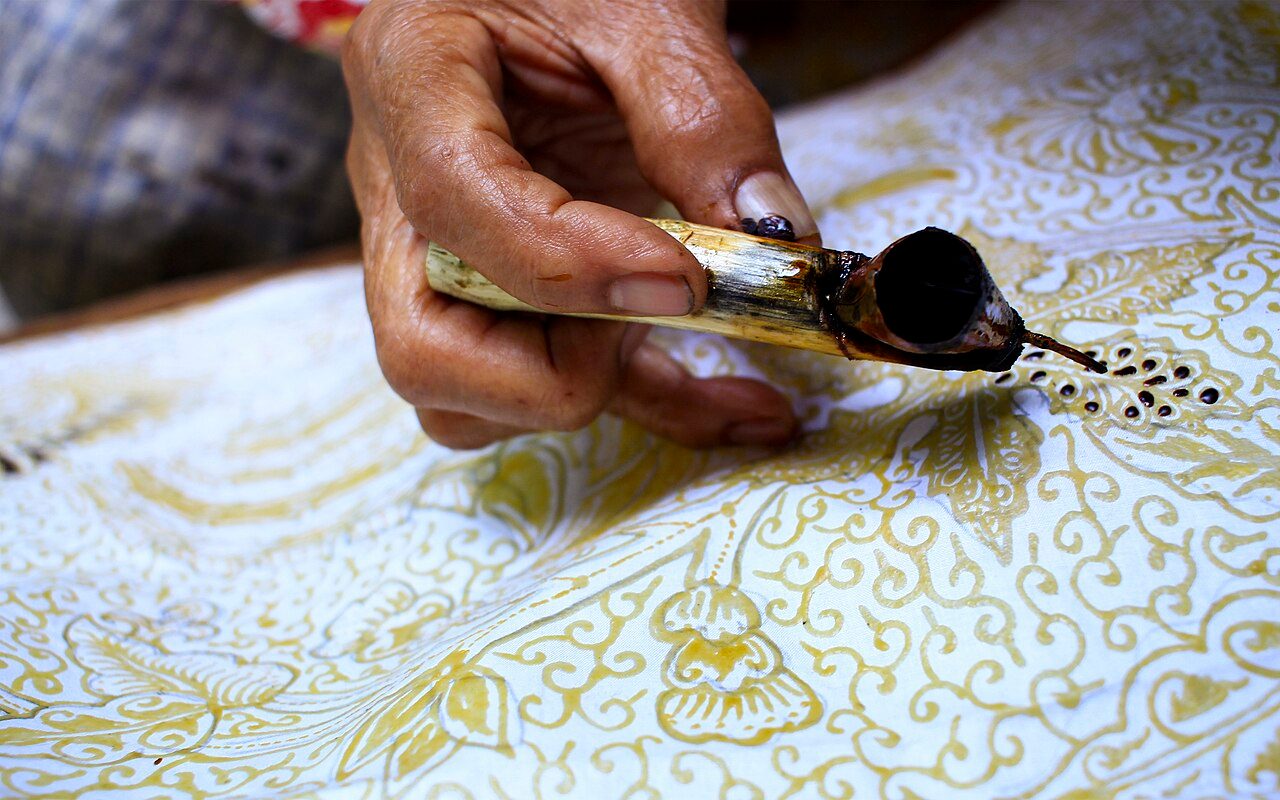
In wax or paste resists, melted wax or some form of paste is applied to cloth before being dipped in dye. Wherever the resist medium has seeped through the fabric, the dye will not penetrate. Sometimes several colors are used, with a series of steps including dyeing, drying, and the repeated application of the resist. The resist may also be applied to another piece of cloth to make a stencil, which is then placed over the cloth, and dye applied to the assembly; this is known as resist printing. 1
Stencils
In stencilled resists, a stencil is placed over the fabric where it is to be shielded from ink, similar to how screen prints are made. 1
Mechanical
Mechanical resist dyeing ties, stitches or clamps the cloth using clothespins or wooden blocks to shield areas of the fabric from the dye. 1
Chemical
Chemical resist dyeing is a modern textile printing method, commonly achieved using two different classes of fiber reactive dyes, one of which must be of the vinyl sulfone type. A chemical-resisting agent is combined with dye Type A, and printed using the screenprint method and allowed to dry. A second dye, Type B, is then printed overtop. The resist agent in Type A chemically prevents Type B from reacting with the fabric, resulting in a crisp pattern/ground relationship. 1
History
Resist dyeing has been very widely used in Asia, Africa, and Europe since ancient times. The earliest extant pieces of resist-dyed fabric were found in Egypt, dating to the 4th century AD. Cloths used for mummy wrappings were sometimes coated with wax, scratched with a sharp stylus, and dyed with a mixture of blood and ashes. After dyeing, the cloth was washed in hot water to remove the wax. In Asia, this technique was practiced in China during the Tang dynasty (618–907 AD), Indonesia, India, and Japan in the Nara period (645–794 AD). In Africa, it was originally practiced by the Yoruba people in Nigeria, and the Soninke and Wolof in Senegal. 1
The text above is adapted from the Wikipedia article “Resist dyeing”, available under the Creative Commons Attribution-ShareAlike 4.0 licence. 1
resist dyeing is traditional method of dyeing textiles with patterns, according to the structured record cited below. This entry was generated automatically from that record and has not yet been reviewed by a person familiar with the tradition. 2
The source record links this tradition to 5 external registers, which can be verified through the citation. 2