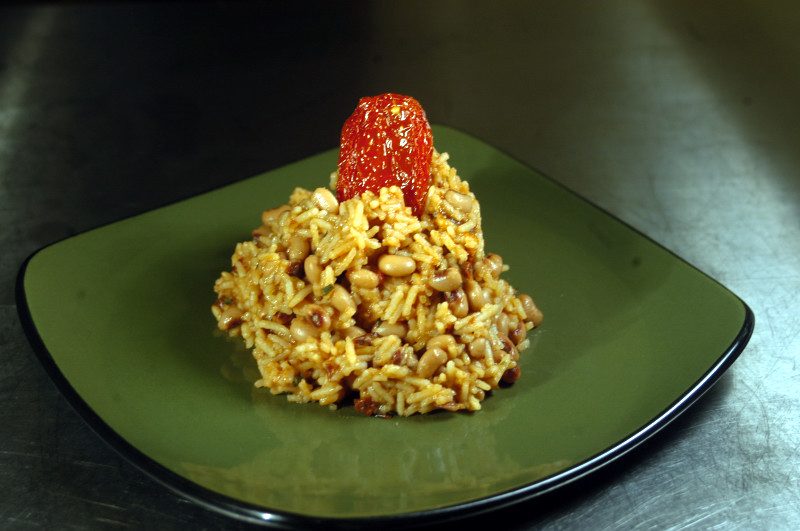
The tradition & historical record
5 min read · 2 sourcesRice and peas or peas and rice is a traditional rice dish in some Caribbean and Latin American countries. Kidney beans (red peas/beans) and other similar varieties are typically used to prepare the dish in the Greater Antilles and coastal Latin America. Sometimes, it is made with pigeon peas, otherwise called gungo peas by Jamaicans. Rice and peas recipes vary throughout the region, with each country having its own way(s) of making them and name(s)—with the two main ingredients being legumes (peas/beans) and rice, combined with herbs, spices and/or coconut milk. 1
History
Rice and peas, a one-pot Creole dish that originated in the Caribbean during the colonial era, includes a mixture of ingredients, cooking techniques and spices influenced by various ethnic groups in the region. The Spanish, the first European arrivals to the Americas, contributed many peas/bean dishes and rice dishes. They also introduced Asian rice to the Caribbean and Latin America, as well as herbs and spices like garlic, thyme, onion, and oregano. Kidney beans, another key ingredient, are thought to have originated in Peru around 8,000 B.C., and other native cultivars including black turtle beans, pinto beans, and lima beans used in the dish, were dispersed throughout the Americas by indigenous Amerindian tribes by 500 B.C., then later the Spanish and Portuguese, who introduced them to other parts of the world. Similarly, the Amerindians cultivated pimento, and they spread Capsicum chinense cultivars throughout the region, including Scotch bonnet and other peppers used in the dish. The Africans who arrived during slavery and indentureship also influenced the dish, especially with the use of pigeon and cow peas. Along with the Spanish, Portuguese, French, English, Dutch and East Indians, they contributed to the introduction and cultivation of rice in the region. Pigeon peas (also called Congo or Angola peas), which originated in India and were domesticated there 3500 years ago, were also introduced by the Spanish and Portuguese, from Africa. Throughout the Caribbean and Latin America, they are referred to as gandule, guandules or guandu (Spanish and Portuguese), gungo (Jamaican Patois) and pwa kongo or pwa di bwa (French Creole)— which were possibly derived from Bantu dialects, ngungu or wandu (Kongo) and oanda (Angolan Kimbundu). 1
Caribbean
Jamaica Rice and peas from Jamaica is one of the most popular variations from the region. It is typically eaten as a side dish, often accompanied with meats or seafood. Jamaican rice and peas has been introduced to other parts of the world by the diaspora, and is eaten in other countries outside of the Caribbean. In Jamaica, the dish is especially prepared on Sundays for dinner. Kidney beans and other similar cultivars like round reds are normally used to prepare the dish; however, pigeon peas (gungo peas) and Jerusalem peas (Phaseolus trinervius) are traditionally cooked during the Christmas season. Other ingredients include Scotch bonnet and pimento, which are native to the island, and long-grain rice, coconut milk, scallion, garlic, salt and pepper, and thyme. Sometimes, cured meat like corned pork or beef is added to rice and peas. 1
Cuba Moros y cristianos (also called Moros), which means "Moors and Christians", and congri are Cuban variations. Both side dishes resemble and taste similar to Jamaican rice and peas and Haitian diri ak pwa or kongo; however, some of the ingredients are different. Moros is usually made with black beans, while congri is made with black or red beans— which represent the Islamic Moors, with the rice representing Christian Spaniards. The dish commemorates the Reconquista, and represents how both groups came to live together in the Iberian Peninsula after a long period of battle. According to Cuban historian and anthropologist Fernando Ortiz Fernández, congri was adopted from the Haitians who settled in Cuba during the Haitian Revolution. Other ingredients include onion, bell pepper, garlic, tomato, bay leaf, cumin, oregano and salt. Sometimes, bacon or pork is added. 1
Belize Belizean rice and beans is the national dish of Belize. 1
Latin America
Nicaragua & Costa Rica 1
Gallo pinto which means "spotted rooster" in Spanish, is a Central American variation made mainly in Nicaragua and Costa Rica. It is the national dish of both countries, and is typically made with black or red beans in Costa Rica, while in Nicaragua red beans are used. In both countries, the dish may be eaten for breakfast, lunch or dinner. The historical origins of gallo pinto can be traced back to Afro-Caribbean people, specifically Jamaicans. In the 1800s, Jewish Jamaicans, most notably the Lindo brothers who were merchants and planters, migrated to Costa Rica and established businesses in agriculture (coffee, sugar, rice, banana and other produce). 1
According to the book Mamita Yunai by Carlos Luis Fallas, Costa Ricans and Nicaraguans worked together on banana plantations, on the Caribbean coast of Costa Rica where gallo pinto was a staple dish— introduced by emancipated African slaves from Jamaica, who worked on the banana plantations too. As such, Nicaraguans took the Caribbean recipe back to Nicaragua, while Costa Ricans brought the recipe to the Central Valley and made it a traditional meal there. Further, the Jamaican Jews who arrived in the 19th century, integrated with the local population and settled in Cartago, San Jose and Puerto Limon. Many Afro-Jamaicans also went to Costa Rica to work in the construction of the Atlantic Railroad and port— thus, they brought their culture, dialect and culinary practices with them, including rice and peas. 1
The text above is adapted from the Wikipedia article “Rice and peas”, available under the Creative Commons Attribution-ShareAlike 4.0 licence. 1
rice and peas is traditional food within the West Indian Caribbean islands, according to the structured record cited below. This entry was generated automatically from that record and has not yet been reviewed by a person familiar with the tradition. 2
The source record links this tradition to 1 external register, which can be verified through the citation. 2