The tradition & historical record
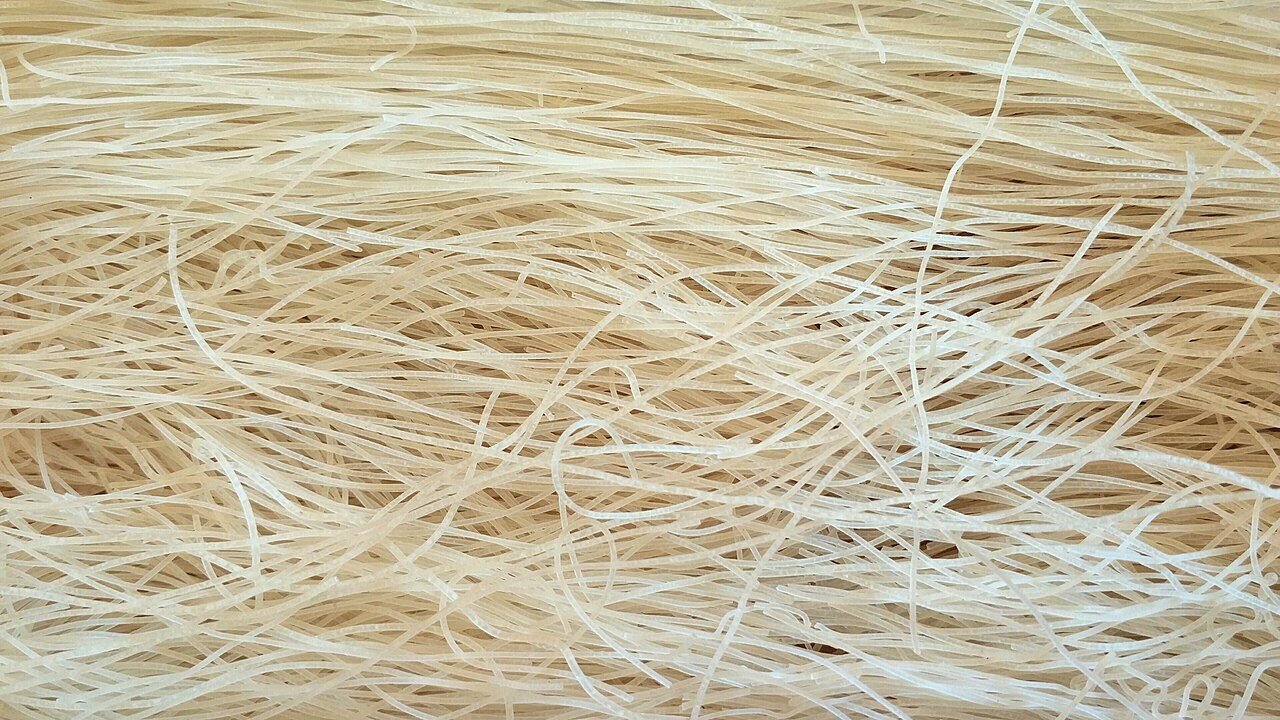
3 min read · 2 sourcesRice vermicelli is a thin form of rice noodle. It is sometimes referred to as "rice noodles" or "rice sticks", but should not be confused with cellophane noodles, a different Asian type of vermicelli made from mung bean starch or rice starch rather than rice grains themselves. 1
Presentation and varieties
Rice vermicelli is a part of several Asian cuisines, where it is often eaten as part of a soup dish, stir-fry, or salad. Being in such widespread use, multiple varieties exist. One particularly well-known, slightly thicker variety, called Guìlín mǐfěn (桂林米粉), comes from the southern Chinese city of Guilin, where it is a breakfast staple. 1
Names
Rice vermicelli is widely known in Asia by cognates of Hokkien 米粉 (bí-hún, lit. 'rice vermicelli'). These include bīfun (Japan), bí-hún or mifen (Taiwan), bíjon or bihon (Philippines), bee hoon (Singapore), bihun or mee hoon (Malaysia and Indonesia), and mee hoon (Southern Thailand). Other names include num banh chok (Cambodia), hsan-kya-zan (Myanmar), and bún (Vietnam). 1
Naming in Taiwan
Beginning July 1, 2014, Food and Drug Administration of Taiwan rules have been in effect that only products made of 100% rice can be labeled and sold as "米粉"(bí-hún, mǐfěn) in Taiwan, usually translated as "rice vermicelli" or "rice noodle". If the product contains starch or other kinds of grain powder as ingredients but is made of at least 50% rice, it is to be labelled as "調和米粉", meaning "blended rice vermicelli". Products made of less than 50% rice cannot be labelled as rice vermicelli. 1
Mainland China
Yunnan and Guangxi cuisine—famous dishes include crossing-the-bridge noodles, mixian, Guilin noodles, and luosifen (snail noodles). Rice noodles are also a staple of ethnic Tai, Miao, and Zhuang cuisine. Cantonese noodles—a large number of Cantonese dishes use this ingredient (called 米粉 maifun or "rice" in Cantonese). Usually, the noodles are simmered in broth with other ingredients, such as fish balls, beef balls, or fish slices. Fujian and Teochew cuisine—rice vermicelli is a commonly used noodle and is served either in soup, stir-fried and dressed with a sauce, or "dry" (without soup) with added ingredients and condiments. As the term 米粉 (mifen) literally only means "rice noodles" in Chinese, there is considerable variation among rice noodles granted this name. In Hubei and historically in much of Hunan, mifen refers to thick, flat rice noodles made using a wet mix, similar to shahe fen. In Changde, the term refers to thick, round noodles that have supplanted the other mifen in Hunan. These are mifen in China, but not rice vermicelli noodles. 1
Hong Kong
Singapore-style noodles (星州炒米, Xīng zhōu cháo mǐ)—a dish of fried rice vermicelli common in Hong Kong Cantonese-style eateries, inspired by the spicy cuisines of Southeast Asia. This dish is made from rice vermicelli, char siu, egg, shrimp and curry. 1
The text above is adapted from the Wikipedia article “Rice vermicelli”, available under the Creative Commons Attribution-ShareAlike 4.0 licence. 1
rice vermicelli is thin dried noodles made of rice originating from Asia, according to the structured record cited below. This entry was generated automatically from that record and has not yet been reviewed by a person familiar with the tradition. 2
The source record links this tradition to 4 external registers, which can be verified through the citation. 2