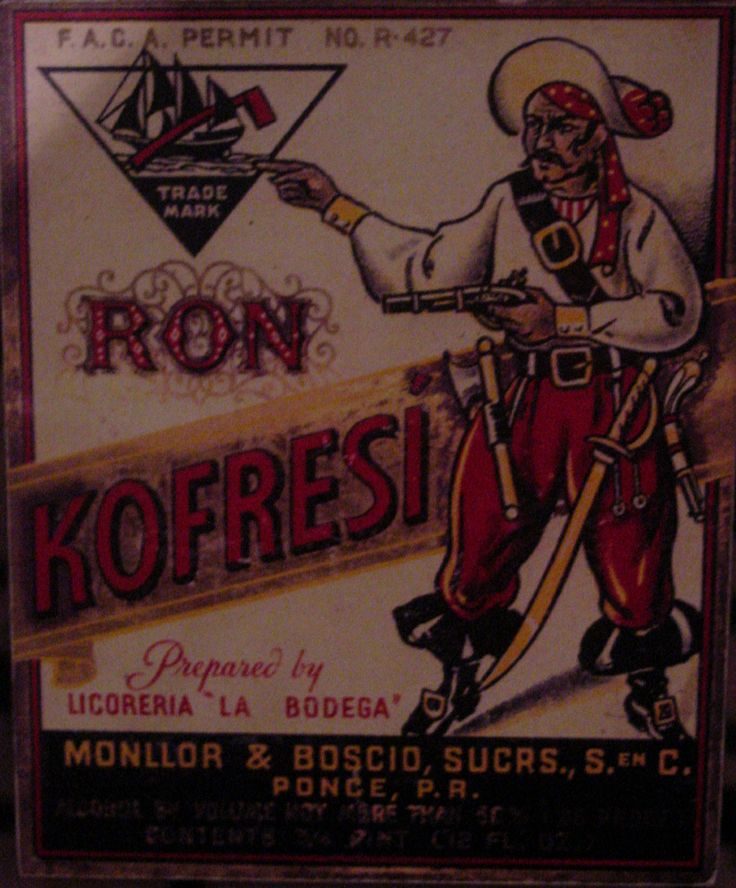
The tradition & historical record
6 min read · 2 sourcesRegarded as the last successful pirate of the Caribbean during the 19th century's suppression era, the life of Roberto Cofresí has been romanticized in his native Puerto Rico and neighboring nations. Already possessing a reputation as hard to capture in life, the freebooter became a symbol for an archipelago immersed in the political unrest caused by its status as a colony within the struggling Spanish Empire. Under these circumstances, Cofresí was soon characterized as a benign and generous thief. In a similar trend, he was also associated with the Puerto Rican independence movement of the era. During the late 19th and early 20th century, the abundant oral tradition led to a subgenre of folk hero literature which depicted Cofresí as a benevolent force and contradicted the other pirate-related works of the time, including the well known Treasure Island and Peter Pan. A century later, this contrast became the subject of sociological study. Research to uncover the historical figure behind these myths has also been published by authors linked to the Puerto Rican Genealogical Society, which creates a parallel to this narrative. While in prison, Cofresí claimed to possess at least 4,000 pieces of eight still accessible after the authorities confiscated his ship, mentioning them in an unsuccessful attempt to bribe an officer in exchange for his freedom. 1
Traits and popular perception
As is the case with other pirates, the actual traits of Cofresí became romanticized and entangled in the mythic aura that surrounds his person long ago. Cofresí was known to be bold and risky, to the point that Salvador Brau argues in Historia de Puerto Rico that had he lived during the 18th century, he would have even eclipsed the accomplishments of Miguel Enríquez. Historian Walter Cardona Bonet also supports this notion, noting that he acted with "a lot of courage and bravery", with his leadership being further established by his "charisma [and] intelligence". This particular aspect, has been heavily mystified, with most legends emphasizing his bravery. The Spanish authorities actually recognized this trait, which Pedro Tomas de Córdova notes in his compilation, Memorias, and may have unwittingly help develop a cult of personality around his figure. During his lifetime, the colonial government of Puerto Rico made efforts to portray him as a fierce and violent criminal. His epithet, "The Terror of the Seas", reflects his position as the unopposed "Pirate Lord" of the region during the early 19th century. In the United States, the media did its part by sensationalizing Cofresí's death row confession of having murdered around 400 victims. This had the effect of portraying him as an antithesis to authority in a troubled society. Author Robert Fernández Valledor notes that the legends that follow his life basically emerge from this status as "Puerto Rico's first rebel". As a consequence of the power void following his death, there was a sharp decline in piracy as no other figure could gather the support of the local population in this fashion. 1
Oral tradition
Cofresí's life and death have inspired several myths and stories. These included those depicting him as a generous figure, who used to share what he stole with the region's poor population. In these myths he is generally described as a benevolent person, with authors writing about his supposed personality. Others take note of his purported sense of humor. In general, these portray him as a noble gentleman who became a pirate out of necessity or as a generous man, claiming that on one occasion he provided money for the upbringing of a baby girl that he had saved. Others depict a brave man, showing disregard for his life on several occasions. The "generous thief" archetype that is associated with Cofresí was predominant during the 19th century, being promoted by the romanticism present in the work of several prominent authors. Further influenced by an anti-establishment sentiment that arose from the dire conditions of the general population, the poor people quickly identified with these "rebels", "who were simply trying to make justice in an unfair social structure where the poor would always take the worst part". Shortly after his death, the popular songs that described his life painted his actions in a positive light, as "feats" instead of crimes. Another copla testifies how the general public praises his bravery, while labeling the authorities as cowards. However, the merchant class also had its own oral tradition, which portrayed him as a "tyrant" of the seas and celebrates that with him gone the business would be normalized. An example from Guayama claims that the pirates would bait the crews of passing vessels by disembarking at Cayo Caribe and posing as shipwrecked sailors, murdering them after the ships ran aground in the shallows. 1
Cofresí's treasure
By intercepting merchant vessels that traveled from Europe to the West Indies, Cofresí is said to have gathered a significant amount of loot. To this day the location of his buried treasures remains a key aspect of the oral tradition surrounding his figure. In Puerto Rico, the undiscovered loot is said to be dispersed throughout the beaches in the west coast. The locations have been several, ranging from Cabo Rojo to Rincón. Specific beaches such as Guajataca, Puerto Hermina, Pico de Piedra or La Sardinera are mentioned depending the municipality where the stories originate. The lesser known Saona, a former pirate's nest, has been quoted as well. His treasure has been placed as far north as Añasco River's mouth and as far east as Tamarindo del Sur in Vieques, where fishermen reportedly saw boxes tied with chains. Some excavations have met moderate success near these places, with people retrieving a small quantities of silver and gold coins in Guaniquilla (part of southern Cabo Rojo), which further fueled the idea that a larger treasure could be nearby. Similar legends are recorded in the adjacent Aguada, where several stories claim that the Ana's water supply was taken from local water sources. Historian Pedro Vélez of the Aguada Museum claims that coin caches found in the municipality lend some credibility to these stories. During the 1950s, numerous excavation were held at Cayo Pirata in Culebra, which found Taíno remains. The same happened at the eponymous Cayo Cofresí, near the vicinity of Jobos Bay and Salinas, where native ceramics were excavated. Few of these accounts agree with each other, but a ritual where he would kill a crewmember and leave his body besides the treasure is recurrent and seen in most accounts, even some with notable variations. 1
Cofresí and the supernatural
Several legends grant Cofresí a connection to the supernatural. Historian Roberto Fernández Valledor argues that a letter published in El Colombiano erroneously claiming that he was killed might have been a catalyst for these. 1
Origin and retribution stories
The reasons behind Cofresí's turn toward piracy are unclear, but most popular theories ignore his previous criminal record and propose alternative motivations. 1
The text above is adapted from the Wikipedia article “Roberto Cofresí in popular culture”, available under the Creative Commons Attribution-ShareAlike 4.0 licence. 1
Roberto Cofresí in popular culture is Roberto Cofresí was a pirate from Puerto Rico, according to the structured record cited below. This entry was generated automatically from that record and has not yet been reviewed by a person familiar with the tradition. 2
The source record links this tradition to 1 external register, which can be verified through the citation. 2