The tradition & historical record
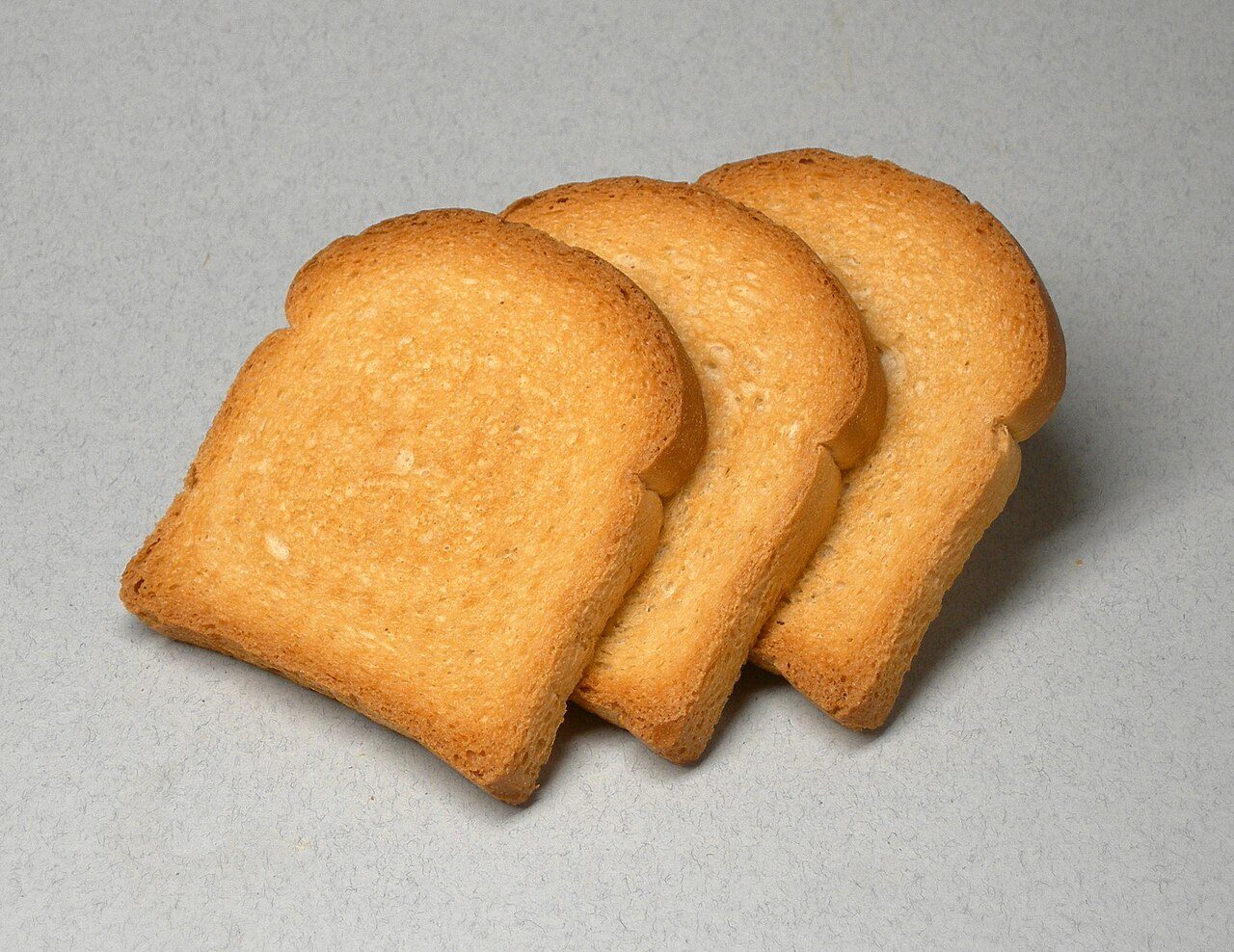
2 min read · 2 sourcesA rusk is a hard, dry biscuit or a twice-baked bread. It is sometimes used as a teether for babies. In some cultures, rusk is made of cake rather than bread: this is sometimes referred to as cake rusk. In the UK, the name also refers to a wheat-based food additive. 1
Argentina
In Argentina, rusk is called tostadas de mesa (literally 'table toasts'), slices of twice-baked bread generally available in supermarkets in plain and sweetened variants. Cake rusk is called "bay biscuit"; its ingredients are egg, sugar, oil, self-rising flour, and vanilla. 1
Azerbaijan
Rusk is called sukhary (Azerbaijani: suxarı – a loanword from Russian via Persian) in Azerbaijani. It is usually made from stale bread and buns. In Baku, some bakeries use their stale buns and bread for making rusks. The price of rusk in those bakeries is usually low, as the bakeries do this to avoid wasting the leftover bread and buns. 1
Balkans
The Serbo-Croatian version is called dvopek (dvo- 'twice', pek, 'baked'). 1
Bangladesh
Rusk is commonly called toast biscuit. Toast biscuits come in a variety of flavours, such as ghee toast, garlic toast, and sugar toast, and are usually served with tea. Cake rusk is commonly known as dry cake. 1
Brazil
The Brazilian version of rusks is called torrada industrializada (industrialised toast), or simply torrada (toast). As of 2016 it was consumed by 33.2% of Brazilian households. 1
The text above is adapted from the Wikipedia article “Rusk”, available under the Creative Commons Attribution-ShareAlike 4.0 licence. 1
rusk is hard, dry biscuit or a twice-baked bread, according to the structured record cited below. This entry was generated automatically from that record and has not yet been reviewed by a person familiar with the tradition. 2
The source record links this tradition to 8 external registers, which can be verified through the citation. 2