The tradition & historical record
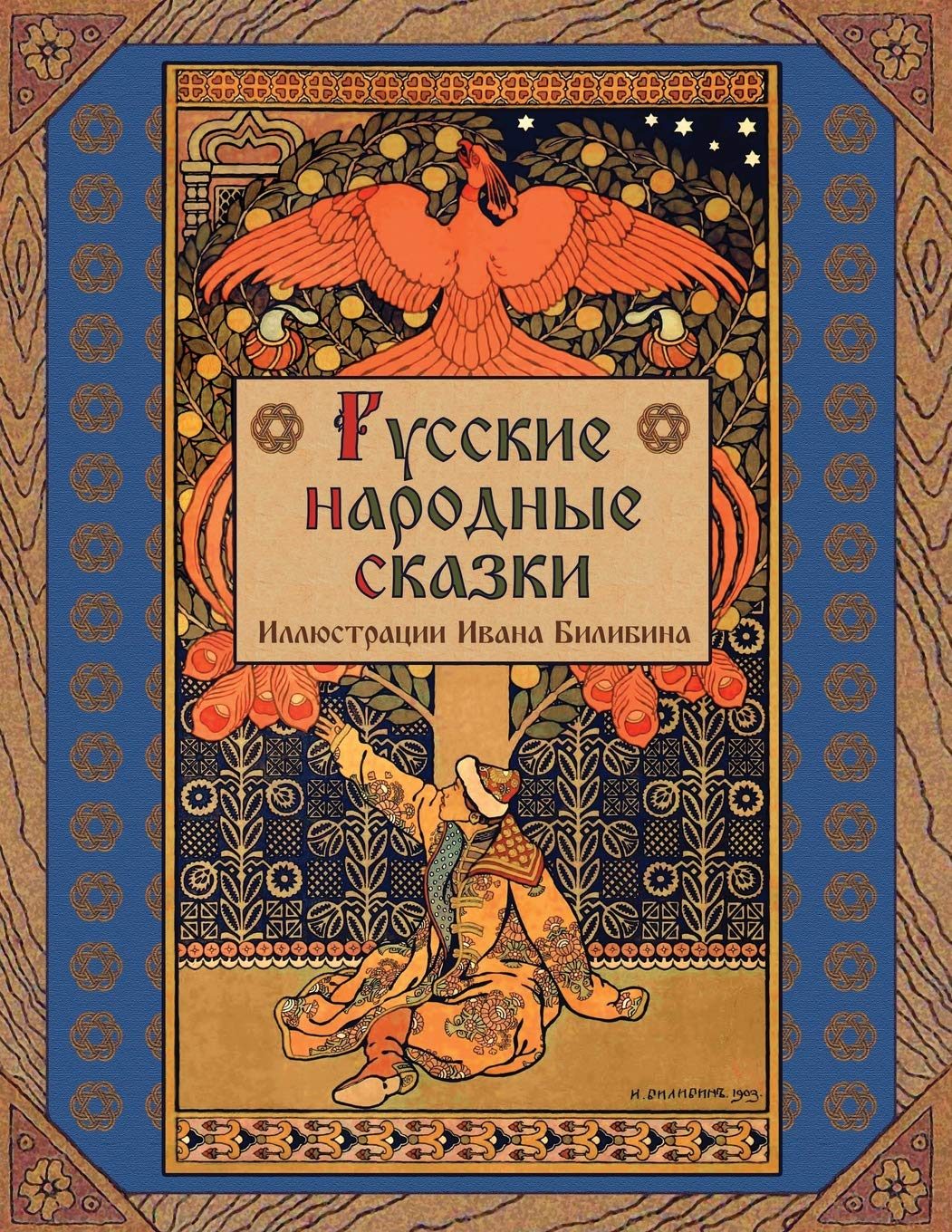
5 min read · 2 sourcesA Russian fairy tale or folktale (Russian: ска́зка, romanised: skazka; plural ска́зки, skazki) is a fairy tale in Russian culture. Various sub-genres of skazka exist. A volshebnaya skazka (Russian: волше́бная ска́зка, lit. 'magical tale') is considered a magical tale, skazki o zhivotnykh are tales about animals, and bytovye skazki are tales about household life. Russian folklore was first collected by scholars and systematically studied in the 19th century. Russian fairy tales and folk tales were catalogued (compiled, grouped, numbered and published) by Alexander Afanasyev in his 1850s Narodnye russkie skazki. Scholars of folklore still refer to his collected texts when citing the number of a skazka plot. An exhaustive analysis of the stories, describing the stages of their plots and the classification of the characters based on their functions, was developed later, in the first half of the 20th century, by Vladimir Propp (1895-1970). 1
History
Appearing in the latter half of the eighteenth century, fairy tales became widely popular as they spread throughout the country. Literature was considered an important factor in the education of Russian children who were meant to grow from the moral lessons in the tales. During the 18th Century Romanticism period, poets such as Alexander Pushkin and Pyotr Yershov began to define the Russian folk spirit with their stories. Throughout the 1860s, despite the rise of Realism, fairy tales still remained a beloved source of literature which drew inspiration from writers such as Hans Christian Andersen. 1
Effects of communism
The messages in the fairy tales began to take a different shape once Joseph Stalin rose to power under the Communist movement. Fairy tales were thought to have a strong influence over children which is why Joseph Stalin decided to place restrictions upon the literature distributed under his rule. The tales created in the mid 1900s were used to impose Socialist beliefs and values as seen in numerous popular stories. In comparison to stories from past centuries, fairy tales in the USSR had taken a more modern spin as seen in tales such as in Anatoliy Mityaev's Grishka and the Astronaut. Grishka and the Astronaut, examines modern Russian's passion to travel through space as seen in reality with the Space Race between Russia and the United States. The new tales included a focus on innovations and inventions that could help characters in place of magic which was often used as a device in past stories. 1
Influences
In Russia, the fairy tale is one sub-genre of folklore and is usually told in the form of a short story. They are used to express different aspects of the Russian culture. In Russia, fairy tales were propagated almost exclusively orally, until the 17th century, as written literature was reserved for religious purposes. In their oral form, fairy tales allowed the freedom to explore the different methods of narration. The separation from written forms led Russians to develop techniques that were effective at creating dramatic and interesting stories. Such techniques have developed into consistent elements now found in popular literary works; They distinguish the genre of Russian fairy tales. Fairy tales were not confined to a particular socio-economic class and appealed to mass audiences, which resulted in them becoming a trademark of Russian culture. Cultural influences on Russian fairy tales have been unique and based on imagination. Isaac Bashevis Singer, a Polish-American author and Nobel Prize winner, claims that, “You don't ask questions about a tale, and this is true for the folktales of all nations. They were not told as fact or history but as a means to entertain the listener, whether he was a child or an adult. Some contain a moral, others seem amoral or even antimoral, Some constitute fables on man's follies and mistakes, others appear pointless." They were created to entertain the reader. Russian fairy tales are extremely popular and are still used to inspire artistic works today. The Sleeping Beauty is still played in New York at the US Ballet Theatre and has roots to original Russian fairy tales from 1890. Mr. Ratmansky’s, the artist-in-residence for the play, gained inspiration for the play's choreography from its Russian background. 1
Formalism
From the 1910s through the 1930s, a wave of literary criticism emerged in Russia, called Russian formalism by critics of the new school of thought. 1
Analysis
Many different approaches of analysing the morphology of the fairy tale have appeared in scholarly works. Differences in analyses can arise between synchronic and diachronic approaches. Other differences can come from the relationship between story elements. After elements are identified, a structuralist can propose relationships between those elements. A paradigmatic relationship between elements is associative in nature whereas a syntagmatic relationship refers to the order and position of the elements relative to the other elements. 1
The text above is adapted from the Wikipedia article “Russian fairy tale”, available under the Creative Commons Attribution-ShareAlike 4.0 licence. 1
Russian fairy tales is Russian folk or author's fairy tale in folk style, according to the structured record cited below. This entry was generated automatically from that record and has not yet been reviewed by a person familiar with the tradition. 2
The source record links this tradition to 3 external registers, which can be verified through the citation. 2