The tradition & historical record
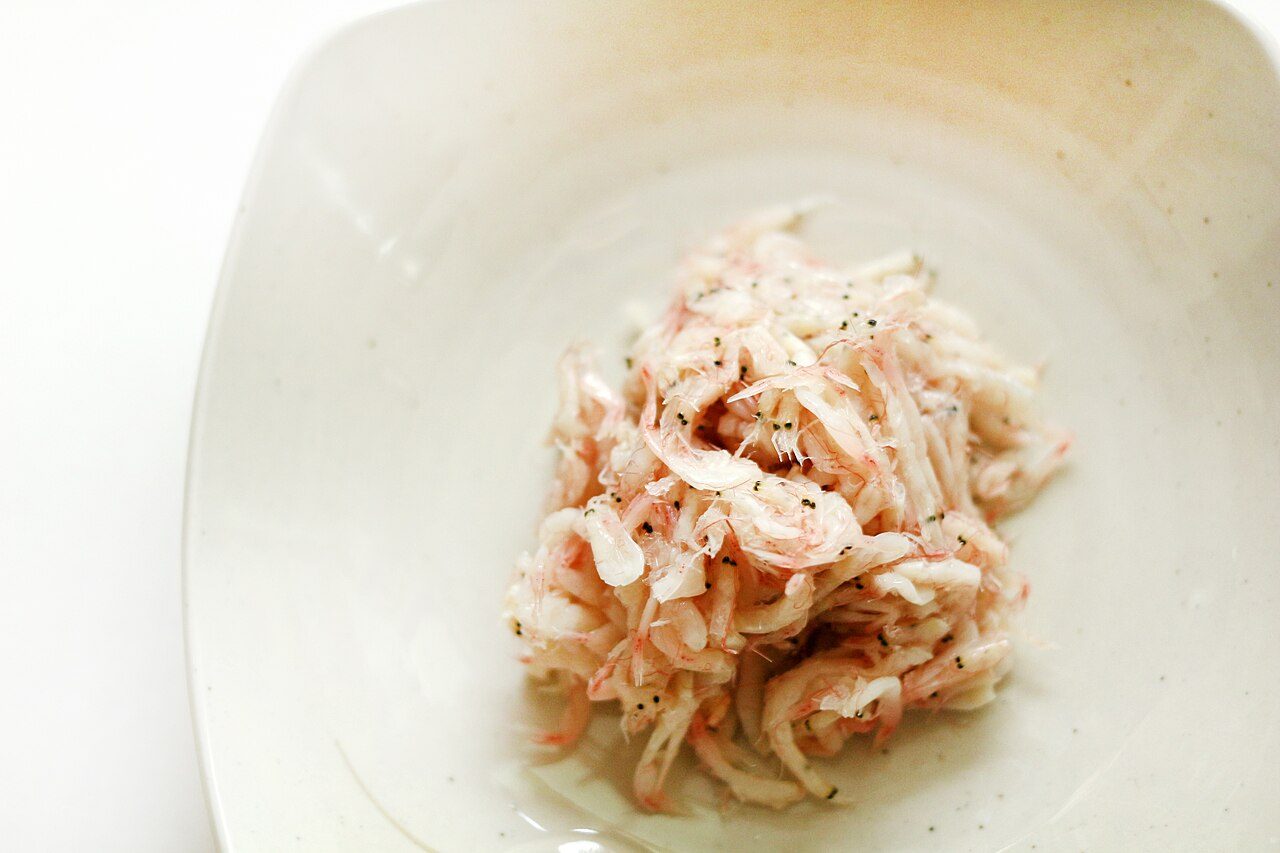
3 min read · 2 sourcesSaeu-jeot (Korean: 새우젓) is a variety of jeotgal, salted and fermented food made with small shrimp in Korean cuisine. It is the most consumed jeotgal along with myeolchi-jeot (멸치젓, salted anchovy jeot) in South Korea. The name consists of the two Korean words saeu (새우, shrimp) and jeot. Saeu-jeot is widely used throughout Korean cuisine but is mostly used as an ingredient in kimchi and dipping pastes. The shrimp used for making saeu-jeot are called jeot-saeu (젓새우) and are smaller and have thinner shells than ordinary shrimp. The quality of saeu-jeot largely depends on the freshness of the shrimp. In warm weather, fishermen may immediately add salt for preliminary preservation. 1
Types
The types of saeu-jeot depend on the kind of shrimp used and when they are harvested. 1
In spring
Putjeot (풋젓) is made with shrimp harvested from the end of the first month through the fourth month of the Korean calendar (lunisolar). It is called deddeugi jeot (데뜨기젓) or dotddegi jeot (돗떼기젓) in the west coast of the South Korea. Ojeot (오젓) is made with shrimp harvested in May. 1
In summer
Yukjeot (육젓, 六젓, six [month] jeot) is made with shrimp harvested in June and is regarded as the highest quality jeot. It is the type most preferred for making kimchi because of its richer flavor and bigger shrimp than other versions. The shrimp in yukjoet have red heads and tails. Chajeot (차젓) is made with shrimp harvested in July. 1
In fall
Gonjaeng-ijeot (곤쟁이젓) or jahajeot (자하젓; 紫蝦젓) is made with very small shrimp-like Neomysis awatschensis, one of the opossum shrimp family, which is called gonjaeng-i or jaha (자하; 紫蝦) in Korean. The shrimp used for it is the smallest among all saeu-jeot. They are harvested in August and September in small amounts where freshwater mixes with seawater of the abyss of the Yellow Sea. As it ferments, the jeot changes from transparent to light violet or brown in color and becomes soft in texture. Gonjaeng-ijeot is called gogaemijeot (고개미젓) in Jeolla Province. It is a local specialty of Seosan-gun, Chungcheong Province. Chujeot (추젓) is made with small shrimp harvested in autumn, which are smaller and cleaner than the shrimp in yukjeot. 1
In winter
Dongjeot (동젓; 冬젓) is made with shrimp harvested in November. Dongbaekha (동백하젓 冬白蝦) is made with shrimp harvested in February whose bodies are white and clean. 1
The text above is adapted from the Wikipedia article “Saeu-jeot”, available under the Creative Commons Attribution-ShareAlike 4.0 licence. 1
saeujeot is jeotgal made from small shrimp, according to the structured record cited below. This entry was generated automatically from that record and has not yet been reviewed by a person familiar with the tradition. 2
The source record links this tradition to 4 external registers, which can be verified through the citation. 2