The tradition & historical record
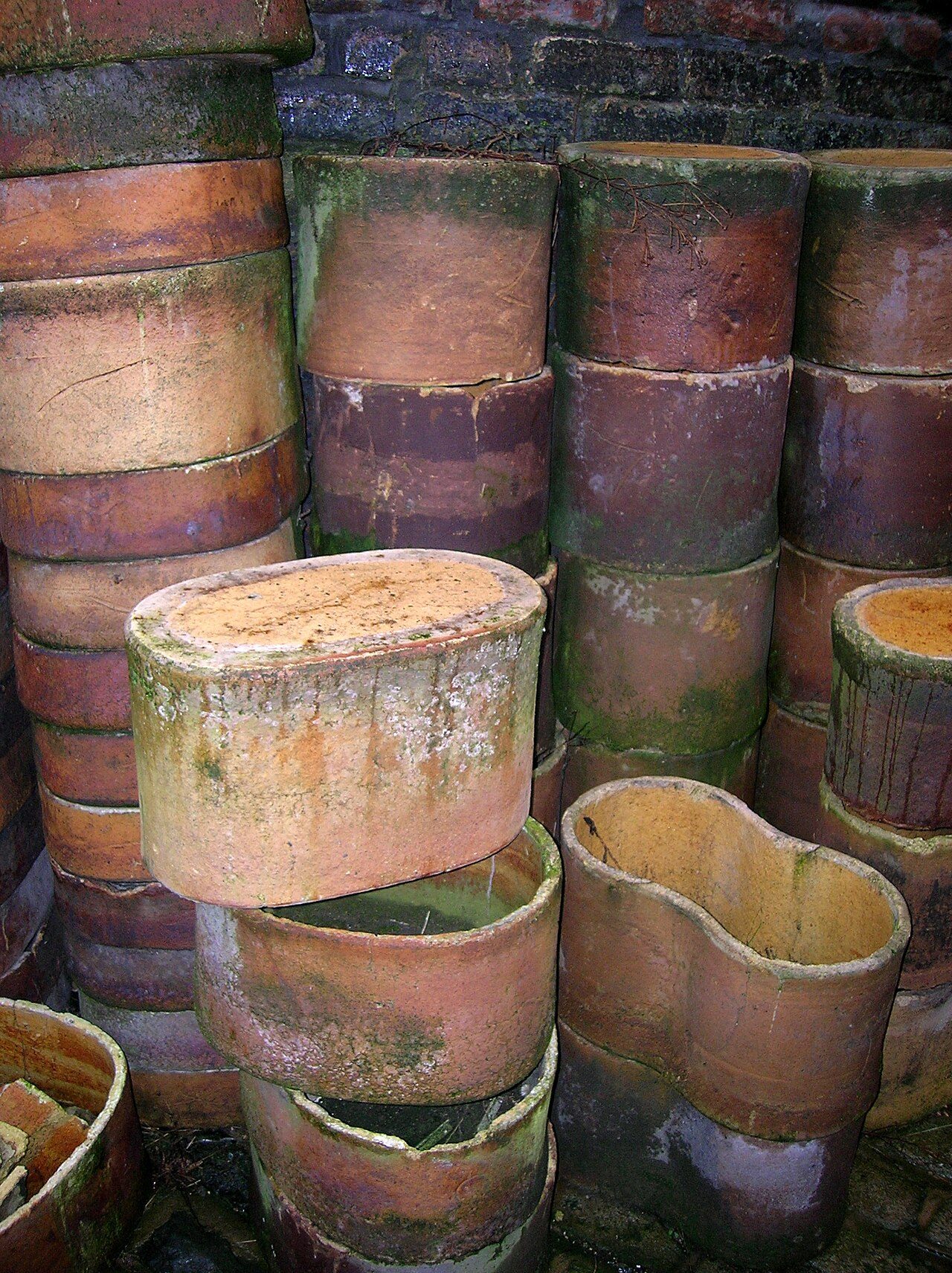
4 min read · 2 sourcesA saggar (also misspelled as sagger or segger) is a type of kiln furniture. It is a ceramic boxlike container used in the firing of pottery to enclose or protect ware being fired inside a kiln. The name may be a contraction of the word safeguard. Saggars are still used in the production of ceramics to shield ware from the direct contact of flames and from damage by kiln debris. Traditionally, saggars were made primarily from fireclay. Saggars have been used to protect, or safeguard, ware from open flame, smoke, gases and kiln debris: Modern saggars are made of alumina ceramic, cordierite ceramic, mullite ceramic, silicon carbide and in special cases from zirconia. 1
Contemporary use
In industrial and technical ceramics, modern saggars serve as precision-engineered controlled environments rather than simple protective boxes. Their production is a highly specialised branch of materials science, focussing on chemical purity and extreme thermal stability to facilitate the sintering of components used in aerospace, telecommunications and high-performance engineering. 1
Precision sintering and contamination control
In the production of technical ceramics such as zirconia, alumina and silicon nitride, the saggar functions as a clean-room in miniature. At the molecular level, these ceramics are hypersensitive to vapour-phase contaminants. Modern saggars are manufactured to be chemically inert, ensuring that no elements from the kiln’s heating elements or refractory lining—such as iron, silica or alkalis—leach into the technical components. For the manufacturing of phosphors used in high-end optical sensors and LEDs, saggars are often lined with high-purity alumina or even platinum to prevent even parts-per-million contamination that would ruin the material's refractive properties. In some ultra-high purity applications, the saggar itself may be composed of yttria to prevent any reaction with rare-earth doped ceramics during high-temperature processing. 1
Surface protection of whiteware ceramics
While advanced applications exist, saggars remain indispensable in the high-volume production of modern whiteware, such as fine porcelain, hotel-grade stoneware and sanitaryware. In these industrial settings, the saggar is a precision-engineered tool designed to ensure surface perfection and structural integrity during rapid firing cycles. They are primarily used to create a "micro-environment" that protects the sensitive glaze from the high-velocity air currents found in modern gas-fired shuttle kilns and tunnel kilns. Even in clean environments, the movement of combustion gases can carry minute particles of refractory dust. For high-end whiteware, a single speck of dust landing on a molten glaze results in a "pinhole" or "speck," rendering the piece a second-grade product. Modern saggars are manufactured with low-dusting, high-density surfaces to ensure the interior remains pristine. 1
Structural stability and stack loading
Modern whiteware saggars are produced using cordierite-mullite or silicon carbide blends, materials chosen for their high strength-to-weight ratio. Because industrial kilns are optimised for maximum density, saggars are designed to be "self-nesting." This allows manufacturers to stack products vertically without the need for heavy external kiln furniture. By acting as both the protective chamber and the structural support, modern saggars allow for a much higher "setting density," meaning more plates or bowls can be fired in a single cycle using less energy. This is critical for the economic viability of large-scale ceramic factories. The evolution of finite element analysis in design has allowed for the production of saggars with thinner walls that maintain structural integrity under the massive weight of a full kiln stack. 1
Production
The production of modern saggars has shifted toward high-pressure dry pressing, isostatic pressing and CNC machining. These manufacturing methods ensure that every saggar is dimensionally identical, a necessity for the robotic loading systems used in modern factories. In these facilities, robotic arms must be able to stack and unstack saggars with sub-millimetre precision. Furthermore, many modern saggars feature "labyrinth seals"—interlocking grooves on the lids—that allow for the maintenance of a specific protective atmosphere (such as pure nitrogen or argon) inside the saggar while the kiln itself operates in a different environment. The consistency of the saggar's thermal expansion coefficient is strictly controlled during production to ensure that automated systems can safely handle them even as they transition through varying heat zones in the factory. 1
The text above is adapted from the Wikipedia article “Saggar”, available under the Creative Commons Attribution-ShareAlike 4.0 licence. 1
saggar is kiln furniture in the form of a clay container in which small or delicate glazed vessels are placed during firing, according to the structured record cited below. This entry was generated automatically from that record and has not yet been reviewed by a person familiar with the tradition. 2
The source record links this tradition to 4 external registers, which can be verified through the citation. 2