The tradition & historical record
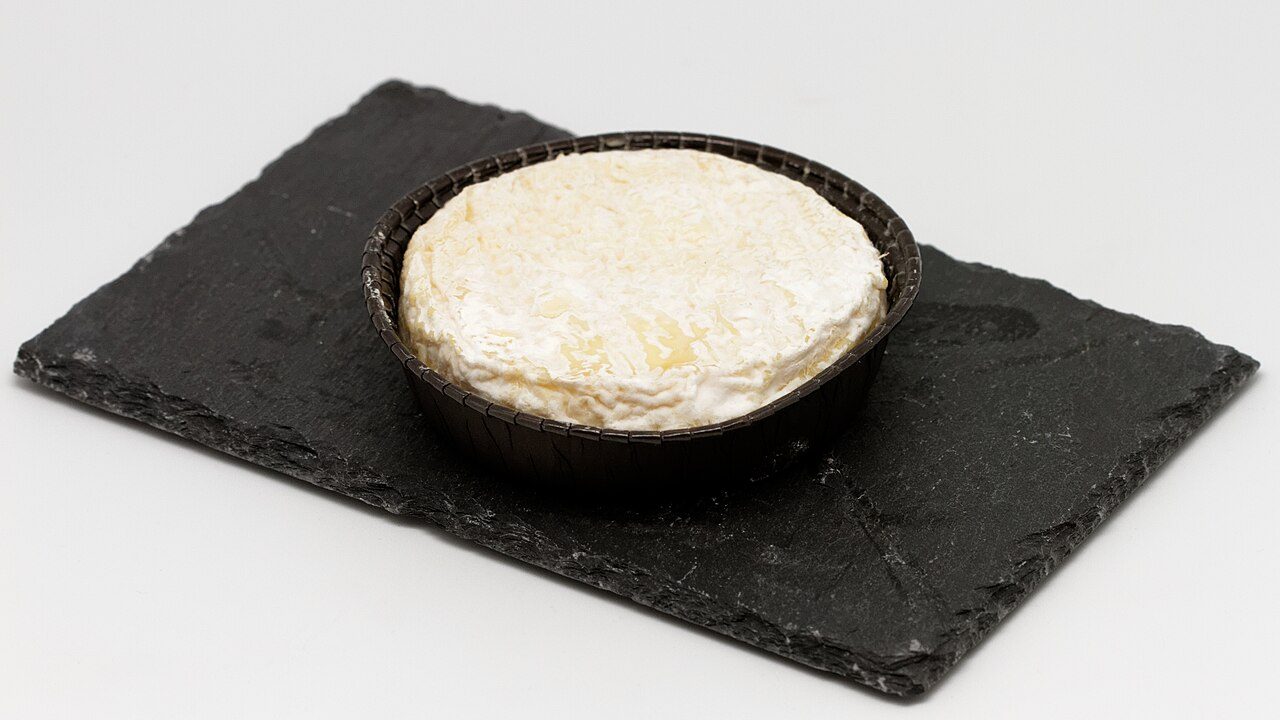
3 min read · 2 sourcesSaint-Félicien (French pronunciation: [sɛ̃ felisjɛ̃] ) is a cow's milk cheese produced in the Rhône-Alpes region of France. In France, it is designated a dauphinois cheese, referring to the former French province Dauphiné where it originated. It is a close cousin of another dauphinois cheese, Saint-Marcellin, and bears a similar texture and taste, though it can be almost twice as large in diameter. The name originates from the small town where the cheese was first produced and sold. It was originally made from goat's milk, but since then it has become more common to produce it with cow's milk. Its creamy interior is encased in a flower-style (fleurie) casing. Its average weight is 180 grams (6.3 oz). The optimal period for flavor occurs between April and September after an aging of 4 to 6 weeks, but it is also excellent consumed between March and December. It is softer and creamier than Saint-Marcellin. One should not confuse this cheese with the goat's milk cheese called caillé doux from Saint-Félicien, Ardèche. 1
History
The first mention of Saint-Félicien cheese made from cow's milk dates back to November 6, 1956, when a trademark was filed at the Lyon Commercial Court by Marius Boucher, a cheese producer from Villeurbanne. Marius Boucher's cheese factory was later taken over by Antoine Fuster, who improved the cheese's production method. In the 1960s, the promotion of Saint-Félicien through advertising campaigns, updated labeling, and the mechanization of production contributed to strengthening its reputation on the Lyon market and led to a growth in sales. In February 1963, another trademark registration was recorded under the name "Le Saint-Félicien" (no. 10955). It was filed by Ferdinand Brun, president of the dairy industry association of Isère and head of the largest dairy in the Saint-Marcellin region ("BRUN – DUMOULIN" dairy). This registration constitutes the first documented reference to a cow's milk Saint-Félicien from Isère. The dairy sourced its milk primarily from Isère, as well as from the commune of Lamastre in Ardèche. By the late 1970s, the Saint-Félicien market, considered promising, accounted for 70 to 80% of the production of the Fuster dairy. Having gained a strong reputation, the cheese was seen as a valuable market opportunity for producers of Saint-Marcellin, as both cheeses, made from the same cow's milk and using similar production methods, were well received by consumers in the Lyon region. After the World War II, the number of dairies in Lyon, already reduced, continued to decline due to the process of deindustrialization of the city center in favor of the outskirts. The introduction of European hygiene regulations further complicated the situation. This context opened the market to dairies from Isère, which began to produce their own Saint-Félicien. 1
The text above is adapted from the Wikipedia article “Saint-Félicien cheese”, available under the Creative Commons Attribution-ShareAlike 4.0 licence. 1
Saint-Félicien cheese is cheese, according to the structured record cited below. This entry was generated automatically from that record and has not yet been reviewed by a person familiar with the tradition. 2
The source record links this tradition to 3 external registers, which can be verified through the citation. 2