The tradition & historical record
4 min read · 2 sourcesCoast Salish weaving is a customary textile art of Coast Salish peoples in the Pacific Northwest. They are most noted for their twill blankets. The adoption of new fabrics, dyes, and weaving techniques allow the study of a wide variety of Salish weavings today. 1
History
According to oral history, blankets have been used for ceremonial purposes since the beginning of time. Coast Salish blankets identified the wearer as being a civic and religious leader in the community. Honored individuals would be adorned with a blanket to distinguish them or they would sit or stand upon their blankets so as to raise them in accordance of their honored status. Blankets also represented an individual's wealth and were often given away to members of the community or even other villages to show prosperity. Because of their high value, blankets were also used as a currency for which other goods could be purchased or bartered. Women were in charge of making the blankets. Young girls were trained by their grandmothers as early as ten years of age, with more intense training at puberty. Weaving blankets required serious commitment and could take long periods of time to complete. Additionally, they were often associated with spiritual tasks or rituals such as abstinence. 1
Geography
The name Salish refers to groups of indigenous peoples in the Pacific Northwest whose speech and culture share enough of a commonality to suggest an ancient relationship, in a similar vein to the name Indo-Europeans or the name Polynesians. The region inhabited by this group includes the north of the Fraser canyon to Vancouver Island, to Aberdeen in Washington. The Nuxálk region, farther north, also speak the Salish dialect. Though the Salishan peoples were highly stratified, with a relatively complex division of labor and a powerful elite, each village was distinct from the others, the Salish region was not unified and those people who inhabited the Salish regions did not view themselves as part of a unified Salish group, much like Indo-European and Polynesian peoples. 1
Traditions
During the potlatch ceremony blankets would be distributed among the attendants as a show of wealth. While the attendants obtained the blankets the donor gained prestige allowing for him to raise his social status. Sometimes, in order to supply as many people with blankets as possible, the blankets at would be cut in pieces so that more attendees could receive a gift. These fragments would often be reworked and incorporated into larger blankets. In the winter season, spirit dances were often held. Here, a group of men would perform a dance. A change in the song could lead to their being "possessed" allowing them to perform a dance unlike the others. Spectators often would give blankets as gifts to these new dancers to honor them. 1
Weaving techniques
The Salish adopted many of the numerous weaving techniques. These include: wrapped, diagonal openwork, vertical and slanting openwork, openwork, overlay, simple twining, three stand twining, plain openwork and double twining. The most frequent method used the plain, twill and twine techniques. 1
Plain design
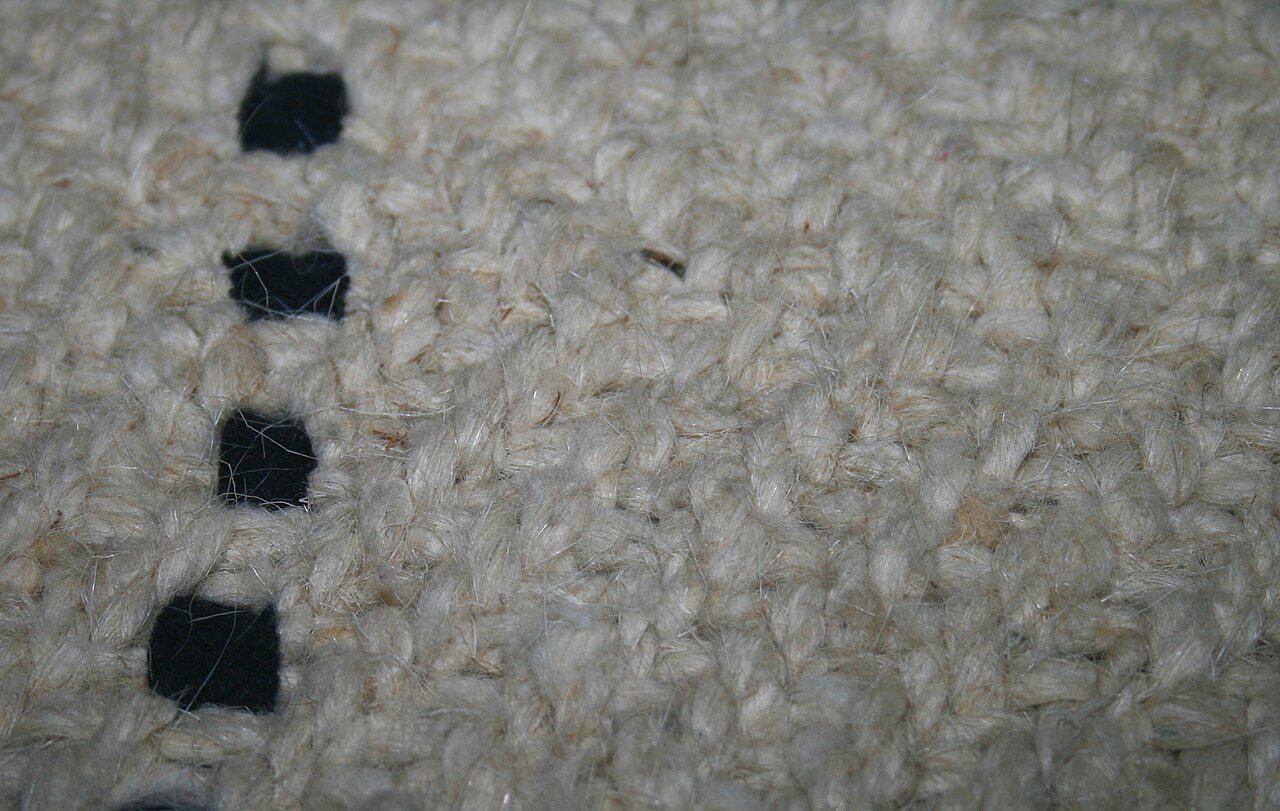
Also known as checkerboard or diagonal weave, the plain design involves simple plaiting of one weft strand in and out over one warp strand and under the next. Sometimes the weave varies when making baskets by passing the weft over two, under two, or over one, under two. This weave is mainly used in the construction of cedar bark and rush mats, and other coarse materials. 1
The text above is adapted from the Wikipedia article “Coast Salish weaving”, available under the Creative Commons Attribution-ShareAlike 4.0 licence. 1
Salish weaving is traditional textile techniques of the Coast Salish peoples, according to the structured record cited below. This entry was generated automatically from that record and has not yet been reviewed by a person familiar with the tradition. 2
The source record links this tradition to 1 external register, which can be verified through the citation. 2