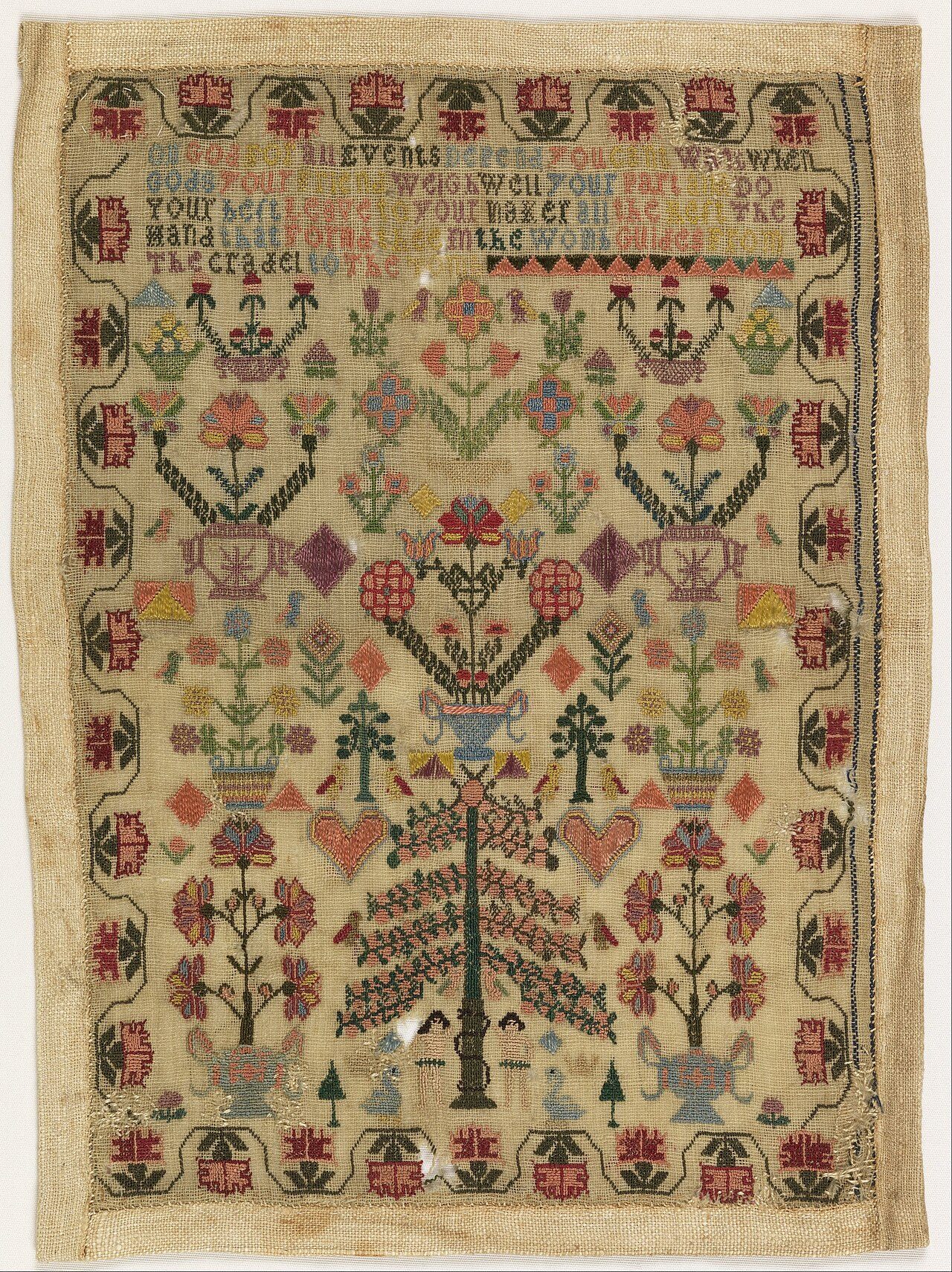
The tradition & historical record
3 min read · 2 sourcesA needlework sampler is a piece of embroidery or cross-stitching produced as a 'specimen of achievement', demonstration or a test of skill in needlework. It often includes the alphabet, figures, motifs, decorative borders and sometimes the name of the person who embroidered it and the date. The word sampler is derived from the Latin exemplum, which means 'example'. 1
History
The earliest sampler extant is a spot sampler, i.e. one having randomly scattered motifs, of the Nazca culture in Peru formerly in the Museum of Primitive Art, New York City. It is estimated to date from ca. 200 BCE –300 CE and is worked in cotton and wool pattern darning on a woven cotton ground. It has seventy-four figures of birds, plants and mythological beings. Coptic sampler fragments of silk on linen in double running stitch and pattern darning have been found in Egyptian burial grounds of 400–500 CE. These are pattern samplers having designs based on early Christian symbols. Samplers were known to be used by stitchers in Europe as early as the beginning of the 16th century, although none that early have been found. A collection of fifty dechados (samplers) was listed in the 1509 inventory of the possessions of Queen Joanna (Juana I, 1479–1555) of Castile (Spain). They were described as stitchery and deshilado (drawn thread work), some in silk and others in gold thread. At the time of the inventory they were in the care of her chamberlain Diego de Rivera and his son Alonso, but they have all disappeared. Early mentions of samplers in text include Skelton (1469-1529), and Shakespeare (1564-1616). The oldest surviving European samplers were made in the 16th and 17th centuries. As there were few pre-printed patterns available for needleworkers, a stitched model was needed. Whenever a needleworker saw a new and interesting example of a stitching pattern, they would quickly sew a small sample of it onto a piece of cloth – their 'sampler'. 1
Modern samplers
Samplers are widely stitched today. Designs range widely in style, from accurate reproductions of historic pieces to much more contemporary and modern styles. Popular topics include designs commemorating births and marriages, family trees, and maps. The word "sampler" has been applied to different styles of needlework meant for display. However, the genre may broadly be said to include any needlework that serves as a personal reference for patterns, stitches, or designs to include in other pieces. Materials used include aida cloth, evenweave, and linen fabrics, in cotton, linen, and man-made materials combined in more and more ways; and fibers from cotton floss to silk, rayon, viscose, and metallic. 1
The text above is adapted from the Wikipedia article “Sampler (needlework)”, available under the Creative Commons Attribution-ShareAlike 4.0 licence. 1
sampler is textile works containing examples of embroidery or other needlework stitches, according to the structured record cited below. This entry was generated automatically from that record and has not yet been reviewed by a person familiar with the tradition. 2
The source record links this tradition to 11 external registers, which can be verified through the citation. 2