The tradition & historical record
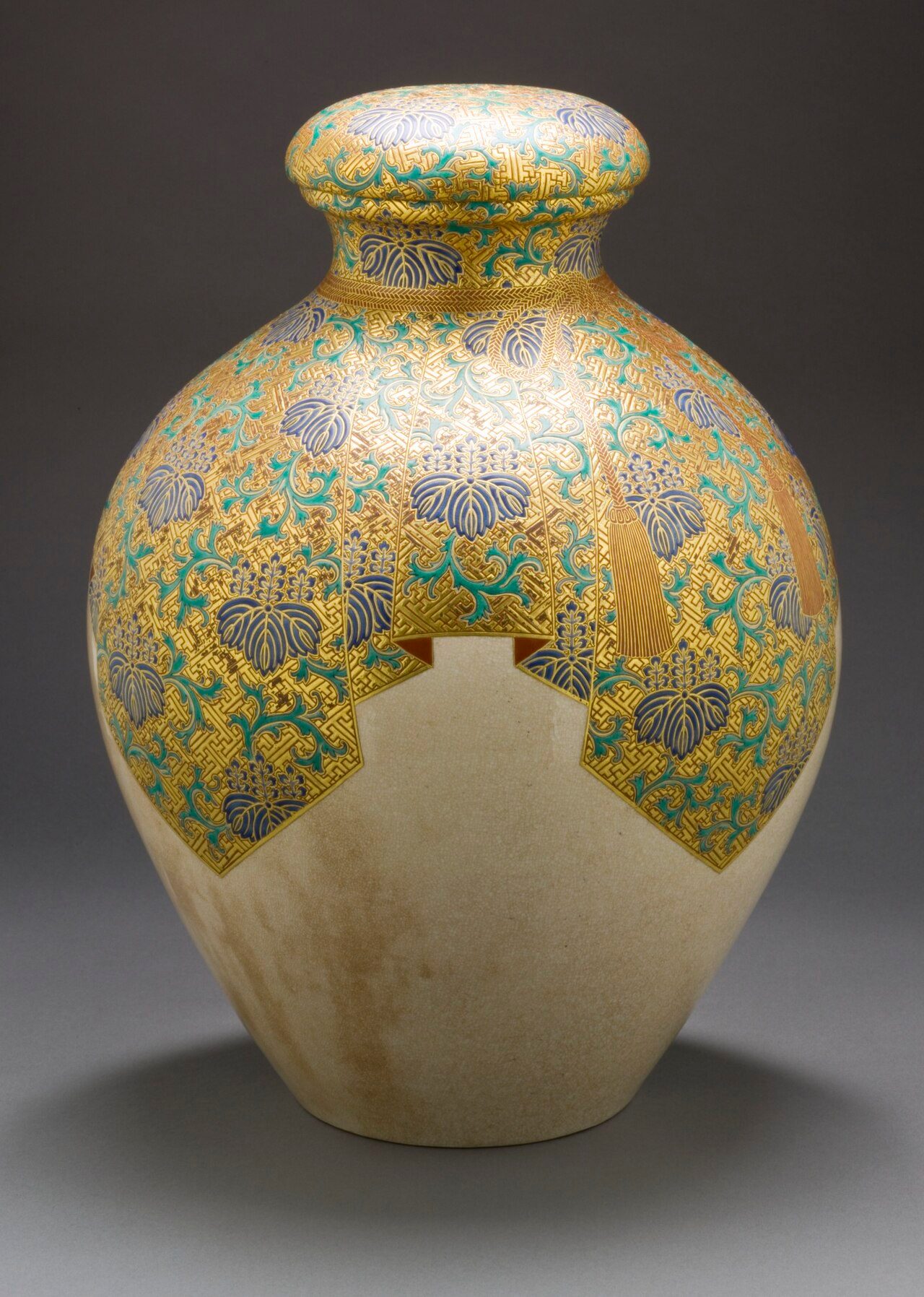
5 min read · 2 sourcesSatsuma ware (薩摩焼, Satsuma-yaki) is a type of Japanese pottery originally from Satsuma Province, southern Kyūshū. Today, it can be divided into two distinct categories: the original plain dark clay early Satsuma (古薩摩, Ko-Satsuma) made in Satsuma from around 1600, and the elaborately decorated export Satsuma (京薩摩, Kyō-Satsuma) ivory-bodied pieces which began to be produced in the nineteenth century in various Japanese cities. By adapting their gilded polychromatic enamel overglaze designs to appeal to the tastes of western consumers, manufacturers of the latter made Satsuma ware one of the most recognized and profitable export products of Japan for centuries, and even became one of the key sources of funding for the Meiji period reforms. 1
Early history
Most scholars date Satsuma ware's appearance to the late sixteenth or early seventeenth century. In 1597–1598, at the conclusion of Toyotomi Hideyoshi's incursions into Korea, Korean potters, which at the time were highly regarded for their contributions to ceramics and the Korean ceramics industry, were captured and forcefully brought to Japan to kick-start Kyūshū's non-existent ceramic industry. Hagi ware and Arita ware (Yi Sam-pyeong) share similar peninsular origins. The Satsuma region happened to be a great spot for the development of kilns due to its access to local clay and proximity to the Korean Peninsula. These potters eventually mainly settled in Naeshirogawa and Tateno, which were to become the hub of the local pottery industry. Of the Korean potters settled in Japan which revolutionized Japanese pottery, members of the well known Shim (심 沈) clan, who is now headed by the 15th generation Shim Su-gwan (Chin Jukan, 심수관, 沈壽官), have continued to make the Chin Jukan-brand pottery to this day, making sales offline and online, while keeping his ancestral identity by holding Korean ceremonies in traditional Joseon attire, and have attempted to improve Korean-Japanese relations by speaking in public and holding exhibits. 1
Early Satsuma ware
Satsuma ware dating up to the first years of the Genroku era (1688–1704) is often referred to as Early Satsuma or ko-satsuma. The oldest remaining examples of Satsuma are stoneware made from iron-rich dark clay covered in dark glaze. Prior to 1790, pieces were not ornately decorated, but rather humble articles of folk-ware intended for practical everyday use in largely rustic environments or the tea ceremony. Given that they were "largely destined for use in gloomy farmhouse kitchens", potters often relied on tactile techniques such as raised relief, stamp impressions and clay carving to give pieces interest. The intense popularity of Satsuma ware outside Japan in the late nineteenth century resulted in an increase in production coupled with a decrease in quality. Collectors sought older, more refined pieces of what they erroneously referred to as early Satsuma. These were in fact simply better-quality pre-Meiji nineteenth-century pieces, works from other potteries such as Kyoto's Awata ware (粟田焼, Awata-yaki), or counterfeits. 1
1800–1867
From around 1800, brocade (錦手, nishikide) painted decoration began to flourish, including a palette of "delicate iron-red, a glossy blue, a bluish green, a soft purple black, and a yellow very sparingly used". A slightly later innovation added painted gilding to the brocade (金錦手, kin nishikide). The multi-coloured enamel overglaze and gold were painted on delicate, ivory-bodied pieces with a finely crackled transparent glaze. The designs—often light, simple floral patterns—were highly influenced by both Kyoto pottery and the Kanō school of painting, resulting in an emphasis on negative space. Many believe this came from Satsuma potters visiting Kyoto in the late seventeenth century to learn overglaze painting techniques. 1
1867–1885
The first major presentation of Japanese arts and culture to the West was at Paris' Exposition Universelle in 1867, and Satsuma ware figured prominently among the items displayed. The region's governor, the daimyō, understood early the economic, prestige and political advantages of a trade relationship with the West. In order to maintain its connection with Satsuma, for example, Britain offered support to the Daimyō in the 1868 rebellion against the shogunate. The Paris Exposition showcased Satsuma's ceramics, lacquerware, wood, tea ceremony implements, bamboo wicker and textiles under Satsuma's regional banner—rather than Japan's—as a sign of the Daimyō's antipathy to the national shogunate. Following the popularity of Satsuma ware at the 1867 exhibition and its mention in Audsley and Bowes' Keramic Art of Japan in 1875, the two major workshops producing these pieces, those headed by Boku Seikan and Chin Jukan, were joined by a number of others across Japan. "Satsuma" ceased to be a geographical marker and began to convey an aesthetic. By 1873, etsuke (絵付け) workshops specializing in painting blank-glazed stoneware items from Satsuma had sprung up in Kobe and Yokohama. In places such as Kutani, Kyoto and Tokyo, workshops made their own blanks, eliminating any actual connection with Satsuma. From the early 1890s through the early 1920s there were more than twenty etsuke factories producing Satsuma ware, as well as a number of small, independent studios producing high-quality pieces. Eager to tap into the burgeoning foreign market, producers adapted the nishikide Satsuma model. The resulting export style demonstrated an aesthetic thought to reflect foreign tastes. 1
1885–1930s
The mid-1880s saw the beginning of an export slump for many Japanese goods, including Satsuma ware, linked in part to a depreciation of quality and novelty through mass production. By the 1890s, contemporary Satsuma ware had become generally denigrated by critics and collectors. It was negatively received at Chicago's Columbian Exposition of 1893, but remained a popular export commodity into the twentieth century, becoming "virtually synonymous with Japanese ceramics" throughout the Meiji period. Satsuma ware continued to be mass-produced through the modern period, though quality declined to the point where it eventually lost interest for consumers. 1
The text above is adapted from the Wikipedia article “Satsuma ware”, available under the Creative Commons Attribution-ShareAlike 4.0 licence. 1
Satsuma ware is type of Japanese pottery, according to the structured record cited below. This entry was generated automatically from that record and has not yet been reviewed by a person familiar with the tradition. 2
The source record links this tradition to 9 external registers, which can be verified through the citation. 2