The tradition & historical record
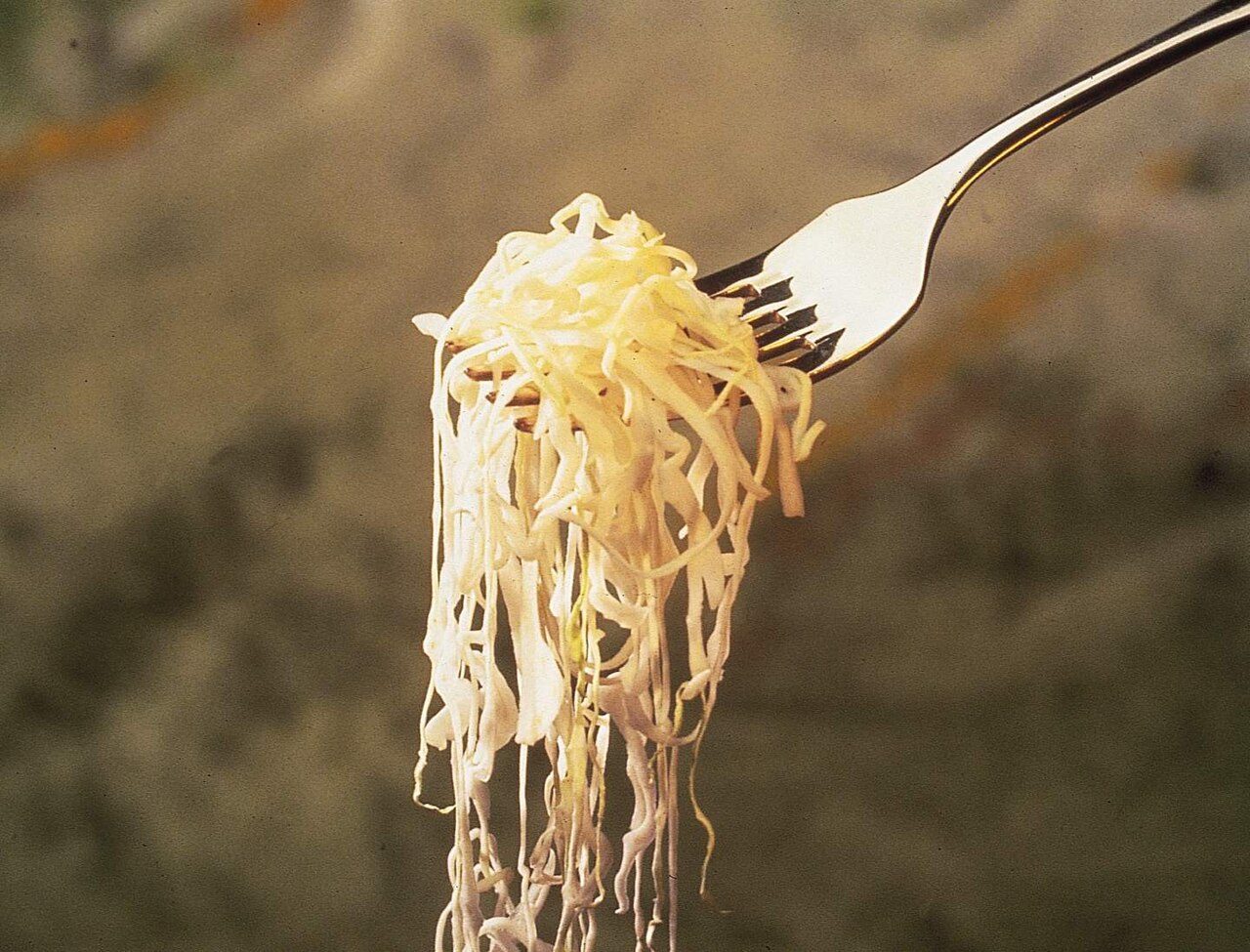
6 min read · 2 sourcesSauerkraut (; German: [ˈzaʊ.ɐˌkʁaʊt] , lit. 'sour cabbage') is finely cut raw white cabbage that has been fermented by various lactic acid bacteria. It has a long shelf life and a distinctive sour flavor, both of which result from the lactic acid formed when the bacteria ferment the carbohydrates in the cabbage leaves. 1
History
Fermented foods have a long history in many cultures. The Roman writers Cato (in his De agri cultura) and Columella (in his De re Rustica) mentioned preserving cabbages and turnips with salt. According to Wilhelm Holzapfel et al., Plinius the Elder, writing in the first century AD, is reputed to have been the first writer to describe the making of sauerkraut by preserving what the Romans called salt cabbage in earthen vessels. Popular folklore has imagined that sauerkraut was introduced to Europe by the trade networks formed across Eurasia by the Golden Horde. However, according to Mack and Surina (2005), there is no evidence to support this theory, nor any evidence that fermented cabbage arrived from an East Asian source, and there is evidence of sauerkraut production in Europe dating back to the early period of the Western Roman Empire. 1
Before frozen foods, refrigeration, and cheap transport from warmer areas became readily available in Northern, Central, and Eastern Europe, sauerkraut – like other preserved foods – provided a source of certain nutrients (eg, vitamin C) during the winter. Captain James Cook took sauerkraut on his sea voyages to prevent scurvy. 1
Name
The English name is borrowed from German, where it means "sour cabbage". The dish did not originate in Germany. Some claim fermented cabbage, Suan cai, was already produced in the days of the building of the Great Wall of China. However, the Romans pickled forms of cabbage, and were the more likely source of modern-day European sauerkraut. It became popular in Central and Eastern European cuisines, and countries including the Netherlands, where it is known as zuurkool, and France, where the name became choucroute. According to Mack and Surina (2005), the Slavic peoples of Europe likely discovered fermented cabbage on their own. The names in Slavic and other Central and Eastern European languages have similar meanings with the German word: "fermented cabbage" (Armenian: թթու կաղամբ, Albanian: lakër turshi, Azerbaijani: kələm turşusu, Belarusian: квашаная капуста, Czech: kysané zelí, Lithuanian: rauginti kopūstai, Polish: kapusta kiszona/ kapusta kwaszona, Russian: квашеная капуста/кислая капуста, romanized: kvašenaja kapusta, Turkish: lahana turşusu, Romanian: varză murată, Persian: kalam torş, Bulgarian: кисело зеле, Estonian: hapukapsas, Hungarian: savanyúkáposzta, Latvian: skābēti kāposti, Macedonian: расол / кисела зелка, Serbo-Croatian: кисели купус / кисело зеље, kiseli kupus / kiselo zelje, Slovak: kyslá kapusta, Slovene: kislo zelje, Ukrainian: квашена капуста, kvashena kapusta). The word Kraut, derived from this food, is a derogatory term for the German people. During World War I, due to concerns the American public would reject a product with a German name, American sauerkraut makers relabeled their product as "liberty cabbage" for the duration of the war. 1
Production
Sauerkraut is made by a process of pickling called lactic acid fermentation, analogous to how traditional (not heat-treated) pickled cucumbers and kimchi are made. The cabbage is finely shredded, layered with salt, and left to ferment. Fully cured sauerkraut keeps for several months in an airtight container stored at 15 °C (60 °F) or below. In temperate climates, this allows storage over the full winter and early-spring. Neither refrigeration nor pasteurization is required, although these treatments prolong storage life. Fermentation by lactobacilli is introduced naturally, as these air-borne bacteria culture on raw cabbage leaves where they grow. Yeasts also are present, and may yield soft sauerkraut of poor flavor when the fermentation temperature is too high. The fermentation process has three phases, collectively sometimes referred to as population dynamics. In the first phase, anaerobic bacteria such as Klebsiella and Enterobacter lead the fermentation, and begin producing an acidic environment that favors later bacteria. The second phase starts as the acid levels become too high for many bacteria, and Leuconostoc mesenteroides and other Leuconostoc species take dominance. In the third phase, various Lactobacillus species, including L. brevis and L. plantarum, ferment any remaining sugars, further lowering the pH. Properly cured sauerkraut is sufficiently acidic to prevent a favorable environment for the growth of Clostridium botulinum, the toxins of which cause botulism. A 2004 genomic study found an unexpectedly large diversity of lactic acid bacteria in sauerkraut, and that previous studies had oversimplified this diversity. Weissella was found to be a major organism in the initial, heterofermentative stage, up to day 7. 1
Regional varieties
In Armenian, Belarusian, Estonian, Latvian, Lithuanian, Czech, Slovak, Polish, Russian, and Ukrainian cuisine, chopped cabbage is often pickled together with shredded carrots. Other ingredients may include caraway seeds, whole or quartered apples for additional flavour or cranberry for flavour and better keeping (the benzoic acid in cranberries is a common preservative). Bell peppers and beets are added in some recipes for colour. The resulting sauerkraut salad is typically served cold, as zakuski or a side dish. A homemade type of very mild sauerkraut is available, where white cabbage is pickled with salt in a refrigerator for only three to seven days. This process results in very little lactic acid production. Sometimes in Russia double fermentation is used, with the initial step producing an exceptionally sour product, which is then "corrected" by adding 30–50% more fresh cabbage and fermenting the mix again. The flavor additives like apples, beets, cranberries, and sometimes even watermelons are usually introduced at this step. Sauerkraut may be used as a filling for Polish pierogi, Ukrainian varenyky, Russian pirogi and pirozhki. Sauerkraut is also the central ingredient in traditional soups, such as shchi (a national dish of Russia), kwaśnica (Poland), kapustnica (Slovakia), kapusniak (Ukraine) and zelňačka (Czech Republic resp. Moravian). It is an ingredient of Polish bigos (a hunter's stew). In Germany and Austria, cooked sauerkraut is often flavored with juniper berries or caraway seeds; apples and white wine are added in popular variations. In South Tyrol, it is made with juniper berries, extra-virgin olive oil and smoked pancetta. 1
Benefits
Many health benefits have been claimed for sauerkraut: 1
It is a high source of vitamins K and (if uncooked) C; the fermentation process increases the bioavailability of nutrients rendering sauerkraut even more nutritious than the original cabbage. 1
The text above is adapted from the Wikipedia article “Sauerkraut”, available under the Creative Commons Attribution-ShareAlike 4.0 licence. 1
sauerkraut is cabbage that has been fermented by various lactic acid bacteria, according to the structured record cited below. This entry was generated automatically from that record and has not yet been reviewed by a person familiar with the tradition. 2
The source record links this tradition to 30 external registers, which can be verified through the citation. 2