The tradition & historical record
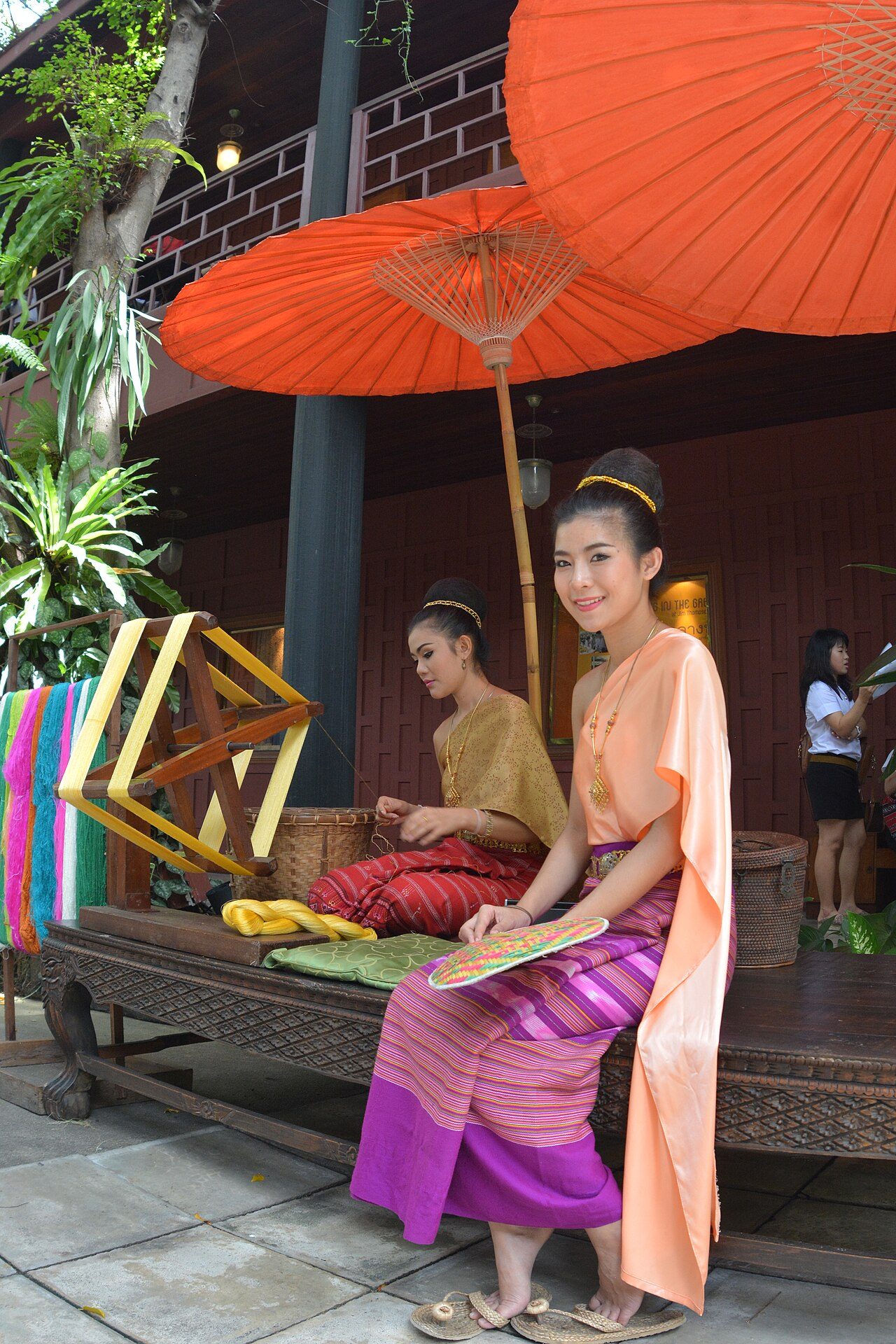
5 min read · 2 sourcesSbai (Khmer: ស្បៃ [sɓaj]; Lao: ສະໄບ [sā.bàj]; Malay: Sebai; Jawi: سباي; Thai: สไบ, RTGS: sabai [sā.bāj]) or phaa biang (Lao: ຜ້າບ່ຽງ [pʰȁː bīaŋ]; Thai: ผ้าเบี่ยง [pʰâː bìaŋ]) is a shawl-like garment worn by women in Cambodia, Laos, and Thailand to cover the breasts, while in Sumatra, Borneo and the Malay Peninsula, the same term is used to describe a cloth hanging from the shoulders. The sbai was derived from the Indian sari, the end of which is worn over one shoulder. 1
Etymology
The term sbai is the contracted form of vowels which has its ultimately original roots from the Austronesian term *cahebay, which was diversified as the first exodus in Taiwan as the Formosan term *sapay from south China between 5,000–4,500 BCE, and the second exodus to the Philippines, Indonesia, and others occurred around 3,000–2,000 BCE. Its vowel sequence was contracted from south China to the first exodus: *cahebay→*cahbay→*cahpay→*sapay (meaning: 'to hang'). According to the Proto-Austronesian Phonology of Cornell University Southeast Asia Program (SEAP), there is the diversity of the term *cahebay or *sapay into subgroups of other languages families as follows: 1
Austroasiatic languages: *lɓak (Dvaravati Old Mon and Nyah Kur), cambāy (Middle Mon), *jbaay (Mon), *sapay→sĕbai, sbai→sbāy, spai→spiey or *sapay→spai→spiey (Old Khmer and Modern Khmer), phìai (Kuy). Austronesian languages: *cahebay→łahpay, cahfay, cabfay. 1
History
Sbai is derived from the Indian sari, which may have been introduced to Southeast Asia through the Indianized Kingdoms, the most notable being Funan, Srivijaya, and the Khmer Empire, which spread clothing and other traditions and elements of Indian culture. 1
Cambodia
In Khmer, the sbai (ស្បៃ) refers to an asymmetrical breast-sash, usually embroidered and of silk, worn for ballet performances and ceremonies. Chinese chronicles relay from the founding legend of Neang Neak and Preah Thong that the latter was unhappy with Neang Neak's nudity and he "folded a piece of material to make a garment through which he had her pass her head." Scholar and ballet teacher Prumsodun Ok writes that this describes how one wears a pre-sewn sbai. The sbai is used in traditional Khmer weddings during the rite of Preah Thong Taong Sbai Neang Neak ("Preah Thong holding on to the sbai of Neang Neak"), which represents the legend of the foundation of the Khmer people: groom carries the bride's sbai from behind for a ritualistic walk to "symbolize their entering into her naga realm." At Angkor Wat, there are 12th century depictions of topless devatas (Khmer: tevoda ទេវតា) holding a sbai connected to their sampot, while the northern wall of Angkor Wat depicts a 16th-century group of Theravada Buddhist ladies wearing long sbai while holding various offerings. 1
For men, especially Brahmin and Buddhist monk, the sbai called sbong sbai trai chivor, and is considered the robe of Hindu and Buddhist monks. For women, sbai can be freely used and in different ways such as to wrapping it around the body, covering the shoulder, and commonly covering the breast and stomach over the left shoulder. Prumsodun Ok on etymology: 1
...Monosyllable Khmer loan words become bi‑syllable in Thai with phka (flower) to phaka, spean (bridge) to sapan, and sbai to sabai. 1
Laos
In Laos, this garment is known as phaa biang (Lao: ຜ້າບ່ຽງ) or sabai. It is common for Lao women to wear sabai/phaa biang as it is considered traditional clothing. A sabai can also be worn by men in weddings or when attending religious ceremonies. The type typically worn by Lao men often has checkered patterns. Sabai/phaa biang can also be a long piece of silk, about a foot wide, that is draped diagonally over the chest covering one shoulder with one end dropping behind the back. Important and sacred in Lao culture, phaa biang can be of various fabric and worn regardless of age. For occasions such as wedding ceremonies, visits to a pagoda, or New Year celebrations, the phaa biang is often draped over traditional outfits. Laywomen in Luang Prabang wear phaa biang to comply with Buddhist modesty rules. This secures the collar and keeps the upper body concealed. Women attending a Vat Manorom monk coronation laid their phaa biangs out on the hall floor to welcome the monks. The Lao sabai/phaa biang may bear a hybrid "dragon/serpent and ancient ship" image. 1
Malaysia
In Malaysia, sebai is a cloth wrapped around the neck to cover the shoulders with both ends hanging on the chest similar to a scarf hung over the shoulders. Sarong cloth in Malaysia may be made into a sebai, and it was Malay wedding tradition to gift a sarong to be fashioned into a sebai. 1
The text above is adapted from the Wikipedia article “Sbai”, available under the Creative Commons Attribution-ShareAlike 4.0 licence. 1
sbai is silk or brocade wrap or shoulder cloth worn by women in Thailand, Cambodia, and Laos, according to the structured record cited below. This entry was generated automatically from that record and has not yet been reviewed by a person familiar with the tradition. 2
The source record links this tradition to 1 external register, which can be verified through the citation. 2