The tradition & historical record
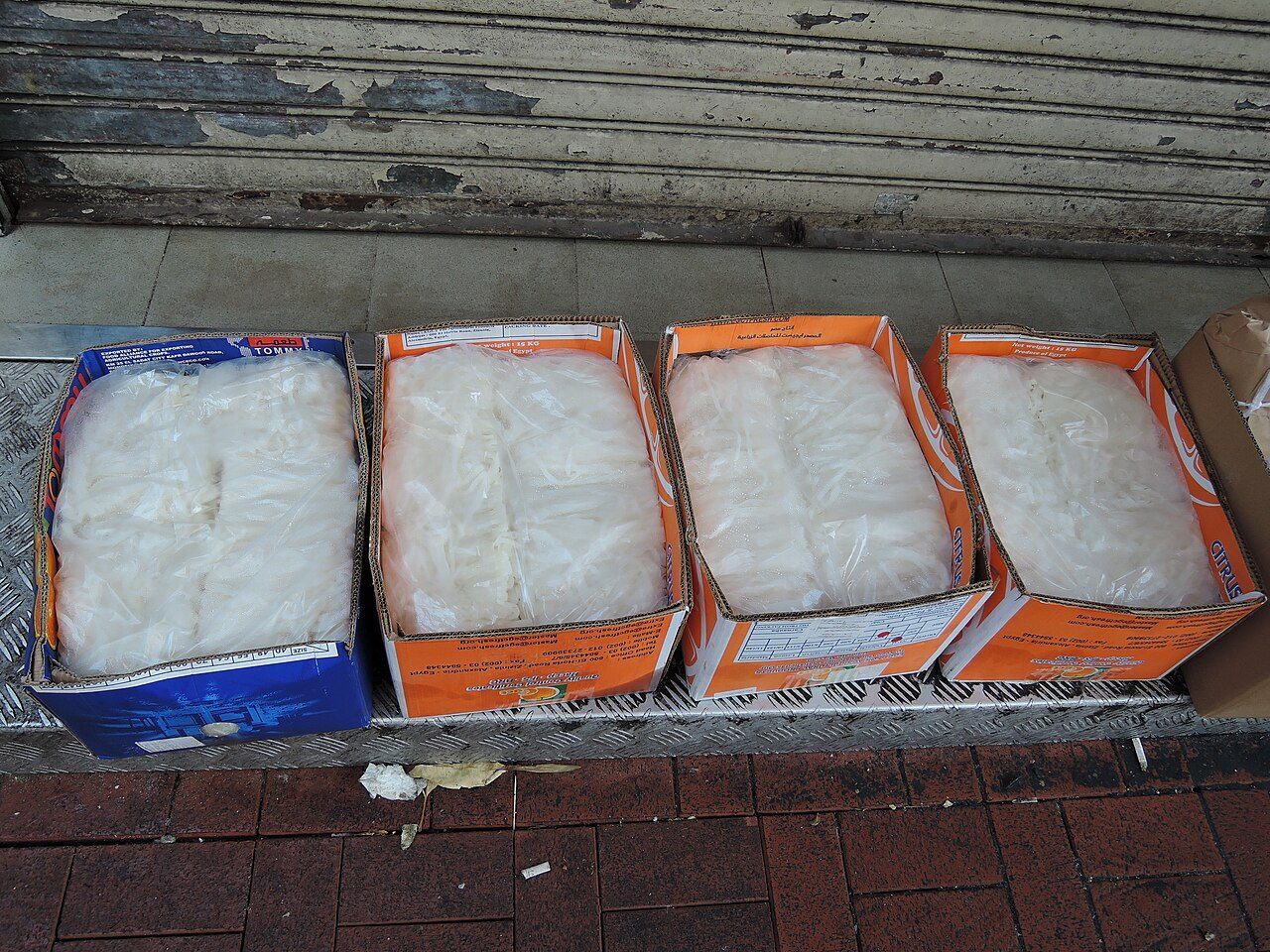
4 min read · 2 sourcesShahe fen (Chinese: 沙河粉; pinyin: shāhé fěn, also simply hor fun / he fen Chinese: 河粉) or guotiao (Chinese: 粿條; pinyin: guǒtiáo, also kway teow) is a type of wide Chinese noodle made from rice. It is often stir-fried with meat and/or vegetables in a dish called chao fen (炒粉; pinyin: chǎo fěn); it is also a main ingredient in char kway teow. 1
Shahe fen
While shahe fen and he fen are transliterations based on Mandarin, there are numerous other transliterations based on Cantonese, which include ho fun, hofoen (a Dutch transliteration in Suriname), hor fun, sar hor fun, etc. 1
Guotiao
The word 粿條 guǒtiáo literally means "ricecake strips". It is also read in Minnan Chinese as kóe-tiâu; it is borrowed into the homophones kwetiau in Indonesia, kuetiau in Malaysian, and kway teow in Singapore. It is also called kuaitiao or guay tiew (ก๋วยเตี๋ยว) in Thailand, kuyteav (គុយទាវ) in Cambodia, and pan-tiau (粄條) by the Hakka. 1
Differences
Minnan people generally consider shahe fen and kway teow to be two distinct foods, and continue to make a distinction between shahe fen and guotiao/kway teow in their speech. Hor fun was developed by the Cantonese and is thin and tapered like strips of tape, with some porous areas that absorb the gravy, taste, and flavour of the broth or sauce that it is cooked in because it contains less starchy content, which has been stripped away during the production process. In contrast, guotiao/kuay teow is dense, and less absorbent and contains a higher level of starch and is more impermeable to absorbing flavours, and thus has to be soaked for a longer period of time in the dish preparation usually for a day or more, or is soaked in water first for a long time before it is fried as char kway teow. The taste, texture, flavour, ingredients, length, thickness, width, style, density are considered very different to many people in China and Asia more broadly, but often people from other regions are not be able to tell the difference immediately. Guotiao/kway teow has a different origin from shahe fen, from Northeast instead of Central China, and is a modification of the guo/kway (rice cake) production process, and originated as the ancient preservation of rice as a starch-filled cake patty (of which Korean rice strips are yet another descendant, as it was brought as a recipe from China to Choseon dynasty when the Emperor of China during the Ming dynasty took the Korean princess as one of his concubines, and this recipe was gifted to the people of Choseon as a betrothal gift to the Korean people). In Hokkien (Fujian) of China, this version of guotiao/kway teow was then influenced by the Cantonese shahe fen from the neighboring province of Guangdong. 1
In other languages
Other names that are known include sen yai (เส้นใหญ่, lit. 'large rice noodles') in Thailand, hsan-bya (ဆန်ပြား, lit. 'flat rice') or nan-bya (နန်းပြား, lit. 'flat filigree') in Myanmar, and hủ tiếu or pho in Vietnam. 1
Origin
Shahe fen is believed to have originated in the town of Shahe (Chinese: 沙河; pinyin: Shāhé; Jyutping: Saa1 Ho4), now part of the Tianhe District in the city of Guangzhou, in the southern Chinese province of Guangdong, whence their name derives. Shahe fen is a common component of southern Chinese cuisine, although similar noodles are also prepared and enjoyed in nearby Southeast Asian nations such as Cambodia, Vietnam, Thailand, Philippines, Malaysia, Indonesia and Singapore, all of which have sizeable Chinese populations. 1
The text above is adapted from the Wikipedia article “Shahe fen”, available under the Creative Commons Attribution-ShareAlike 4.0 licence. 1
shahe fen is Chinese noodle, according to the structured record cited below. This entry was generated automatically from that record and has not yet been reviewed by a person familiar with the tradition. 2
The source record links this tradition to 3 external registers, which can be verified through the citation. 2