The tradition & historical record
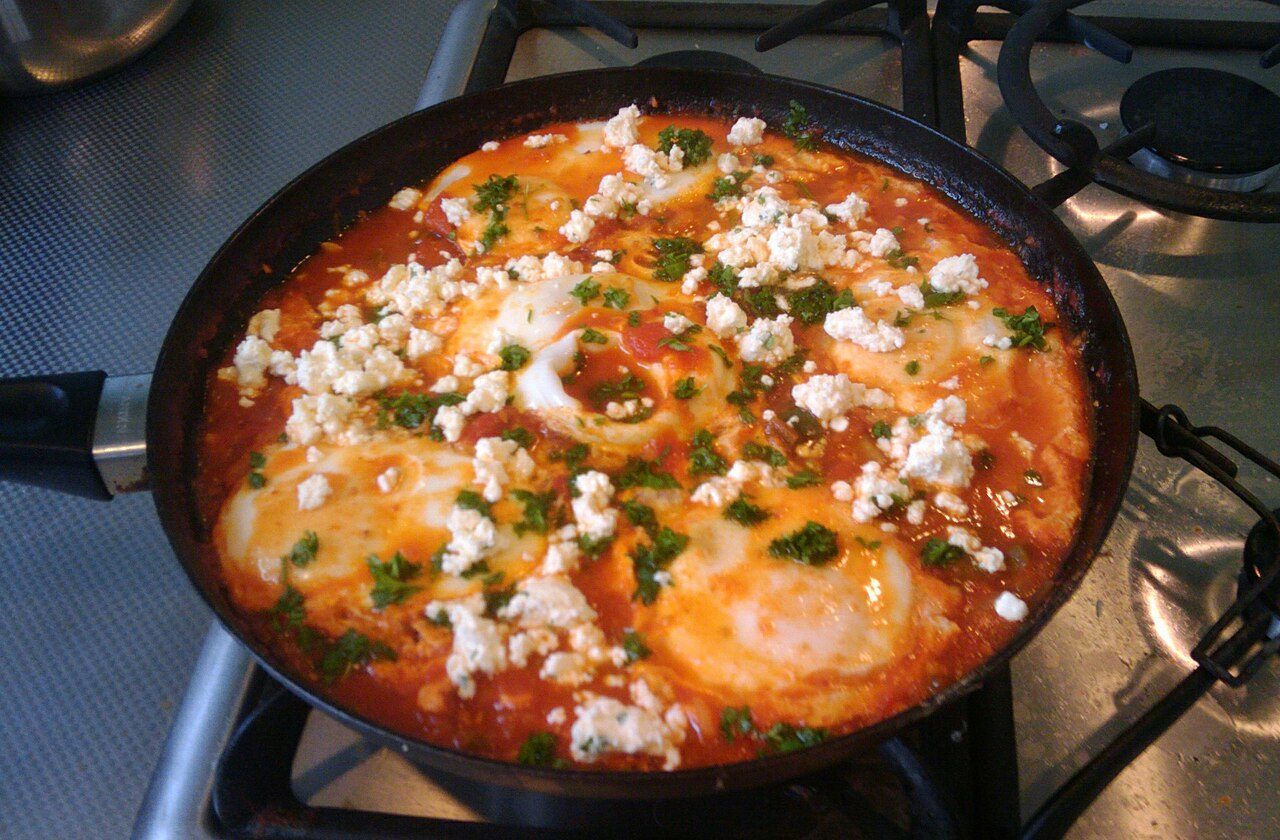
3 min read · 2 sourcesShakshouka is a Maghrebi dish of eggs poached in a sauce of tomatoes, olive oil, peppers, onion, and garlic, commonly spiced with cumin, paprika, and cayenne pepper. Shakshouka is a popular dish throughout North Africa and the Middle East. 1
Etymology
Shakshuka is a word for "mixture" in Algerian Arabic, and "mixed" in Tunisian Arabic. The Oxford English Dictionary describes the English version of the word as being borrowed from more than one origin: an onomatopoeic Maghribi Arabic word, related to the verb shakshaka meaning "to bubble, to sizzle, to be mixed up, to be beaten together", and the French word Chakchouka, which was borrowed into English in the nineteenth century, and which itself had been borrowed into French from Algerian Arabic. 1
History
Gil Marks, while noting some similarities with the Ottoman dish menemen, suggests that shakshouka evolved from şakşuka which spread to the Maghreb through the influence of the Ottoman Empire. Anthony Buccini noted similarities between a wider range of vegetable stews. He and Noam Sienna conclude that both shakshouka and menemen, among other dishes like piperade and ratatouille, are members of a wider family of vegetable stews of common ancestry appearing throughout the western Mediterranean. The migration of Maghrebi Jews in the 1950s brought the dish to Israel, where it was subsequently widely adopted. The dish was not previously associated with Palestinian or Levantine cuisine. Shakshouka began appearing in Israeli restaurants in the 1990s. 1
Variations
Many variations of the basic sauce are possible, varying in spice and sweetness. Some cooks add preserved lemon, salty sheep milk cheeses, olives, harissa or a spicy sausage such as chorizo or merguez. Shakshouka is made with eggs, which are commonly poached but can also be scrambled, like in the Turkish menemen. In Algeria, shakshouka is commonly eaten as a side dish, and there are countless variations of it, each with their own unique blend of ingredients. One such variation is hmiss, which is often served alongside traditional kesra bread. Hmiss typically includes grilled peppers, tomatoes, and garlic. In Tunisia, a similar dish called slata meshouia is enjoyed, but it differs from hmiss with the addition of onions, cumin and tuna. In Syria, jaz maz is a similar eggs-and-tomatoes dish, it is sometimes referred to as shakshouka. In Morocco, there is a dish referred to as bīḍ w-maṭiša (بيض ومطيشة "egg and tomato"). In Egypt, the dish features the typical poached eggs in a spiced tomato-based sauce but with some variations in ingredients. The base consists of sautéed onions, garlic, and chopped bell peppers cooked until softened. Chopped tomatoes or tomato paste is then added, along with spices such as cumin, paprika, and chili powder. Once the sauce thickens, eggs are cracked directly into the mixture and poached until the whites are set but the yolks remain runny. It is garnished with fresh herbs like parsley and cilantro, sometimes also a sprinkle of domiati cheese. The dish is commonly eaten with warm eish baladi, and is a popular choice for breakfast in the country. Some variations of shakshouka can be made with lamb mince, toasted whole spices, yogurt and fresh herbs. Spices can include ground coriander, caraway, paprika, cumin and cayenne pepper. 1
The text above is adapted from the Wikipedia article “Shakshouka”, available under the Creative Commons Attribution-ShareAlike 4.0 licence. 1
shakshuka is dish of eggs with tomato and onion, according to the structured record cited below. This entry was generated automatically from that record and has not yet been reviewed by a person familiar with the tradition. 2
The source record links this tradition to 1 external register, which can be verified through the citation. 2