The tradition & historical record
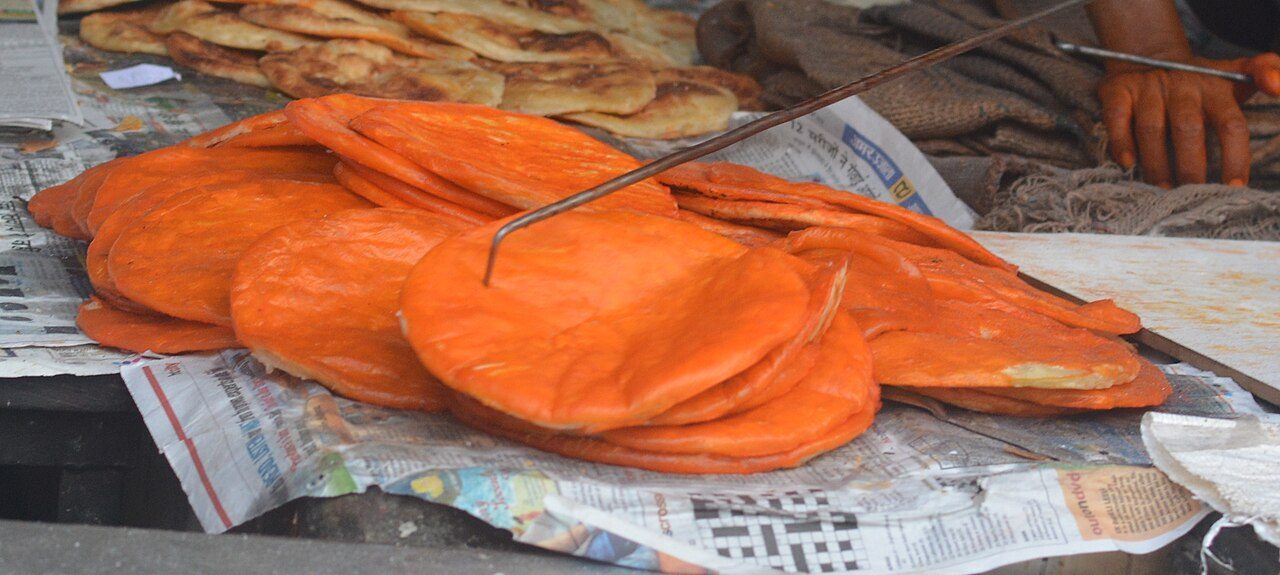
2 min read · 2 sourcesSheermal (Persian/Urdu: شیرمال, Hindi: शीरमल) also spelled shirmal, is a saffron-flavored traditional flatbread in South Asian cuisine. The word sheermal is derived from the Persian words شیر (translit. sheer, Sanskrit kshir) meaning milk, and مالیدن (translit. malidan), meaning to rub or to knead. In a literal translation, sheermal means milk-rubbed. It was said to have originated in Sassanid Iran and was introduced to North India by the Mughal emperors during the medieval period. It became part of Lucknow, Hyderabad and Aurangabad. It is also part of Awadhi cuisine and is eaten in Bhopal and brought to Pakistan post partition. 1
Preparation
Shirmal is a mildly sweet naan made out of maida, leavened with yeast and baked in a tandoor or oven. Sheermal was traditionally made like roti. Today, sheermal is prepared like naan. The warm water in the recipe for naan roti was replaced with warm milk sweetened with sugar and flavored with saffron and cardamom. In India, especially arounr Lucknow, sheermal is sometimes served with kababs, tikkia, or alongside nihari. 1
The text above is adapted from the Wikipedia article “Sheermal”, available under the Creative Commons Attribution-ShareAlike 4.0 licence. 1
Sheermal is Iranian flatbread, according to the structured record cited below. This entry was generated automatically from that record and has not yet been reviewed by a person familiar with the tradition. 2
The source record links this tradition to 2 external registers, which can be verified through the citation. 2