The tradition & historical record
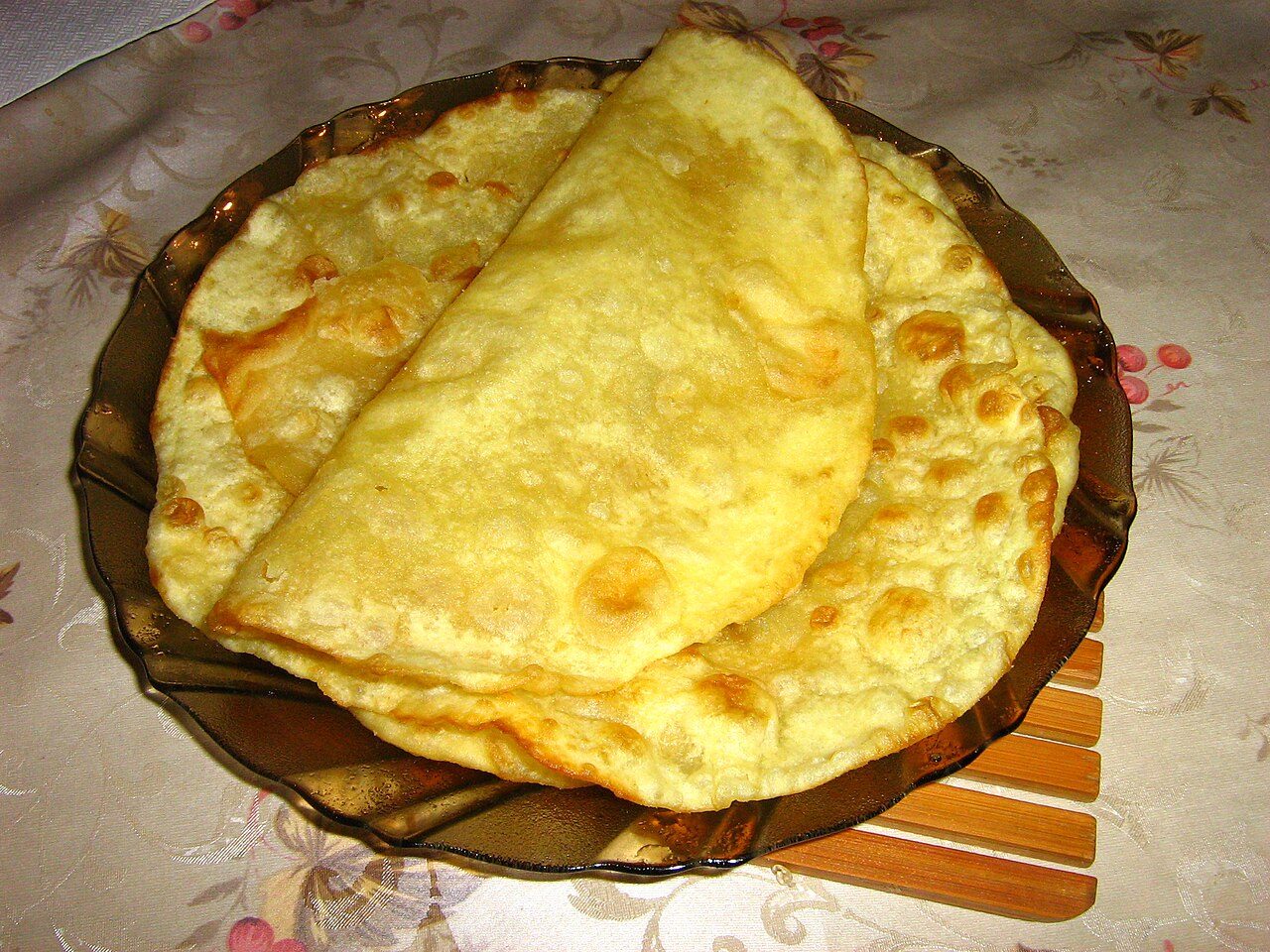
2 min read · 2 sourcesА Shelpek, chalpak or chalpyak (Turkmen: çelpek; Kazakh: шелпек, жеті-нан, romanized: shelpek, zheti-nan; Kyrgyz: май токоч, челпек; Uzbek: chalpak; Uyghur: чалпак, romanized: chalpyak) is a traditional flatbread commonly consumed throughout Central Asia. The main ingredients are flour, water or milk, and salt, and some recipes call for ripened sour cream and a small amount of sugar and baking soda. Shelpeks are often eaten with butter, honey, jam, or tea, and they can be paired with meat or dairy dishes. The dough is shaped into flat disks and fried in hot vegetable oil until it becomes a golden color. Shelpeks can also be prepared with yeast, which makes the dough stay soft for a longer period of time. The recipe to prepare the dough is similar to the one used for baursaks. A Kazakh tradition is to prepare multiples of seven shelpeks, or zheti-nan, on Thursdays. It is believed that the scent emitted during the frying process nourishes the ancestors, or aruakhs. 1
The text above is adapted from the Wikipedia article “Shelpek”, available under the Creative Commons Attribution-ShareAlike 4.0 licence. 1
Shelpek is kazakh flatbread, using butter, milk and sugar, according to the structured record cited below. This entry was generated automatically from that record and has not yet been reviewed by a person familiar with the tradition. 2
The source record links this tradition to 2 external registers, which can be verified through the citation. 2