The tradition & historical record
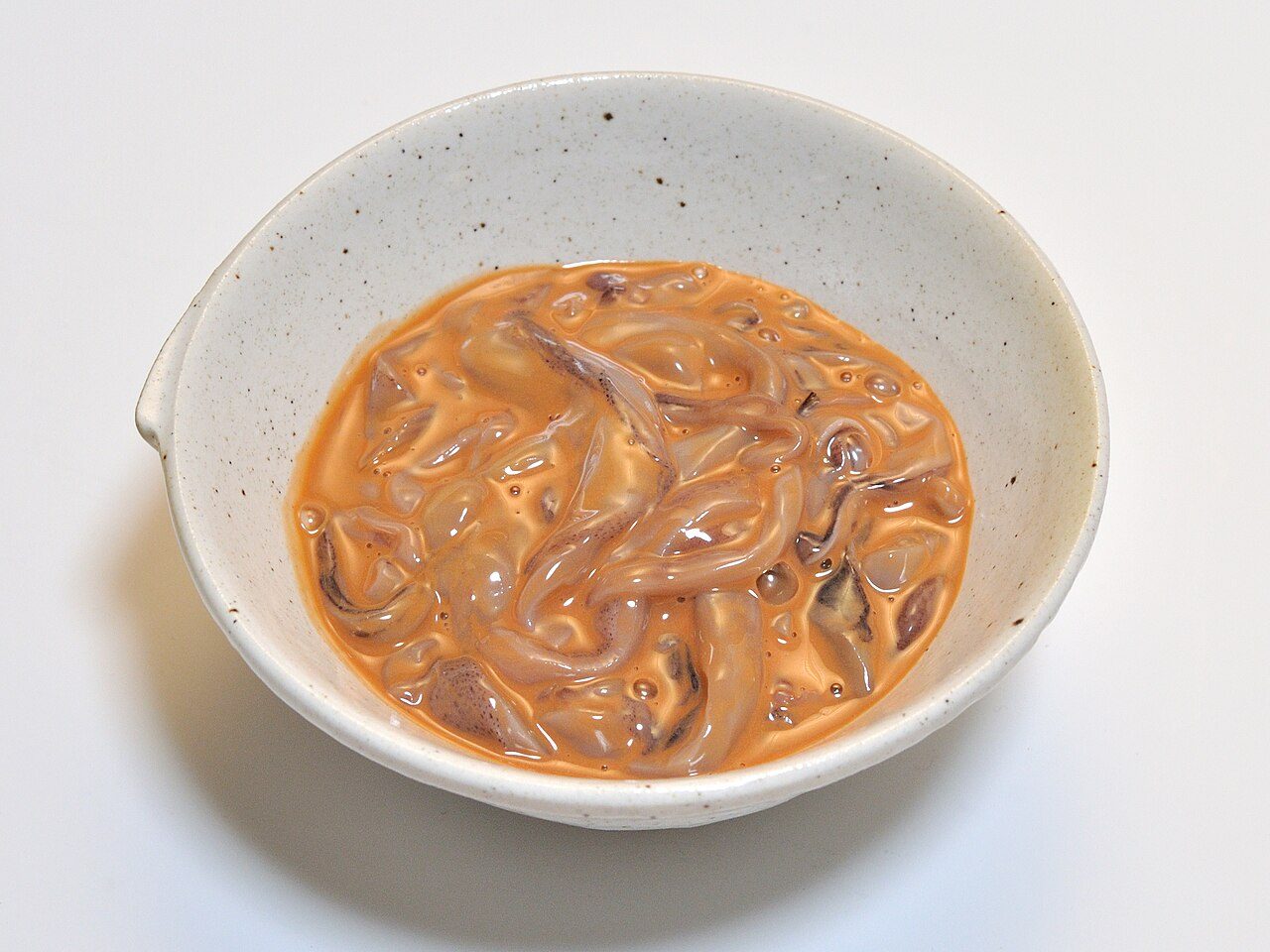
2 min read · 2 sourcesShiokara (塩辛) lit. 'salty-spicy', is a food in Japanese cuisine made from various marine animals that consists of small pieces of meat in a brown viscous paste of the animal's heavily salted, fermented viscera. The raw viscera are mixed with about 10% salt, 30% malted rice, packed in a closed container, and fermented for up to a month. Shiokara is sold in glass or plastic containers. The flavor is similar in saltiness and fishiness to that of European cured anchovies, but with a different texture. One of the best-known chinmi ("delicacy"), it is quite strong and is considered something of an acquired taste even for the native Japanese palate. It was a valuable protein in post-war Japan because food was scarce and it did not require refrigeration. It continued to be eaten as a condiment for rice and in bars. One method of enjoying it is to consume the serving in one gulp and to follow it with a shot of straight whisky. Some bars in Japan specialize in shiokara. 1
Some types of shiokara
Ika no shiokara—from cuttlefish "squid", the most common variety Hotaruika no shiokara—from firefly squid Katsuo no shiokara—from skipjack tuna Kaki no shiokara—from oyster Uni no shiokara—from sea urchin roe Ami no shiokara—from Mysidacea, a krill-like crustacean Some shiokara types have special names: 1
ganzuke — from fiddler crab konowata — from sea cucumber mefun — from chum salmon uruka (shiokara) — from ayu shuto — from skipjack tuna (katsuo) 1
The text above is adapted from the Wikipedia article “Shiokara”, available under the Creative Commons Attribution-ShareAlike 4.0 licence. 1
shiokara is Japanese snack made of salty seafood, according to the structured record cited below. This entry was generated automatically from that record and has not yet been reviewed by a person familiar with the tradition. 2
The source record links this tradition to 3 external registers, which can be verified through the citation. 2