The tradition & historical record
4 min read · 2 sourcesShumai (simplified Chinese: 烧卖; traditional Chinese: 燒賣; pinyin: shāomài; Cantonese Yale: sīu-máai; Pe̍h-ōe-jī: sio-māi; Wugniu: sau1 ma6) is a type of traditional Chinese dumpling meat made of ground pork. In Cantonese cuisine, it is usually served as a dim sum snack, and is served with an additional serving of soy sauce. In addition to accompanying the Chinese diaspora, variations of shumai can be found in Japan, Southeast Asia, and South America. Variations include the Hawaiian pork hash and the Indonesian siomay. In Australia, it developed into dim sim. 1
Cantonese siumaai
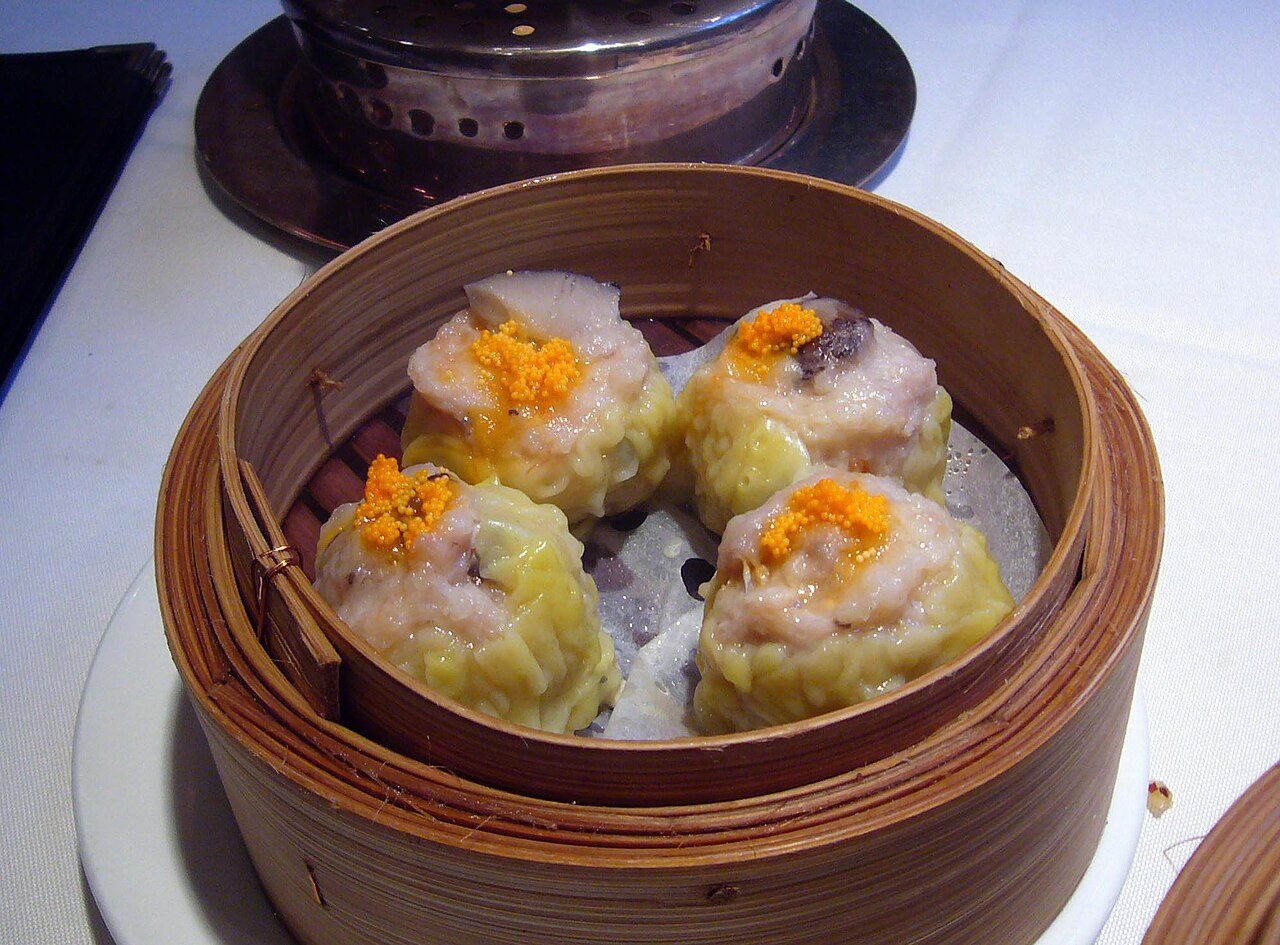
This is the most well-known variety outside of Asia and is from the southern provinces of Guangdong and Guangxi. As prepared in Cantonese cuisine, siumaai is also referred to as "pork and mushroom dumpling". Its standard filling consists primarily of ground pork, small whole or chopped shrimp, Chinese black mushroom, green onion (also called scallion) and ginger with seasonings of Chinese rice wine (e.g. Shaoxing rice wine), soy sauce, sesame oil and chicken stock. Bamboo shoots, water chestnuts and pepper can also be added. The outer covering is made of a thin sheet of lye water dough, which is either yellow or white. The center is usually garnished with an orange dot, made of crab roe or diced carrot, although a green dot made with a pea may be used. The decorative presentations vary. A fish paste variety of siumaai is sold as a popular street food in Hong Kong, usually alongside curry fishballs. It is most often eaten with a sweet soy sauce and/or chili oil. Pig liver shiumai (豬潤燒賣) is a variety of shiumai sold at traditional tea houses such as Luk Yu (陸羽茶室) and Lin Heung Tea House (蓮香樓). The Hong Kong Siumaipedia was written to document the Cantonese variety. 1
Hohhot shaomai
Hohhot shaomai is a regional variety in Hohhot, Inner Mongolia. The wrapping is a very thin, round sheet of unleavened dough, with a pleated border. There is only one kind of filling, which mainly consists of chopped or minced mutton, scallion and ginger. Hohhot shaomai features this extensive use of scallion and ginger, creating a dense combined scent, and a slightly spicy taste. The filling is put in the center of the wrapping and the border of the wrapping is loosely gathered above, forming a "neck" and a flower-shaped top. It is then cooked by steaming or pan-frying. Hohhot shaomai is served in the unit of "liang", which means either eight steamed ones served in a steamer tier, or eight fried ones served in a dish. "Liang" is equal to 50 grams, is traditionally used as an indication of the total weight of the wrapping. Hohhot shaomai is commonly served with vinegar and tea, due to its greasiness. 1
Hunan juhua shaomai
Called the chrysanthemum shaomai (菊花燒賣), this variety is made in Changsha (長沙), Hunan province (湖南). This shaomai is named for its opening resembling the chrysanthemum flower petal shape. It is spicy with pepper and the wrapper is translucent. The filling largely consists of glutinous rice, pork hash, shrimp, shiitake mushrooms, bamboo shoots and onion. 1
Jiangnan shaomai
Shaomai common in the Jiangnan region (stretching from Shanghai to Nanjing) has a filling similar to zongzi from the region, containing marinated pork pieces in glutinous rice, soy sauce and Shaoxing wine, steamed with pork fat. It is larger than the Cantonese version. The Shanghai variation also contains shiitake mushrooms and onion. The mince, mushrooms and onion are stir-fried before being prepared as the filling. Another type of Shaomai prepared in the region contains minced pork and bamboo shoot pieces. Xiasha Shaomai is a famous traditional snack from the Xiasha Old Street in Nanhui, Pudong, Shanghai, and Fengjing Shaomai is a traditional, intangible cultural heritage snack from Fengjing Ancient Town in Jinshan, Shanghai; the former uses spring bamboo shoots and the latter uses winter bamboo shoots. This type of Shaomai is also common in Jiaxing and Hangzhou. 1
Uyghur shaomai
In northwest China, the Uyghur people of Xinjiang adapted shaomai into two regional varieties. The southern Xinjiang recipes differ slightly from the northern version in terms of ingredients and method. The filling of the northern version consists of mutton or beef, along with green onion and radish, whereas the southern filling primarily uses glutinous rice with smaller amounts of mutton or beef. Minced meat from sheep ribs containing some fat is ideal. 1
The text above is adapted from the Wikipedia article “Shumai”, available under the Creative Commons Attribution-ShareAlike 4.0 licence. 1
shumai is type of traditional Chinese dumpling, according to the structured record cited below. This entry was generated automatically from that record and has not yet been reviewed by a person familiar with the tradition. 2
The source record links this tradition to 4 external registers, which can be verified through the citation. 2