The tradition & historical record
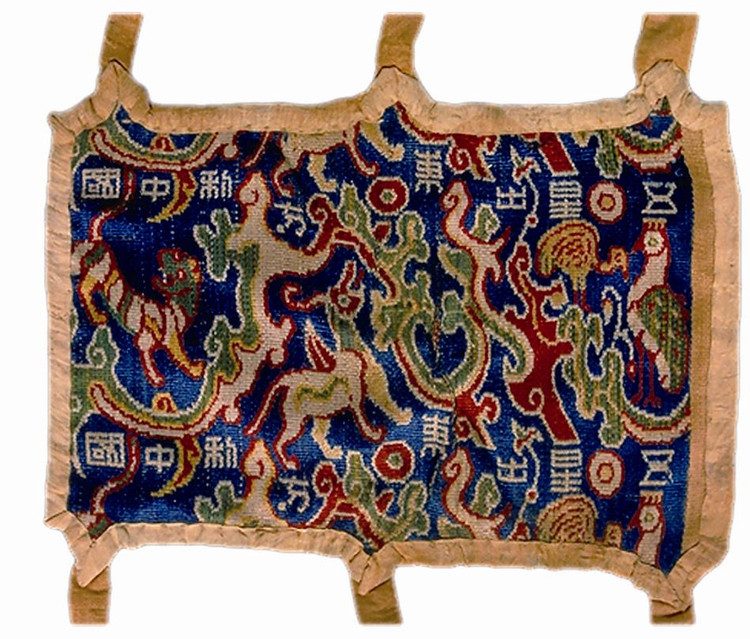
2 min read · 2 sourcesSichuan Textiles (traditional Chinese: 川繡; simplified Chinese: 川绣; pinyin: Chuān Xiù) consist of several different fiber art techniques. The Sichuan region is especially renowned for its woven fabrics, especially a brocade known as Shu brocade (蜀錦; 蜀锦; Shǔ Jǐn). Sichuan brocade originates from Chengdu, the capital of Sichuan, during the time of the ancient Kingdom of Shu (c. 1046 BC?–c. 316 BC). An excavation of four tombs dating back to the Western Han dynasty (202 BC – 8 AD), on Mount Laoguan located in Tianhui Town, Chengdu, has confirmed the use of patterning looms for weaving warp-faced compounds in that period. Sichuan embroidery or Shu embroidery (蜀繡; 蜀绣; Shǔ Xiù; Shu-Hsiu), is a style of embroidery folk art native to Sichuan and Chongqing. Sichuan embroidery is one of the so-called "four great embroideries of China" along with Cantonese embroidery, Suzhou embroidery and Xiang embroidery. 1
Materials and Style
Sichuan textile art is based on the use of silk. The designs often featured animals, flowers, leaves, mountains, rivers, trees and human figures. These silk products were a combination of fine art and practical use, as it is used to decorate pillow cases, shoes, quilt covers, garments, and folding screens. 1
Brocades
Throughout its history, Sichuan brocades developed a quality of being smooth, bright, neat, and influenced by its own geographical environment, various customs and cultures, with significant foreign influences being Sasanian, Sogdian and Hellenistic during the 1st millennium. The Sui and Tang dynasties (581–907) saw the golden age of Sichuan textile art, when it enjoyed high popularity throughout the regions immediately to the west of China (Chinese Turkestan), Central Asia and Western Asia. Novel themes and patterns from these regions were incorporated into embroidery designs during this period. In the Book of Sui, it is recorded that in the year 605, the head of the Sichuan ateliers producing silks in the "western style" was a certain He Chou (何稠), a name which betrays his Sogdian origins. A classification of various types of Sichuan brocade is found in Dunhuang manuscripts preserved in the Bibliothèque nationale de France. 1
The text above is adapted from the Wikipedia article “Sichuan Textiles”, available under the Creative Commons Attribution-ShareAlike 4.0 licence. 1
Sichuan embroidery is a style of embroidery folk art native to Sichuan and Chongqing, according to the structured record cited below. This entry was generated automatically from that record and has not yet been reviewed by a person familiar with the tradition. 2
The source record links this tradition to 4 external registers, which can be verified through the citation. 2