The tradition & historical record
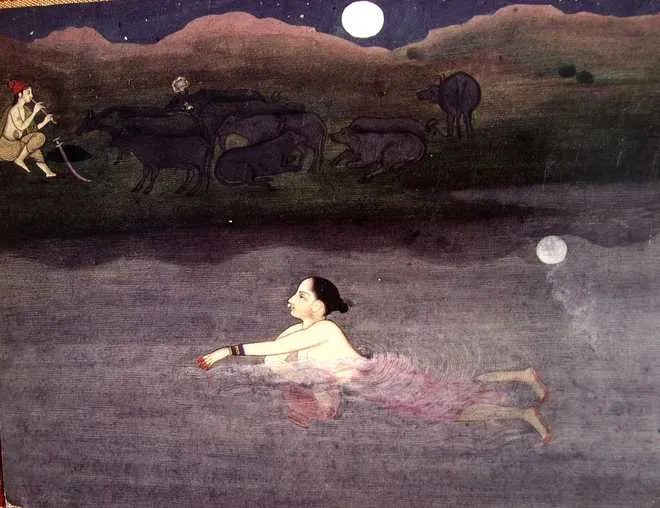
5 min read · 2 sourcesSohni Mahiwal (Punjabi: [soː(ɦ)ɳiː məɦĩʋaːl]) or Suhni Mehar is a classical Punjabi–Sindhi folk tragedy. Set in northern Punjab or central Sindh, depending upon the version of the tragedy, the folktale depicts the separation of two lovers and their tragic demise. In Punjab, it is one of four of the most popular romances, the other three being Heer Ranjha, Mirza Sahiban and Sassui Punnhun. The most popular Punjabi rendition is the one of Fazal Shah of Lahore. In Sindh, it is one of the seven popular tragic romances. The other six are Sassui Punnhun, Umar Marvi, Momal Rano, Lilan Chanesar, Sorath Rai Diyach and Noori Jam Tamachi. Sohni Mahiwal is a tragic love story which inverts the classical motif of Hero and Leander. The heroine Sohni, forcibly and unhappily married to a man she despises, swims every night across the river using an earthenware pot to keep afloat in the water, to where her beloved Mahiwal herds buffaloes. One night her sister-in-law replaces the earthenware pot with a vessel of unbaked clay, which dissolves in water and she dies in the whirling waves of the river. 1
Origins
The tale originated in the Soomra dynasty period in the 10th century. Later, it was found in the texts of Shah Abdul Karim Bulri and lastly in Shah Jo Risalo. It is one of seven popular tragic romances from Sindh, commonly known as The Seven Queens of Sindh (Sindhi:ست سورميون) of Shah Abdul Latif Bhittai. Sohni remains one of the favourite folktales both in Punjab and Sindh. 1
Punjabi version
In the 18th century (late Mughal period), a beautiful girl, Sohni, was born to a potter named Tulla. Their family belonged to the Kumhar community, and lived in the town of Gujrat in northern Punjab. At the time, Gujrat, located on the banks of river Chenab, was a caravanserai on the trade route between Bukhara and Delhi. As Sohni grew up, she helped her father decorate his pots. Their shop is said to have been near Ram Pyari Mahal by the river. As soon as the Surahis (water-pitchers) and mugs came off the wheel, she would draw artistic designs on them and set them up for sale. 1
Izzat Baig
Izzat Baig, a rich trader from Gujrat. Here he saw Sohni at the shop and was completely smitten. Just to get a glimpse of Sohni, he would end up buying the water pitchers and mugs every day. Sohni too lost her heart to Izzat Baig. Instead of returning to his caravan, the noble-born Izzat Baig took up the job of a servant in the house of Tulla. He would even take their buffaloes for grazing. Soon, he came to be known as "Mahiwal" (buffalo herder in Punjabi). 1
Sohni's marriage
The love of Sohni and Mahiwal caused a commotion within the Kumhar community. It was not acceptable that a daughter from this community would marry an outsider, so her parents immediately arranged her marriage with another potter. On the day the "barat" (marriage party) of that potter arrived at her house, Sohni felt helpless and lost. She was sent off to the husband's house in a Doli (palanquin). Izzat Baig renounced the world and started living as a faqir (hermit). He eventually moved to a small hut across the river Chenab from Sohni's new home. In the dark of night, when the world was fast asleep, the lovers would meet by the river. Izzat would come to the riverside and Sohni would come to meet him swimming with the help of an inverted hard baked pitcher (inverted so that it would not sink). He would regularly catch a fish and bring it for her. It is said that once, when due to high tide he could not catch a fish, Mahiwal cut a piece of his thigh and roasted it. Sohni didn't realise this at first but then she told Izzat that this fish tastes different. When she kept her hand on his leg, she realised what Mahiwal had done and this only strengthened their love for each other. 1
Tragic end
Meanwhile, rumours of their romantic rendezvous spread. One day Sohni's sister-in-law followed her and saw the hiding place where Sohni kept her earthenware pitcher. She informed her mother, Sohni's mother-in-law, and instead of telling Sohni's husband (who was away on a business trip), the women decided to take the decision in their own hands and finish the matter. The next day, the sister-in-law removed the hard baked pitcher and replaced it with an unbaked one. That night, when Sohni tried to cross the river with the help of the pitcher, it dissolved in the water and Sohni drowned. From the other side of the river, Mahiwal saw Sohni drowning and jumped into the river to save her and drowned as well. Thus, the lovers were reunited in death. 1
The text above is adapted from the Wikipedia article “Sohni Mahiwal”, available under the Creative Commons Attribution-ShareAlike 4.0 licence. 1
Sohni Mahiwal is tragic romance of Punjab and Sindh, according to the structured record cited below. This entry was generated automatically from that record and has not yet been reviewed by a person familiar with the tradition. 2
The source record links this tradition to 1 external register, which can be verified through the citation. 2