The tradition & historical record
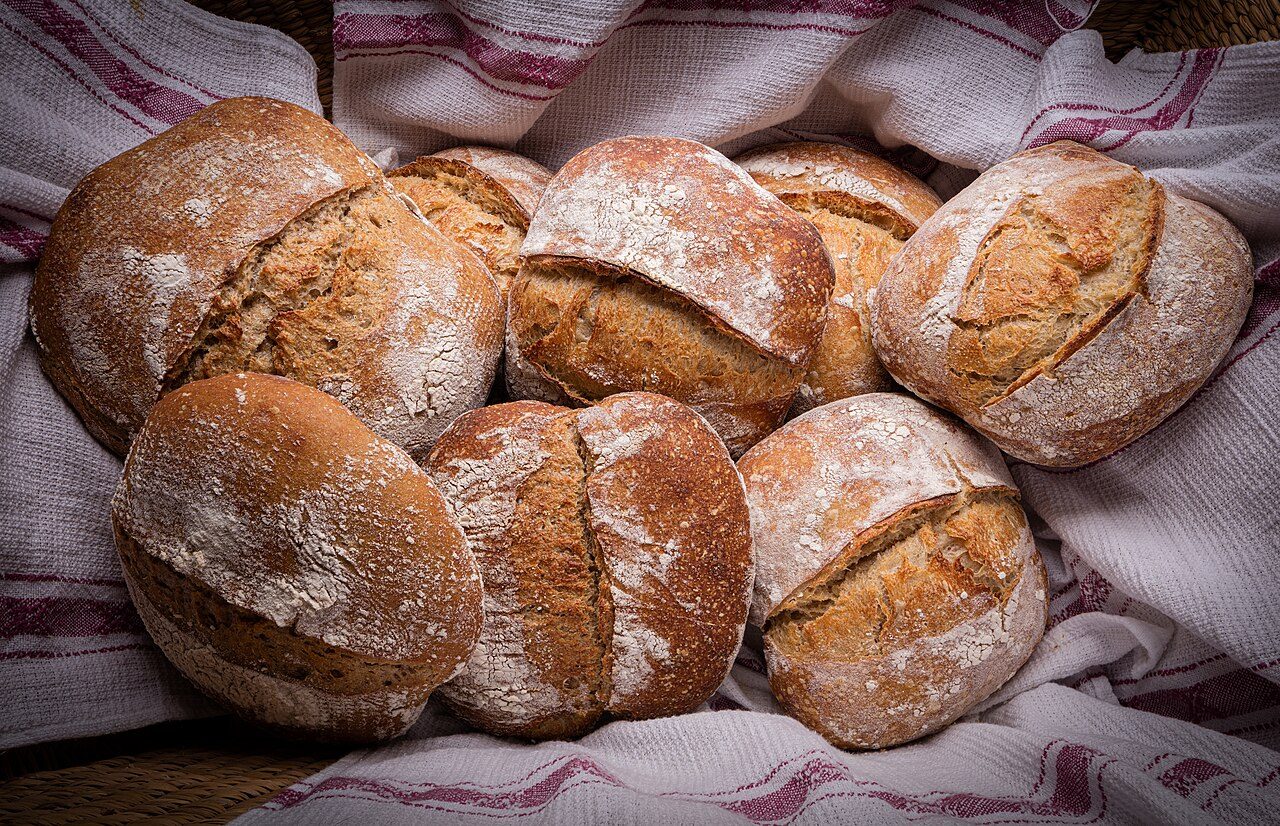
6 min read · 2 sourcesSourdough is a leavening agent containing naturally occurring yeast and lactobacillus bacteria. The term is used to describe bread baked with sourdough, while the sourdough itself is referred to as a starter. In addition to leavening the bread, the fermentation process produces lactic acid, which gives the bread its distinctive sour taste and improves its keeping qualities. 1
History
Sourdough is one of the most ancient and popular forms of leavening bread. It was the standard method of breadmaking for most of human history until the Middle Ages, when it was replaced by barm. Barm, in turn, was replaced in the late 19th and early 20th centuries by industrially produced baker's yeast. The Encyclopedia of Food Microbiology states: "One of the oldest sourdough breads dates from 3700 BC and was excavated in Switzerland, but the origin of sourdough fermentation likely relates to the origin of agriculture in the Fertile Crescent and Egypt several thousand years earlier", and "Bread production relied on the use of sourdough as a leavening agent for most of human history; the use of baker's yeast as a leavening agent dates back less than 150 years from the year of 2014". Pliny the Elder described several methods of sourdough leavening to make bread. Sourdough remained the usual form of leavening down into the European Middle Ages until being replaced by barm from the beer-brewing process, and after 1871 by purpose-cultured yeast. French bakers brought sourdough techniques to Northern California during the California Gold Rush, and it remains a part of the culture of San Francisco today. (The nickname remains in "Sourdough Sam", the mascot of the San Francisco 49ers.) Sourdough has long been associated with the 1849 gold prospectors, though they were more likely to make bread with commercial yeast or baking soda. 1
Starter
Sourdough leavening requires a pre-ferment (the starter or leaven, variously known as the chief, chef, head, mother, or sponge), a live mixture of flour and water, containing a colony of microorganisms including wild yeast and lactobacilli. The purpose of the starter is to produce a vigorous leavening and to develop the flavour of the bread. In practice there are several kinds of starters, as the ratio of water to flour in the starter (hydration) varies. A starter may be a liquid batter or a stiff dough. To initially create the pre-ferment, water and flour are mixed and left in a warm place for a week or two. When wheat flour comes into contact with water, the naturally occurring enzyme amylase breaks down the starch into the sugars glucose and maltose, which sourdough's natural yeast can metabolize. With sufficient time, temperature, and refreshments with new or fresh dough, the mixture develops a stable culture. This culture will cause a dough to rise. The bacteria ferment starches that the yeast cannot metabolise, and the by-products, chiefly maltose, are metabolised by the yeast, which produces carbon dioxide gas, leavening the dough. 1
Refreshment or feeding of the starter
As it ferments, sometimes for several days, the volume of the starter is increased by periodic additions of flour and water, called refreshments or referred to as a feeding. As long as this starter culture is fed flour and water regularly, it will remain active. The ratio of fermented starter to fresh flour and water is critical in the development and maintenance of a starter. This ratio is called the refreshment ratio. Higher refreshment ratios are associated with greater microbial stability in the sourdough. In San Francisco sourdough, the ratio is 40% of the total weight, which is roughly equivalent to 67% of the new-dough's weight. A high refreshment ratio keeps the pH of the refreshed dough relatively low (making it more acidic). pH levels below 4.0 inhibit lactobacilli and favor acid-tolerant yeasts. A starter prepared from scratch with a salted wheat-rye dough takes about 54 hours at 27 °C (81 °F) to stabilise at a pH between 4.4 and 4.6. 4% salt inhibits L. sanfranciscensis, while C. milleri can withstand 8%. A drier and cooler starter has less bacterial activity and more yeast growth, which results in the bacterial production of more acetic acid relative to lactic acid. Conversely, a wetter and warmer starter has more bacterial activity and less yeast growth, with more lactic acid relative to acetic acid. The yeasts produce mainly CO2 and ethanol. High amounts of lactic acid are desired in rye and mixed-rye fermentations, while relatively higher amounts of acetic acid are desired in wheat fermentations. A dry, cool starter produces a sourer loaf than a wet, warm one. Firm starters (such as the Flemish Desem starter, which may be buried in a large container of flour to prevent drying out) tend to be more resource-intensive than wet ones. 1
Intervals between refreshments
A stable culture in which F. sanfranciscensis is the dominant bacterium requires a temperature between 25–30 °C (77–86 °F) and refreshments every 24 hours for about two weeks (336 hours). Refreshment intervals of longer than three days acidify the dough and may change the microbial ecosystem. The intervals between refreshments of the starter may be reduced in order to increase the rate of gas (CO2) production, a process described as "acceleration." In this process, the ratio of yeasts to lactobacilli may be altered. Generally, if once-daily refreshment-intervals have not been reduced to several hours, the percentage amount of starter in the final dough should be reduced to obtain a satisfactory rise during proof. Faster starter processes, requiring fewer refreshments, have been devised, sometimes using commercial sourdough starters as inoculants. These starters generally fall into two types. One is made from traditionally maintained and stable starter doughs, often dried, in which the ratios of microorganisms are uncertain. Another is made from microorganisms carefully isolated from petri dishes, grown into large, homogeneous populations in fermentors, and processed into combined baker's products with numerically defined ratios and known quantities of microorganisms well suited to particular bread styles. Maintaining metabolically active sourdough with high leavening activity typically requires several refreshments per day, which is achieved in bakeries that use sourdough as sole leavening agents but not by amateur bakers that use the sourdough only weekly or even less frequently. 1
Local methods
Bakers have devised several ways of encouraging a stable culture of microorganisms in the starter. Unbleached, unbromated flour contains more microorganisms than more processed flours. Bran-containing (wholemeal) flour provides the greatest variety of organisms and additional minerals, though some cultures use an initial mixture of white flour and rye or whole wheat flour or "seed" the culture using unwashed organic grapes (for the wild yeasts on their skins). Grapes and grape must are also sources of lactic acid bacteria, as are many other edible plants. 1
The text above is adapted from the Wikipedia article “Sourdough”, available under the Creative Commons Attribution-ShareAlike 4.0 licence. 1
sourdough bread is bread made with a sourdough starter, according to the structured record cited below. This entry was generated automatically from that record and has not yet been reviewed by a person familiar with the tradition. 2
The source record links this tradition to 7 external registers, which can be verified through the citation. 2