The tradition & historical record
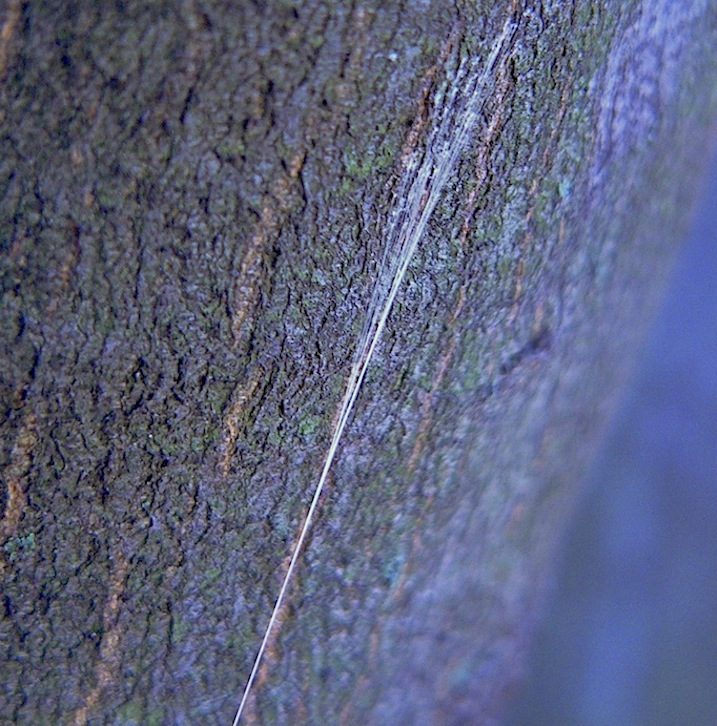
4 min read · 2 sourcesSpider silk is a protein fibre or silk spun by spiders. Spiders use silk to make webs or other structures that function as adhesive traps to catch prey, to entangle and restrain prey before biting, to transmit tactile information, or as nests or cocoons to protect their offspring. They can use the silk to suspend themselves from height, to float through the air, or to glide away from predators. Most spiders vary the thickness and adhesiveness of their silk according to its use. In some cases, spiders may use silk as a food source. While methods have been developed to collect silk from a spider by force, gathering silk from many spiders is more difficult than from silk-spinning organisms such as silkworms. All spiders produce silk, although some spiders do not make webs. Silk is tied to courtship and mating. Silk produced by females provides a transmission channel for male vibratory courtship signals, while webs and draglines provide a substrate for female sex pheromones. Observations of male spiders producing silk during sexual interactions are common across widespread taxa. The function of male-produced silk in mating has received little study. 1
Structural
Silks have a hierarchical structure. The primary structure is the amino acid sequence of its proteins (spidroin), mainly consisting of highly repetitive glycine and alanine blocks, which is why silks are often referred to as block co-polymers. On a secondary level, the short side-chained alanine is mainly found in the crystalline domains (beta sheets) of the nanofibril. Glycine is mostly found in the so-called amorphous matrix consisting of helical and beta turn structures. The interplay between the hard crystalline segments and the strained elastic semi-amorphous regions gives spider silk its extraordinary properties. Various compounds other than protein are used to enhance the fibre's properties. Pyrrolidine has hygroscopic properties that keep the silk moist while warding off ant invasion. It occurs in high concentration in glue threads. Potassium hydrogen phosphate releases hydrogen ions in aqueous solution, resulting in a pH of about 4, making the silk acidic and thus protecting it from fungi and bacteria that would otherwise digest the protein. Potassium nitrate is believed to prevent the protein from denaturing in the acidic milieu. Termonia introduced this basic model of silk in 1994. He suggested crystallites embedded in an amorphous matrix interlinked with hydrogen bonds. Refinements to this model include the discovery of semi-crystalline regions and a fibrillar skin-core model suggested for spider silk, later visualized by atomic force microscopy (AFM) and transmission electron microscopy (TEM). Sizes of the nanofibrillar structure and the crystalline and semi-crystalline regions were revealed by neutron scattering. The fibres' microstructural information and macroscopic mechanical properties are related. 1
Mechanical
Each spider and each type of silk has a set of mechanical properties optimised for their biological function. Most silks, in particular dragline silk, have exceptional mechanical properties. They exhibit a unique combination of high tensile strength and extensibility (ductility). This enables a silk fibre to absorb a large amount of energy before breaking (toughness, the area under a stress-strain curve). 1
Strength and toughness are distinct quantities. Weight for weight, silk is stronger than steel, but not as strong as Kevlar. Spider silk is, however, tougher than both. The variability of spider silk fibre mechanical properties is related to their degree of molecular alignment. Mechanical properties also depend on ambient conditions, i.e. humidity and temperature. 1
Young's modulus
Young's modulus is the resistance to deformation elastically along the tensile force direction. Unlike steel or Kevlar, which are stiff, spider silk is ductile and elastic, having a lower Young's modulus. According to Spider Silkome Database, Ariadna lateralis silk has the highest Young's modulus with 37 GPa, compared to 208 GPa for steel and 112 GPa for Kevlar. 1
Tensile strength
A dragline silk's tensile strength is comparable to that of high-grade alloy steel (450−2000 MPa), and about half as strong as aramid filaments, such as Twaron or Kevlar (3000 MPa). According to Spider Silkome Database, Clubiona vigil silk has the highest tensile strength. 1
Density
Consisting of mainly protein, silks are about a sixth of the density of steel (1.3 g/cm3). As a result, a strand long enough to circle the Earth would weigh about 2 kilograms (4.4 lb). (Spider dragline silk has a tensile strength of roughly 1.3 GPa. The tensile strength listed for steel might be slightly higher – e.g. 1.65 GPa, but spider silk is a much less dense material, so that a given weight of spider silk is five times as strong as the same weight of steel.) 1
The text above is adapted from the Wikipedia article “Spider silk”, available under the Creative Commons Attribution-ShareAlike 4.0 licence. 1
spider silk is filament material produced by spiders, according to the structured record cited below. This entry was generated automatically from that record and has not yet been reviewed by a person familiar with the tradition. 2
The source record links this tradition to 11 external registers, which can be verified through the citation. 2