The tradition & historical record
2 min read · 2 sourcesStilts are small supports used when firing glazed ceramics to stop the melting glaze from fusing them to each other or the kiln. Stilts are a form of kiln furniture. Their presence in archaeological sites, where they may be known as pernette, along with other kiln furniture such as saggars and kiln bars can be used to support a case for local production. Some potters avoid the need for stilts by not glazing the bottom of their products. This is known as dry footing. 1
History
Various types of stilts have been developed over the centuries: 1
Tripod stilt
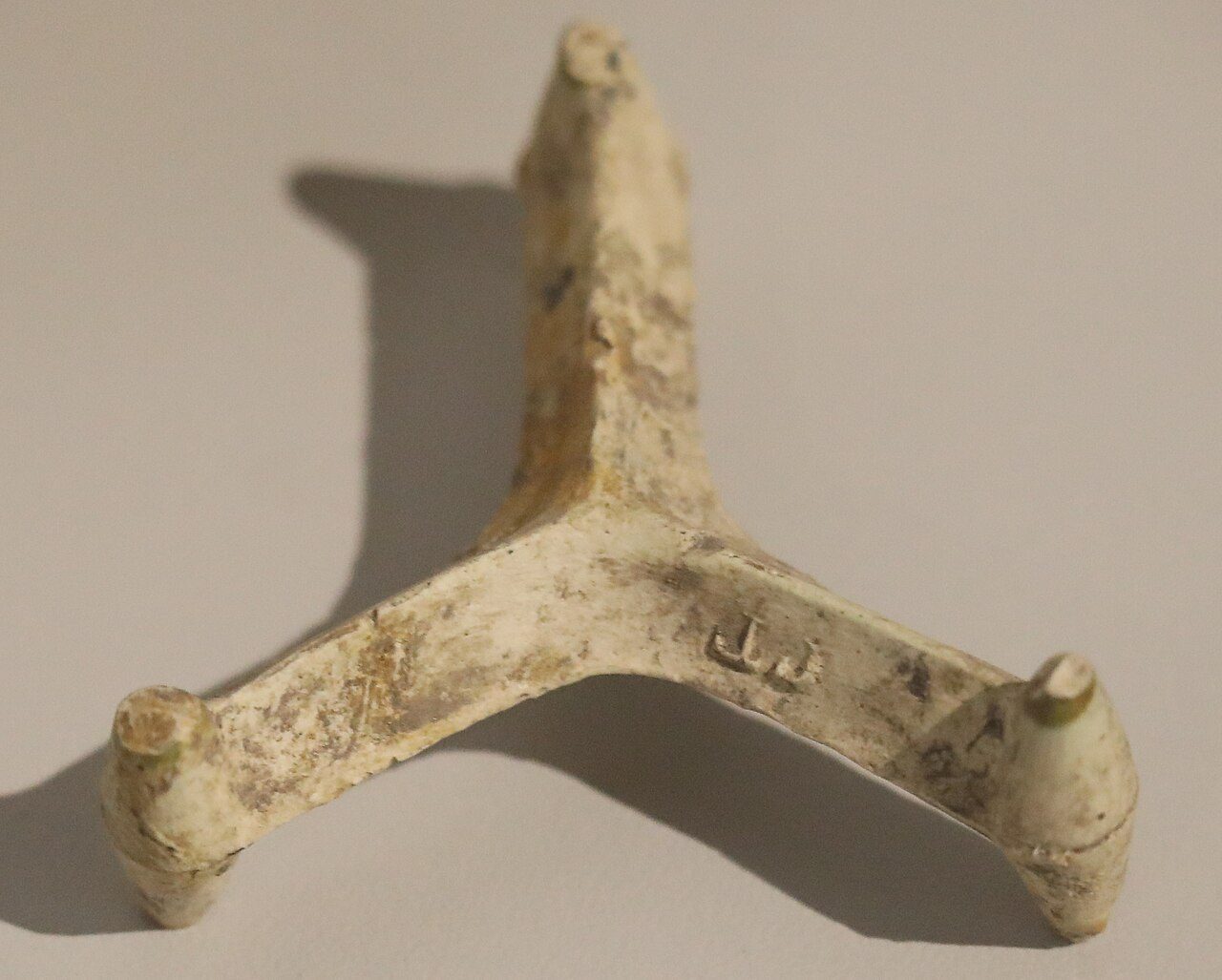
The tripod stilt, which has three legs with a raised point on each end, appears to have been developed in China at least as far back as the third century AD. Tripod stilts have been found during excavations in Ur. It was adopted by the Islamic world in the 9th century AD and was later adopted by the Byzantines around the start of the 13th century. The use of this stilt can be deduced from damage to the glaze where the three raised points were in direct contact with it. A similar type of stilt appears to have been used in the Staffordshire area and perhaps Scotland between the 1760s and 1850s. 1
Ring stilt
Ring stilts, which consist of a ring with three raised points of clay placed at equal distances around the rim, were in use in the second half of the 18th century. 1
Crown stilt
Crown stilts were in use during much the same time period as ring stilts. 1
Other types
A stilt has been found at a Roman kiln site near Holt, Wrexham County Borough dating to around the first or second century AD. It was designed to be used within a saggar and has clay pads supporting it within the saggar. 1
The text above is adapted from the Wikipedia article “Stilt (ceramics)”, available under the Creative Commons Attribution-ShareAlike 4.0 licence. 1
stilts is form of kiln furniture, according to the structured record cited below. This entry was generated automatically from that record and has not yet been reviewed by a person familiar with the tradition. 2
The source record links this tradition to 2 external registers, which can be verified through the citation. 2