The tradition & historical record
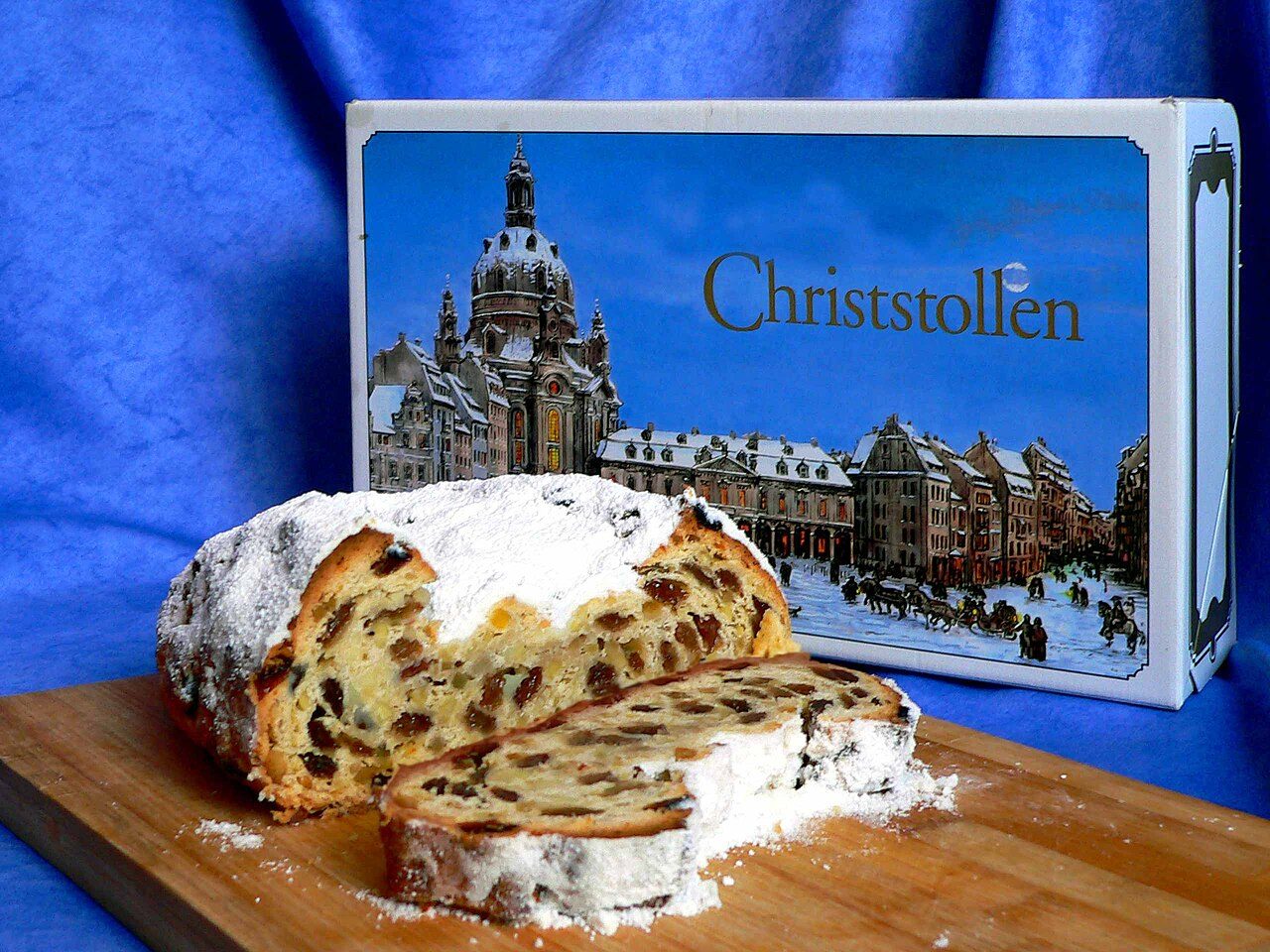
5 min read · 2 sourcesStollen (German: [ˈʃtɔlən] or German: [ʃtɔln] ) or stol (Dutch: [stɔl]) is a fruit bread of nuts, spices, and dried or candied fruit, often coated with powdered sugar or icing sugar and often containing marzipan or almond paste. It is a traditional holiday sweet bread in Northwestern Europe, particularly in Germany and the Netherlands. The bread is also popular in Suriname. In Germany during the Christmas season the cake-like loaves are called Weihnachtsstollen (lit. 'Christmas stollen') or Christstollen (lit. 'Christ stollen'). A ring-shaped Stollen made in a Bundt cake or Gugelhupf pan is called a Stollenkranz (lit. 'stollen wreath'). In the Netherlands the bread is called kerststol (lit. 'Christmas stol') when eaten around Christmas, and paasstol (lit. 'Easter stol') when eaten around Easter. In Germany, stollen are produced year-round, but are traditionally eaten during Advent or Christmas. In the Netherlands, a full-size stollen is typically only available in the Christmas and Easter seasons, but miniature stollen are sold year-round as a pastry snack. 1
Ingredients
Stollen is a cake-like fruit bread made with yeast, water and flour, and usually with zest added to the dough. Orangeat (candied orange peel) and candied citrus peel (Zitronat), raisins and almonds, and various spices such as cardamom and cinnamon are added. Other ingredients, such as milk, sugar, butter, salt, rum, eggs, vanilla, other dried fruits and nuts and marzipan, may also be added to the dough. Except for the fruit added, the dough is quite low in sugar. The finished bread is sprinkled with icing sugar. The traditional weight of a stollen is around 2 kg (4.4 lb), but smaller sizes are common. The bread is slathered with melted unsalted butter and rolled in sugar as soon as it comes out of the oven, resulting in a moister product that keeps better. The marzipan rope in the middle is optional. The dried fruits are macerated in rum or brandy for a superior-tasting bread. Dresden stollen (originally Striezel), a moist, heavy bread filled with fruit, was first mentioned in an official document in 1474, and Dresdner stollen remains notable and available – amongst other places – at the Dresden Christmas market, the Striezelmarkt. Dresden stollen is produced in the city of Dresden and distinguished by a special seal depicting King Augustus II the Strong. This "official" stollen is produced in only 110 Dresden bakeries. A Dutch stollen is a white bread with raisins or currants and, unlike in Germany, it always contains almond paste. Many also contain nuts, and have almond shavings and/or powdered sugar on top. 1
History
Early stollen was different from the modern version, with the ingredients being flour, oats and water. As a Christmas bread, stollen was baked for the first time at the Saxon Royal Court in 1427, and was made with flour, yeast, oil and water. The Advent season was a time of fasting, and bakers were not allowed to use butter, only oil, and the cake was tasteless and hard. In the 15th century, in medieval Saxony (in central Germany, north of Bavaria and south of Brandenburg), the Prince Elector Ernst (1441–1486) and his brother Duke Albrecht (1443–1500) decided to remedy this by writing to the Pope in Rome. The Saxon bakers needed to use butter, as oil in Saxony was expensive, hard to come by, and had to be made from turnips. Pope Nicholas V (1397–1455), in 1450 denied the first appeal. Five popes died before finally, in 1490, Pope Innocent VIII (1432–1492) sent a letter, known as the "Butter-Letter", to the prince's successor. This granted the use of butter (without having to pay a fine), but only for the Prince-Elector and his family and household. Others were also permitted to use butter, but on the condition of having to pay annually 1/20 of a gold coin Gulden to support the building of the Freiberg Minster. 1
Dresden stollen festival
Every year the Stollenfest takes place in Dresden. This historic tradition ended only in 1918 with the fall of the monarchy, and started again in 1994, but the idea comes from Dresden's history. Dresden's Christmas market, the Striezelmarkt, was mentioned in the chronicles for the first time in 1474. The tradition of baking Christmas stollen in Dresden is very old. Christmas stollen in Dresden was already baked in the 15th century. In 1560, the bakers of Dresden offered the rulers of Saxony Christmas stollen weighing 36 pounds (16 kg) each as gifts, and the custom continued. Augustus II the Strong (1670–1733) was the Elector of Saxony, King of Poland and the Grand Duke of Lithuania. The king loved pomp, luxury, splendour and feasts. In 1730, he impressed his subjects, ordering the Bakers' Guild of Dresden to make a giant 1.7-tonne stollen, big enough for everyone to have a portion to eat. There were around 24,000 guests taking part in the festivities on the occasion of the legendary amusement festivity known as Zeithainer Lustlager. For this special occasion, the court architect Matthäus Daniel Pöppelmann (1662–1737), built a particularly oversized stollen oven. An oversized stollen knife was also designed solely for this occasion. 1
Today, the festival takes place on the Saturday before the second Sunday in Advent, and the cake weighs between three and four tonnes. A carriage takes the cake in a parade through the streets of Dresden to the Christmas market, where it is ceremoniously cut into pieces and distributed among the crowd, in return for a small payment which goes to charity. 1
Surinamese stol
Suriname was a colony of the Netherlands from 1667 until 1954. Surinamese stol is lighter and sweeter than traditional Dutch and German stol. The dish is very popular in Suriname and is eaten in large quantities around Christmas and Easter. 1
The text above is adapted from the Wikipedia article “Stollen”, available under the Creative Commons Attribution-ShareAlike 4.0 licence. 1
stollen is German yeasted christmas sweet bread, according to the structured record cited below. This entry was generated automatically from that record and has not yet been reviewed by a person familiar with the tradition. 2
The source record links this tradition to 8 external registers, which can be verified through the citation. 2