The tradition & historical record
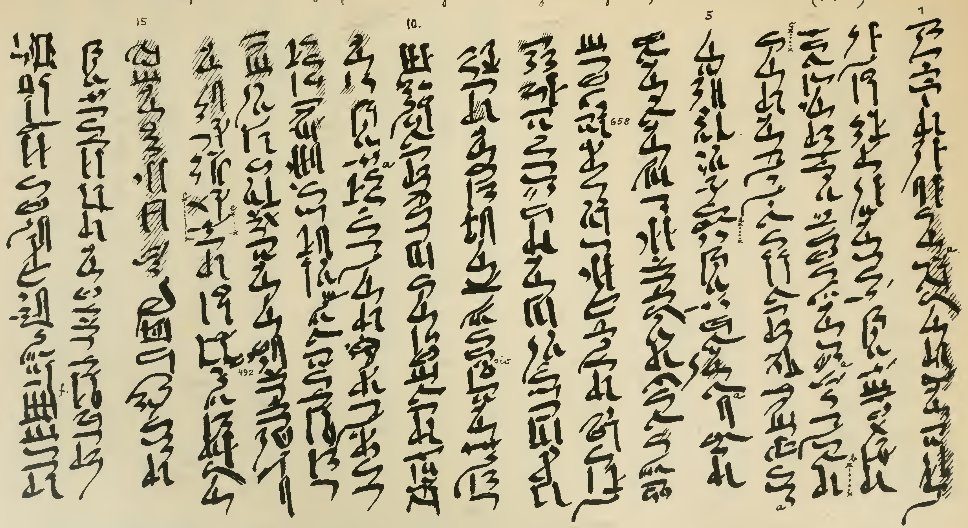
5 min read · 2 sourcesThe Story of Sinuhe, also referred to as the Story of Sanehat or Sanhath, is a work of ancient Egyptian literature. It was likely composed in the beginning of the Twelfth Dynasty after the death of Amenemhat I and the accession of Senusret I as sole pharaoh (i.e. some time after 1971 BC). The tale describes an Egyptian man who flees his kingdom, and lives as a foreigner before returning to Egypt shortly before his death. It explores universal themes such as divine providence and mercy. The oldest known copy of the text dates to the reign of Amenemhat III, around 1800 BC. The work was so popular within Egypt that newer copies have been found ranging up to 750 years after the original. The story is known from significantly more primary sources than any other ancient Egyptian literary narrative – at least five papyri and 30 ostraca. Most other such narratives are known from one period, whereas Sinuhe spans the Middle Kingdom and New Kingdom. 1
Summary
The Story of Sinuhe is written in verse and opens with a wording similarly stylized like other autobiographical coffin texts that are common in Middle Kingdom Egyptian tombs. Theoretically, the Story of Sinuhe would have been inscribed on his supposed tomb. The opening stanzas list Sinuhe’s accomplishments, titles, and ways he was of service to the royal family. Sinuhe claims to be, “...the True Acquaintance of the King, whom he loves, the follower, Sinuhe says, I was a follower who followed his lord, a servant of the royal chambers". Then it breaks away from this styling and transitions to Sinuhe receiving the news of the sudden death of the king from an assassination while he is on an expedition in Libya with the king’s oldest son. Upon hearing the news, Sinuhe is highly upset and enters a panicked state, “my heart staggered, my arms spread out; trembling fell on every limb. I removed myself, leaping, to look for a hiding place”. Fearing that he might be falsely implicated in the conspiracy, Sinuhe flees away from Egypt, sneaks past guards, crosses the Lake Maaty and sets out for foreign lands. He travels beyond Egypt and eventually collapses due to dehydration, having a close brush with death. In the next scene he is rescued by a Syrian leader who recognized Sinuhe, “a leader of theirs, who had once been in Egypt, recognized me. Then he gave me water, he boiled milk for me”. Sinuhe is nursed back to health and eventually, after more travelling, meets Amunenshi, the ruler of upper Retjenu. He begins his new life and attempts to establish an identity amongst a culture he is unfamiliar with. Amunenshi entrusts him to command his armies, and it is through this command that Sinuhe becomes engaged in conflict with a challenger. 1
Interpretations
The tale is notable for its age, as well as the popularity of the story in ancient history. It explores themes and morals that were a part of Egyptian ideals, such as order and chaos, or identity and the soul. Sinuhe also demonstrates the value that Egyptians placed on their homeland—as Sinuhe only finds peace through being allowed to be buried in Egypt. Most authors agree in their discussion on Sinuhe that he represents a dichotomy between a loyal Egyptian and a deserter. While the story mostly takes place in Sinuhe’s time outside of Egypt, this retelling of Sinuhe’s life outside of Egyptian lands serves to encourage “reflection on the nature of Egyptian life, particularly on an individual's relationship to the king”. To heighten the contrast, the story explicitly makes clear that the situation outside Egypt is idyllic. The province of Yaa where he resides in exile is a natural paradise of fertile vineyards; the prince marries Sinuhe to his eldest daughter; he is given his pick of the best lands as the chief heir-apparent. Nevertheless, Sinuhe abandons all of this worldly glory, his wife, and his children, so that he can be buried in Egypt. The grand funeral he is given there is a happy ending for the author; its worth is the greater. The funerary autobiographical nature of the opening and closing of the tale is also significant. The traditional beginning in which the text is stylized as though it is written on Sinuhe’s tomb, listing his accomplishments and service to the royal family, is broken upon his fearful fleeing when the Pharaoh, Amenemhat I dies. The remaining stanzas of the story do not fit more traditional Egyptian narrative styles, at least until Sinuhe is able to return and be laid to rest in Egypt. 1
Parallels
Parallels have been made between the biblical narrative of Joseph and the Story of Sinuhe. In what is seen as divine providence, Sinuhe the Egyptian flees to Syro-Canaan and becomes a member of the ruling elite, acquires a wife and family, before being reunited with his Egyptian family. Similarly, the Syro-Canaanite Joseph is taken to Egypt where he becomes part of the ruling elite, acquires a wife and family, before being reunited with his Syro-Canaanite family. Parallels have also been drawn from other biblical texts: the Hebrew prophet Jonah's frustrated flight from the orbit of God's power is likened to Sinuhe's similar flight from the King. The battle between David and Goliath is compared to Sinuhe's fight with a mighty challenger, whom he slays with a single blow, and the parable of the Prodigal Son is likened to Sinuhe's return home. Additionally, the Story of Sinuhe inspired the modern novel Sinuhe the Egyptian (1945) by Mika Waltari and a film based on the novel. 1
The text above is adapted from the Wikipedia article “Story of Sinuhe”, available under the Creative Commons Attribution-ShareAlike 4.0 licence. 1
Story of Sinuhe is ancient Egyptian literary work, according to the structured record cited below. This entry was generated automatically from that record and has not yet been reviewed by a person familiar with the tradition. 2
The source record links this tradition to 5 external registers, which can be verified through the citation. 2